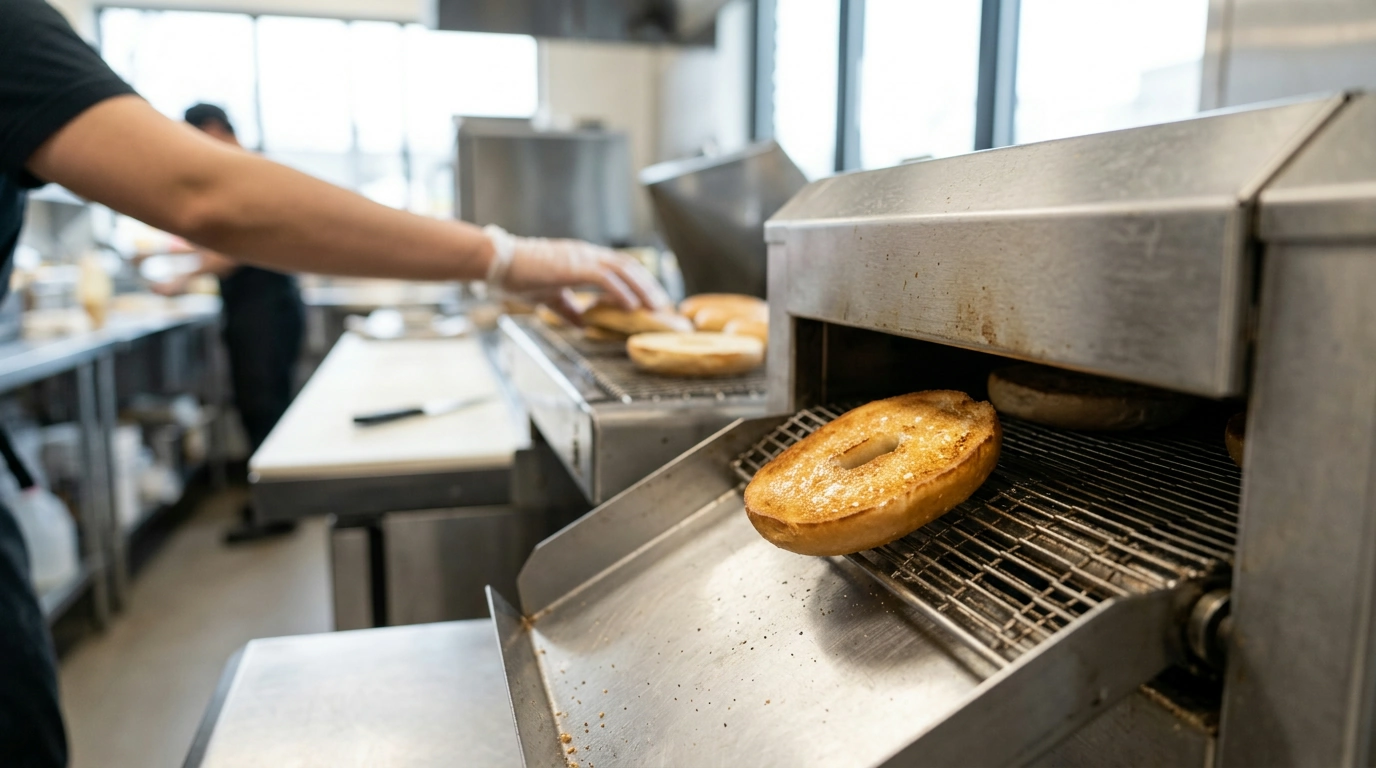
For making bagels in high volume, a commercial high-speed conveyor toaster is usually the fastest choice. It moves bagels through a heated chamber continuously, so staff can keep loading pieces instead of waiting for a pop-up toaster to finish one cycle before starting another.
That advantage is mainly about throughput—how many bagels the machine can handle over time—not necessarily how quickly it toasts one bagel. A conveyor model’s output depends on its belt speed, heat settings, bagel size, and the level of browning you want. Check the manufacturer’s rated hourly capacity and whether it applies to bagels, since ratings may be based on bread slices.
A conveyor toaster is generally oversized for occasional home use. A two- or four-slice pop-up toaster with a bagel setting is often more practical: it can toast the cut side while warming the outer side, and it takes up less counter space. If you are preparing several bagels at once, a larger-capacity pop-up model may serve you better than a commercial machine that is built for nonstop service.
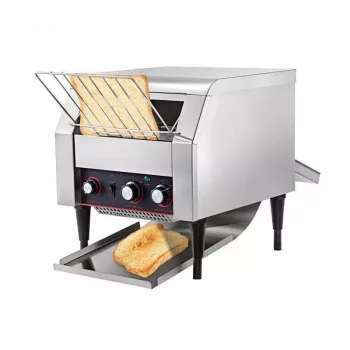
Decide whether you need the fastest single serving or the highest output for a crowd. For a café, cafeteria, or busy breakfast station, compare conveyor capacity, adjustable belt speed, temperature control, and the opening size. For home, look at the number of slots, bagel-specific settings, and how easily the crumb tray can be cleaned. A toaster may run quickly but still be a poor fit if it cannot accommodate thick or oversized bagels.
In short, choose a commercial conveyor toaster when continuous, high-volume service matters most. For a few bagels at home, a bagel-setting pop-up toaster is usually the more convenient option. For more details on conveyor models and their uses, see the guide to high-speed conveyor toasters for bread and bagels.
Yes. Many conveyor toasters can handle bagels, but confirm the model’s opening size and bagel guidance before buying. Adjust the belt speed or heat as needed to reach your preferred toast level.





Leave a comment