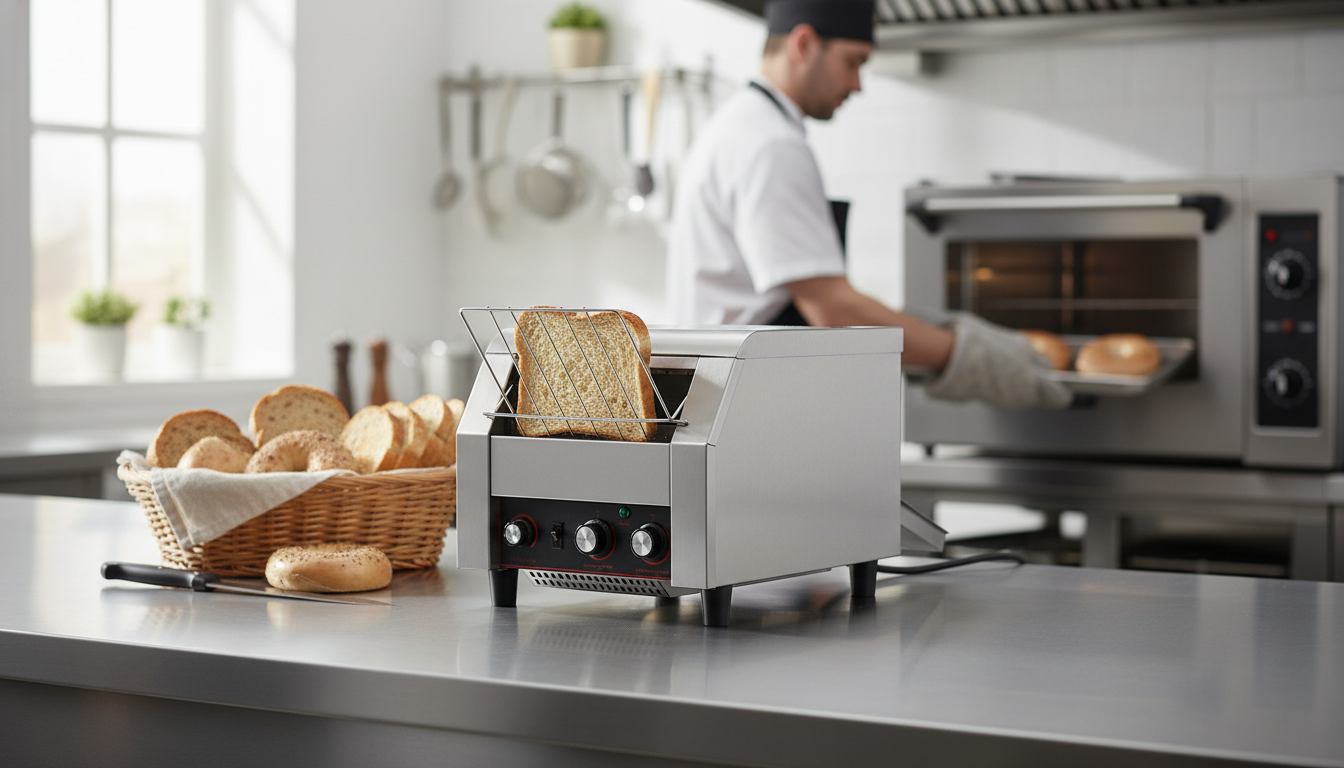
A commercial electric conveyor toaster is built for steady, repeatable toasting during rush periods—moving slices and bagel halves through heated zones at a controlled speed. Instead of waiting on batches, a conveyor unit supports a continuous flow so the line keeps moving. Below is a practical guide to where it performs best, how it achieves consistent browning, which features matter most for bread and bagels, and what daily habits help keep output uniform from open to close. For more guidance, see [PDF] Electric Plug Load Savings Potential of Commercial Foodservice ….
Conveyor toasters are designed around throughput. Product feeds onto a moving belt and passes through a heated chamber, producing a steady stream of finished toast rather than a start-stop cycle. For further reading, see Toaster – Wikipedia.
For foodservice operators who track consistency, equipment standards and safe operation guidance can also be informed by resources like the FDA Food Code, along with safety and sanitation benchmarks such as NSF certification and UL product safety certification.
Size the toaster for the busiest window, not the average hour. Under-sizing often forces staff to run the unit on extreme settings all day, which can lead to dry toast, uneven color, and higher stress when tickets stack.
Bagels, Texas toast, and buns can be thicker than standard sandwich bread. Confirm the opening height and width so product doesn’t snag, tilt, or jam—especially with seeded bagels or split rolls.
Look for simple, readable settings for heat and belt speed so different team members can hit the same “light/medium/dark” results without guessing. Repeatability is the goal: fewer adjustments, fewer surprises.
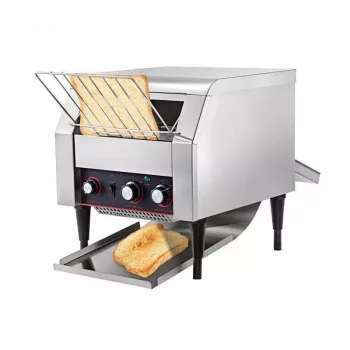
Removable crumb trays reduce smoke, burning smells, and off-flavors. When trays are easy to pull and empty, staff actually does it during service—which protects taste and lowers fire risk.
Commercial use means constant loading/unloading and frequent cleaning. A durable housing, stable feet, and accessible knobs/switches support reliable operation in real kitchens.
Measure the counter area and leave practical clearance for loading and unloading. Ventilation and airflow matter too; a toaster that’s boxed in or surrounded by heat sources may struggle to hold consistent temperature.
Before buying, confirm that the unit fits the space, matches the electrical setup, and handles your actual product mix. Use the checklist below as a fast pre-purchase filter.
| What to verify | Why it matters | What to measure/confirm |
|---|---|---|
| Counter footprint | Prevents workflow congestion and unsafe placement | Width × depth plus clearance for loading/unloading |
| Opening height | Avoids jams with thick bagels and specialty breads | Max product thickness; include sliced bagels |
| Control range | Dialing in color without drying the product | Heat level options and belt speed adjustment |
| Crumb tray access | Reduces smoke, burning smells, and cleanup time | Tool-free removal; frequency of emptying |
| Electrical requirements | Avoids tripped breakers and downtime | Voltage, amperage, outlet type, dedicated circuit if needed |
Often yes by using a baseline heat/belt setting and relying on consistent loading habits, but bagels may need slightly different exposure depending on cut-side orientation. Many operations use a simple staff cheat-sheet (light/medium/dark) to keep adjustments minimal and repeatable.
Estimate how many slices or bagel halves you serve per minute during the busiest 15–30 minutes, then choose a toaster that exceeds that peak so it doesn’t run maxed out all day. Throughput needs can change depending on whether your mix is mostly bread, mostly bagels, or a steady combination.
Let it cool, unplug it, remove and empty crumb trays, and wipe surfaces without letting water enter electrical areas. Follow the manufacturer’s instructions closely, and remove crumbs regularly to reduce smoke and fire risk.





Leave a comment