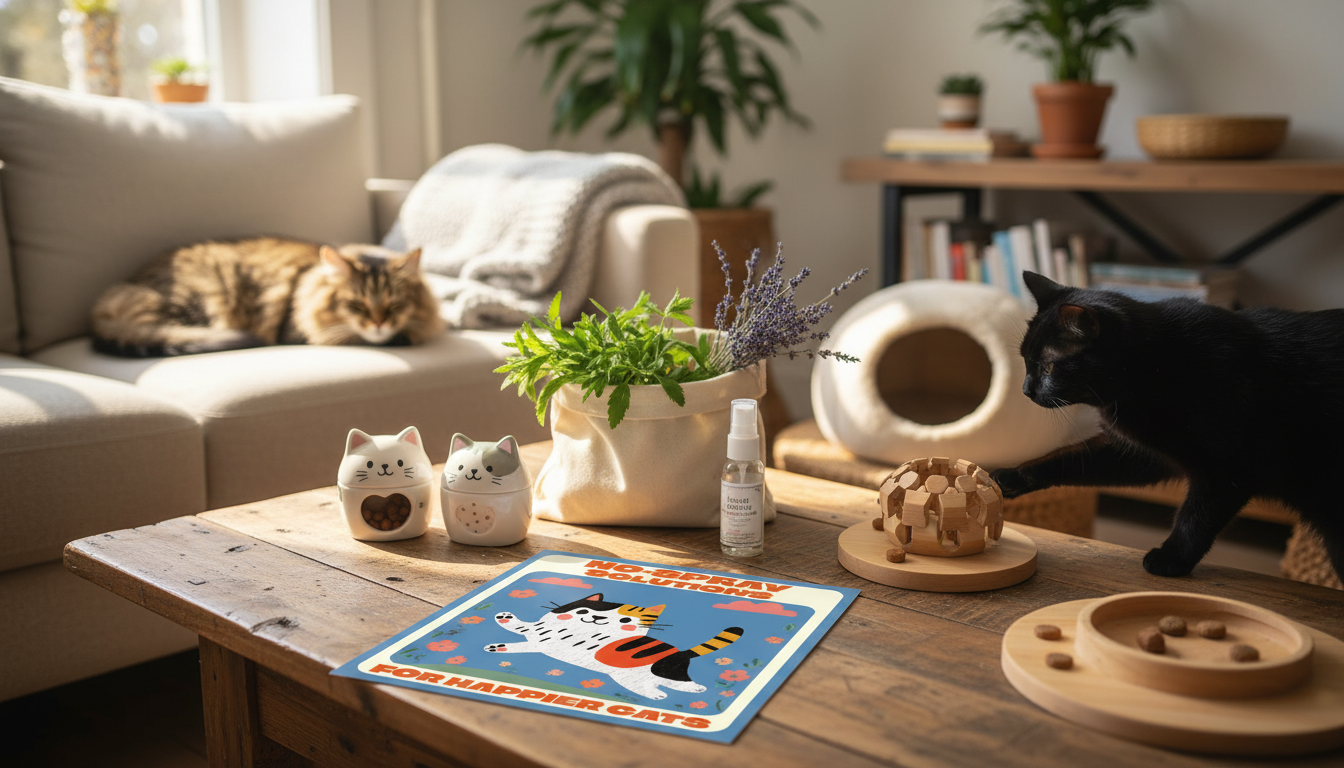
Cat spraying is stressful, confusing, and often misunderstood. Spraying is usually a communication or stress behavior (not “spite”), and it improves fastest when the cause is identified and the home setup supports calm, predictable routines. Use the steps below to rule out medical issues, reduce triggers, clean correctly, and reinforce appropriate marking alternatives—then lock it in with a simple printable checklist you can follow day by day.
Before changing your routine, it helps to identify what you’re seeing. Spraying typically shows up as small amounts of urine on vertical surfaces (walls, door frames, furniture legs), often with the cat standing and a quivering tail. Litter box avoidance more often looks like full urination on horizontal surfaces (floors, laundry, rugs) and can signal pain, urinary disease, or a problem with the box itself.
| Clue | What it can mean | First step to try |
|---|---|---|
| New behavior, frequent trips to the box, straining, or crying | Possible urinary tract pain or illness | Schedule a vet visit promptly; manage stress and hydration meanwhile |
| Sprays near doors/windows | Outdoor cat sightings, territorial stress | Block visual access; add calming enrichment and scent soakers near that area |
| Sprays after moving, visitors, new baby/pet | Change-related anxiety | Increase routine, safe rooms, and predictable play/feeding times |
| Multiple cats, tension or chasing | Social conflict, resource guarding | Add more litter boxes/resources; create escape routes and separate stations |
| Soiled spots keep “coming back” | Odor residue signaling repeat marking | Use enzymatic cleaner; avoid ammonia products; restrict access until fully treated |
If spraying is new, escalating, or paired with frequent urination, blood, crying, or accidents near the box, a veterinary visit is the fastest first move. Urinary discomfort and stress-related bladder inflammation can look like “bad behavior,” and cats rarely improve while they still hurt.
For additional guidance on medical and behavioral causes of house soiling, see resources from International Cat Care and the American Association of Feline Practitioners (AAFP).
Many spraying cases improve when the home feels “easy to live in,” especially in multi-cat households. The goal is simple: access to essentials without feeling trapped, guarded, or rushed.
If you want a simple, printable way to implement these changes without overhauling everything at once, No-Spray Solutions for Happier Cats (Printable Checklist & Guide) lays out a clear weekly plan you can follow and track.
Spraying often spikes when a cat feels their territory is unstable—whether that’s an outdoor cat hanging around, tension inside the home, or a big change to routine.
Small environment tweaks can make a big difference, especially around entrances and main traffic lanes. If you’re also updating a high-traffic room, choosing easy-to-wipe surfaces and minimizing clutter can help you spot new marks quickly—items like the Stylish Wood Coffee Table can be easier to maintain than fabric-heavy pieces in “hot spot” areas.
For more detail on litter box and cleaning best practices, the ASPCA’s litter box guidance is a helpful reference.
| Daily | 3x per week | Weekly |
|---|---|---|
| Scoop litter boxes; quick scan for new spots; 1 short play session | Wash bedding in favorite zones; refresh scratchers; review trigger notes | Deep clean any hot spots; adjust box locations/resources; assess patterns and next step |
For a ready-to-use printable version you can keep on the fridge (plus a step-by-step prevention plan), see No-Spray Solutions for Happier Cats (Printable Checklist & Guide).
Yes. Neutering often reduces hormone-driven spraying, but stress, territorial triggers, and conflict can still cause it. Focus on health checks, resource setup, trigger reduction, and correct cleaning.
Use an enzymatic urine cleaner and follow label directions for saturation and dwell time. Avoid ammonia-based products, and restrict access to repeat areas while rebuilding positive associations.
Some cats improve within days, but many need a few weeks of consistent cleaning, reduced triggers, and better resource distribution. Track patterns, and if there’s no improvement, reassess health and environment.







Leave a comment