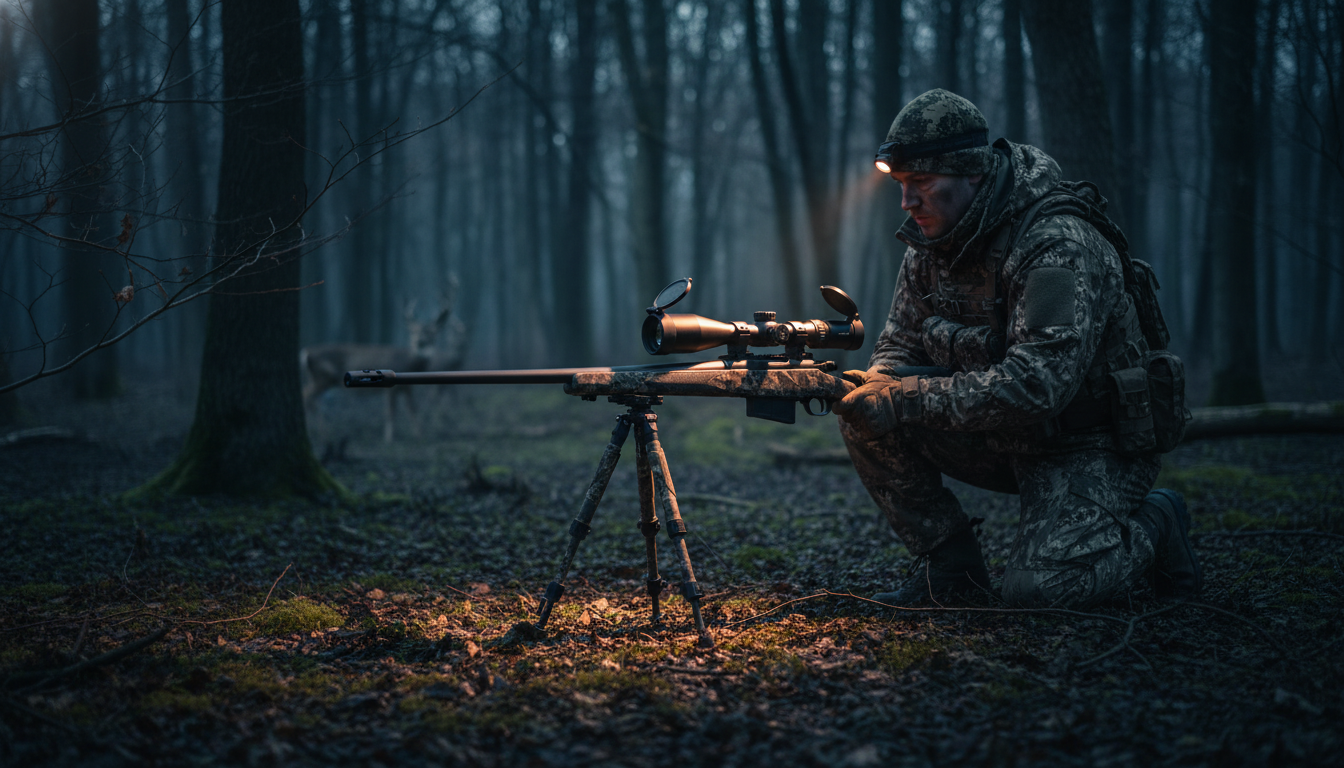
Night hunting demands fast target detection, reliable ranging cues, and optics that stay usable through fog, brush, and low-contrast terrain. A thermal riflescope like the Riflescope RS2 is designed to reveal heat signatures clearly, helping hunters spot movement, confirm targets, and make ethical shots when visible light is limited. For more guidance, see New Optics Coming in 2026 | NSSF SHOT Show 2027.
Thermal changes the nighttime equation by prioritizing what matters most when the landscape turns into silhouettes: heat. Instead of depending on moonlight, starlight, or an illuminator, a thermal optic highlights warm-bodied animals against cooler ground, trees, and sky. For further reading, see RICO HD RS75 Available Through iRayUSA – American Hunter.
That said, thermal is not a shortcut around fundamentals. You still need safe angles, a solid backstop, and enough time to confirm what you’re seeing before you ever move toward a shot.
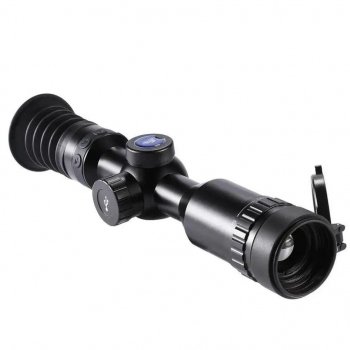
The Riflescope RS2 Thermal Imager: Clear Vision for Night Hunting is built for hunters who want an all-in-one approach: detect heat, track movement, and aim with one optic. For many setups, that reduces the “handoff” between a handheld scanner and a traditional scope, especially when animals are moving in and out of cover.
Thermal can also help with quick accountability—confirming whether the heat signature is still present, whether the animal is traveling with others, and whether a shot window is truly safe.
Thermal optics live or die by how usable they are when it’s cold, dark, and time-sensitive. Beyond headline specs, focus on the things that affect decision-making in real hunts.
A crisp, readable picture matters most when animals are partially obscured by brush or standing near warm objects (rocks, sun-baked dirt, equipment). Clarity also helps reduce “false positives” like warm fence posts or lingering heat on the ground.
Smoother panning makes it easier to scan without losing detail. When you’re tracking a moving coyote or hog, you want a stable, understandable image—not a smear that forces you to stop and reacquire.
Reticles should remain visible on both bright and dark backgrounds. Field-friendly adjustment matters too: an optic that’s easy to correct in the moment is easier to trust when conditions change quickly.
Night use favors simple, glove-friendly controls. If you must stare at menus to change modes or brightness, you’re not scanning—and you’re not maintaining awareness of what’s beyond the target.
Thermal is power-dependent. Plan for your full outing length, keep charging routines consistent, and account for cold-weather performance. A dead optic can end the hunt instantly.
Thermal riflescopes perform best when the entire system is treated like a precision tool: mount, zero, confirm, and maintain. These habits also reduce the likelihood of rushed decisions in the dark.
For a refresher on safe firearms handling principles that apply day or night, review the National Shooting Sports Foundation’s firearm safety rules. For broader hunting guidance and conservation context, the U.S. Fish & Wildlife Service hunting page is a reliable reference.
| Category | What to look for | Why it matters in the field |
|---|---|---|
| Optical/Display clarity | Readable image with strong contrast | Faster identification and fewer false positives |
| Motion handling | Smooth panning and tracking | Improved follow-through on moving animals |
| Controls | Simple buttons, quick menu access | Less time looking at settings, more time observing |
| Power | Reliable runtime and easy charging plan | Prevents loss of visibility mid-hunt |
| Mount/zero stability | Repeatable mounting and consistent zero | Maintains accuracy after travel and recoil |
| Environmental use | Usable in fog/humidity with realistic expectations | More consistent performance across conditions |
If you’re newer to thermal technology, a straightforward primer on how thermal imaging works can help set expectations in humidity, fog, and changing ground temperatures. Teledyne FLIR’s overview is a solid starting point: Thermal Imaging Basics.
Yes, but humidity and precipitation can reduce contrast and make animals blend more into the background. Scanning slower, pausing to confirm heat sources, and adjusting display settings can help, but performance will vary with conditions.
It depends on the state, species, season, and land type. Always check the most current regulations from your state wildlife agency and confirm landowner permissions before heading out.
Zero from a safe range using a solid rest and the same ammunition you’ll hunt with. Confirm at practical distances for your typical shots, re-check after transport or remounting, and document your settings so you can verify quickly before future hunts.





Leave a comment