A Clean, Fresh Pet Zone: A Practical Checklist and Schedule for Every Room
Pet spaces stay fresher (and easier to manage) when cleaning is broken into quick daily resets and simple weekly and monthly routines. The structure below organizes the most common pet areas—feeding stations, litter boxes, crates, bedding, and entryways—so odors, hair, and tracked-in mess don’t pile up. A printable checklist makes it easy to stay consistent, even on busy weeks.
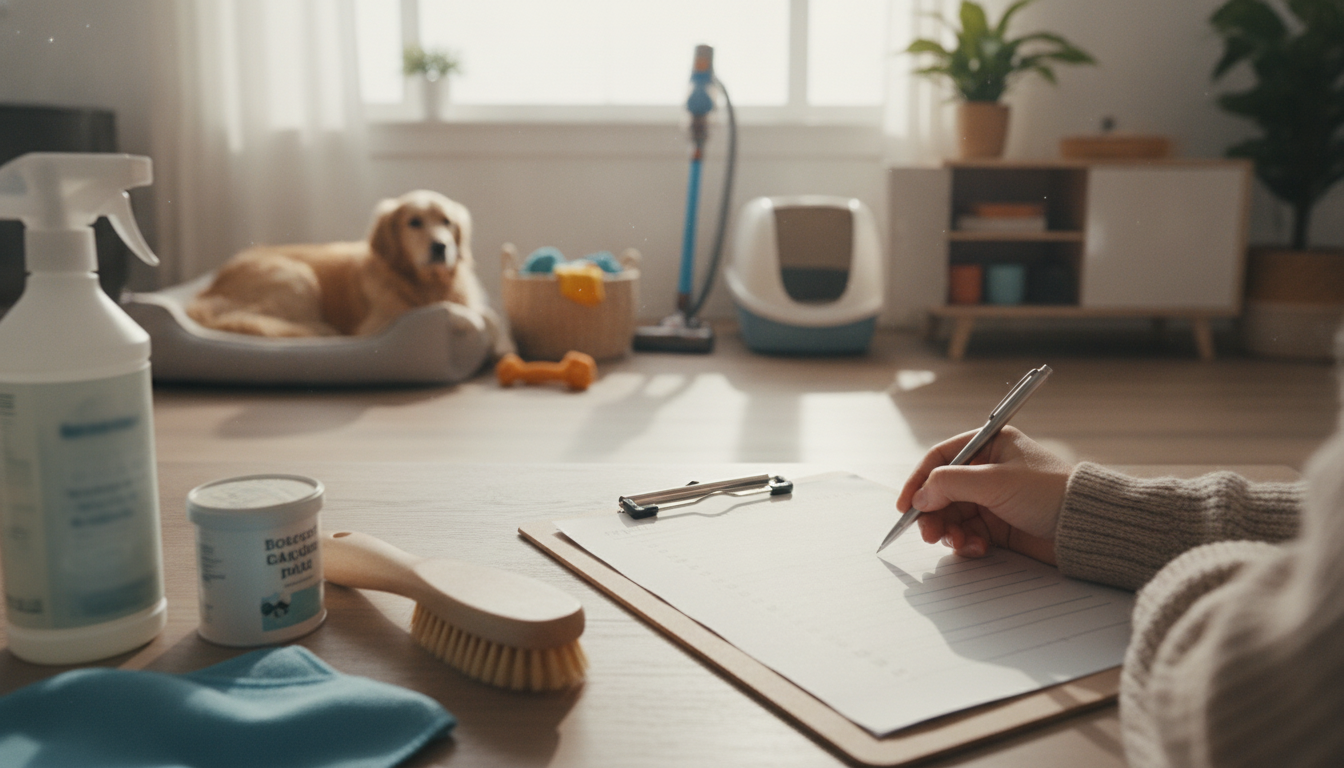
Set up a “pet-cleaning station” in 10 minutes
A dedicated kit prevents the “I’ll do it later” spiral. Keep everything in one place so small messes get handled fast—before they turn into lingering odor or stains.
- Choose one small caddy or bin that stays near the main pet area (laundry room, mudroom, or kitchen).
- Stock it with pet-safe cleaner, enzyme cleaner for accidents, microfiber cloths, disposable gloves, lint roller, trash bags, and a small scrub brush.
- Add one “hair tool” matched to surfaces: rubber broom for rugs, squeegee for upholstery, or a vacuum attachment for baseboards.
- Keep a dedicated hamper or washable bag for pet blankets and crate liners to prevent odor transfer to regular laundry.
- Place a small covered trash can near litter or potty areas to reduce lingering smells.
The core routine: daily, weekly, and monthly tasks that prevent odor
Most pet odors come from a handful of repeat sources: waste, damp fabric, food residue, and hair/dander buildup. A simple cadence keeps each one from settling in.
- Daily tasks focus on removing the freshest sources of odor: waste, wet food residue, saliva on toys, and damp bedding.
- Weekly tasks target buildup: hair in corners, residue on mats, and bacteria on washable surfaces.
- Monthly tasks refresh the “hidden” zones: baseboards behind crates, walls near litter boxes, and filters in vacuums or air purifiers.
- Pair tasks with existing habits (after breakfast, after the last walk, before taking out trash) to make the schedule automatic.
Pet Area Cleaning Schedule (Quick Reference)
| Pet area |
Daily reset |
Weekly refresh |
Monthly deep clean |
| Feeding & water station |
Wipe spills; rinse bowls |
Wash bowls and mat; wipe cabinet fronts |
Pull out station; clean floor edges and wall splashes |
| Litter box / potty zone |
Scoop and top litter; wipe rim |
Wash scoop holder; vacuum surrounding floor |
Empty and wash box; replace liners; deodorize area |
| Crate / kennel |
Shake out liner; remove crumbs and hair |
Wash liner; wipe bars and tray |
Move crate; vacuum behind; clean nearby baseboards |
| Pet bedding |
Air out; spot-clean drool or dirt |
Wash covers/blankets |
Check for wear; deep clean foam insert if washable |
| Living room upholstery & rugs |
Quick hair pickup (lint roller or squeegee) |
Vacuum under cushions; wash throw blankets |
Steam-clean or shampoo if needed (follow fabric/rug care) |
| Entryway / mudroom |
Shake out mats; wipe muddy paw prints |
Wash mats; sanitize leash hooks and bins |
Clean walls/doors at nose-height; refresh storage |
Pet odor control that works (without masking smells)
“Fresh” shouldn’t mean heavy fragrance. The goal is to remove what causes odor and improve air quality so the home stays comfortable for people and pets.
- Start with source removal: scoop/empty promptly, wash fabrics regularly, and clean food residue before it dries.
- Use enzyme cleaners for urine, vomit, and feces on hard floors and fabrics; allow proper dwell time per label so enzymes can break down odor-causing compounds.
- Ventilate: open windows during cleaning, and consider a HEPA air purifier for dander and airborne particles in high-traffic rooms. The EPA’s guidance on indoor air quality is a helpful reference point for reducing indoor pollutants.
- Washable layers reduce odor: add a machine-washable mat under bowls, and use washable covers on beds and couch throws.
- Avoid ammonia-based cleaners near urine spots; ammonia odors can resemble urine and may encourage re-marking in some pets.
For everyday hygiene and safety basics, the CDC’s Healthy Pets, Healthy People hub is a solid, pet-friendly starting point.
Accident cleanup checklist (fast steps for carpets and hard floors)
Speed matters, but technique matters more. The goal is to remove liquid and residue so odor doesn’t “bounce back” after drying.
Room-by-room focus points for pet owners
Instead of deep-cleaning the whole house, focus on the areas where pet mess concentrates. The ASPCA’s pet care resources can be a useful companion for general routines and wellbeing: ASPCA: General Care for Your Pet.
Kitchen
Living areas
Bedrooms
Laundry/utility spaces
Outdoor transition (entryway, porch, mudroom)
Make the checklist stick: a simple tracking system
Printable tool: keep every pet area on schedule
- Checklist for Cleaning Pet Areas (digital download) works well for multi-pet homes by adding initials or color-coding tasks per pet.
- It’s also helpful for households sharing responsibilities—one glance shows what’s done and what’s next.
- For a calming wind-down after reset day, pair your routine with a simple self-care plan like the Essential Oils Relaxation Checklist (always follow pet-safe practices and avoid exposing pets to concentrated oils).
FAQ
How often should pet bedding be washed to prevent odor?
For most homes, washing bedding and washable covers weekly prevents oils and “pet smell” from setting in. Increase to every 3–4 days for puppies, seniors, heavy shedders, or allergy-sensitive households, and always dry fully to prevent mildew.
What removes urine smell from carpets and rugs most effectively?
Blot thoroughly, then use an enzyme cleaner with the full dwell time listed on the label so it can break down odor compounds. If the smell returns after drying, repeat the enzyme step; avoid ammonia-based cleaners, and consider professional cleaning if urine soaked into padding.
How can a home stay fresh with pets without using heavy fragrances?
Focus on source removal (waste, food residue, and washable fabrics), steady ventilation, and HEPA filtration for airborne dander. A simple daily/weekly schedule keeps odors from building so you don’t need to mask them.
Recommended for you



Leave a comment