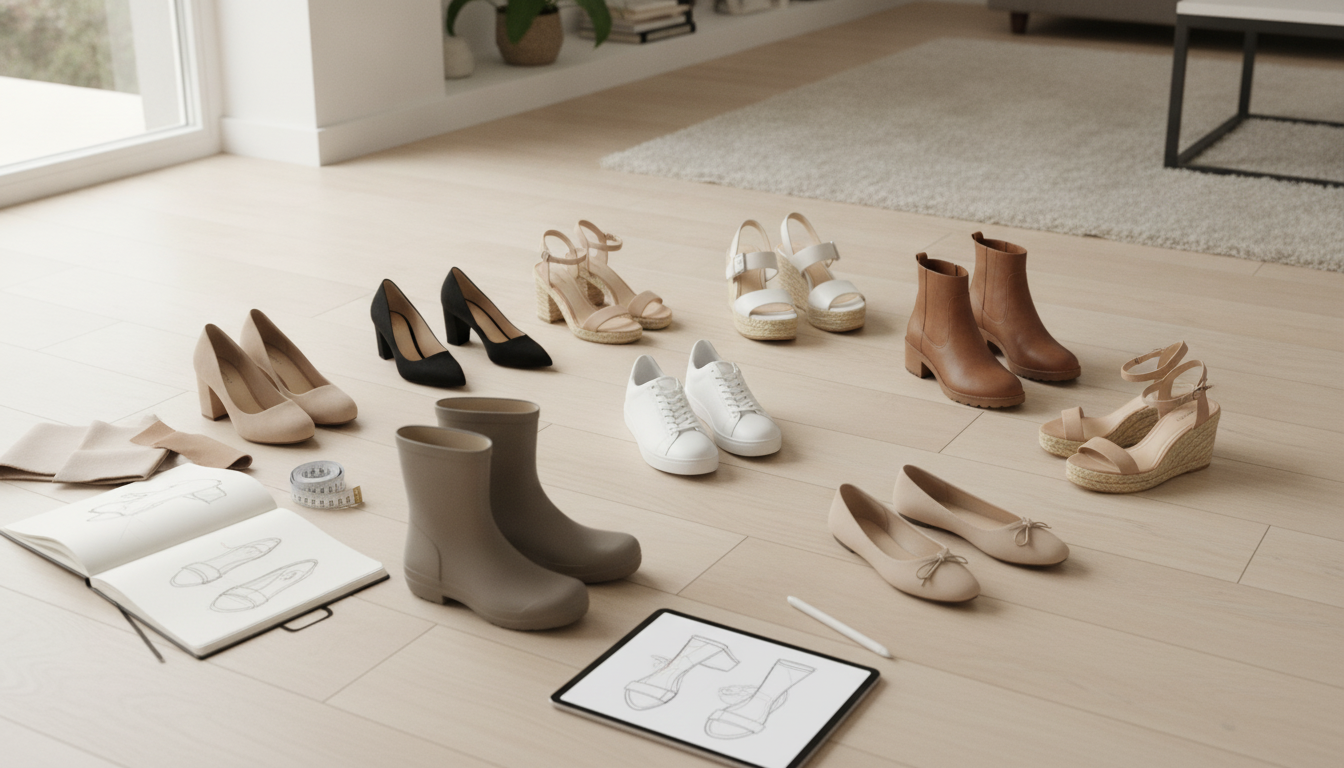
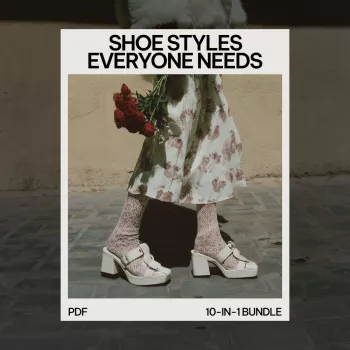
A well-rounded shoe closet doesn’t require endless pairs—it requires the right types. Instead of buying near-duplicates (three similar sneakers, two similar flats), a tighter rotation built around clear “jobs” makes getting dressed faster and shopping decisions easier. The Shoe Styles Bundle Everyone Needs: 10-in-1 Digital Guide for Every Shoe Lover organizes the core shoe styles that cover everyday errands, workdays, events, travel, and seasonal shifts, with practical guidance on fit, comfort, and styling so each pair earns its place.
For everyday comfort, it also helps to lean on evidence-based guidance for healthy footwear basics from sources like the American Podiatric Medical Association (APMA) and practical foot pain considerations from Harvard Health Publishing.
Your “default” pair for daily life: errands, travel days, and long walks. A clean silhouette pairs easily with denim, dresses, and casual tailoring.
Instant polish without the commitment of heels. Loafers elevate jeans, work well with office outfits, and transition smoothly into dinner plans.
A true utility player for transitional weather and layered outfits. They look especially sharp with straight-leg jeans, midi skirts, and sweaters.
The cleanest line under trousers and dresses when you need a formal finish. A supportive insole and a secure heel cup matter more than trend details.
A warm-weather dress option that’s ideal for weddings, vacations, and evening events—especially when the straps feel secure rather than restrictive.
A lightweight alternative to heels for commuting and long days. Look for a supportive footbed so “flat” doesn’t mean “fatiguing.”
Stability with height. A broader heel base often feels steadier for extended standing and long events.
A cold-weather staple that pairs well with tights, sweater dresses, and slim pants. The right shaft fit prevents slouching and friction.
Keep workout shoes separate from lifestyle sneakers. Training-specific support helps with comfort and performance during active sessions.
This is the “personality” slot—one pair that adds interest while the rest of your wardrobe stays simple and repeatable.
Start with real life: commuting, dress code, climate, weekend activities, and what your feet tolerate for hours. Then follow a simple rule—one job per shoe. If two pairs do the same job, keep the one that’s most comfortable and versatile, and let the other go.
| Shoe style | Best for | Material to consider | Comfort check before buying |
|---|---|---|---|
| Minimal sneakers | Daily wear, travel | Leather or breathable knit | Toe room + heel lock; no midfoot squeeze |
| Loafers | Work, smart casual | Leather or suede | No heel slip; flexible forefoot |
| Ankle boots | Fall/winter, transitional outfits | Leather with grippy outsole | Walk test: no ankle rub; stable heel |
| Classic pumps | Events, formal work | Leather upper, cushioned insole | Ball-of-foot comfort; secure heel cup |
| Strappy sandals | Warm-weather events | Leather straps, sturdy sole | No strap bite; secure toe placement |
| Ballet/sleek flats | Commute, long days | Leather with supportive footbed | Arch support; heel doesn’t collapse |
For added stability—especially in wet conditions—traction matters. Falls-prevention guidance from the CDC is a helpful reminder that secure footing isn’t just a comfort issue.
Most people do well with about 8–12 pairs when each one has a distinct role (daily, work, dress, athletic, weather). The right number depends on climate, dress code, and how often you walk or commute.
Neutral anchors like black, white, tan, taupe, and brown cover the widest range of outfits and seasons. Add one statement color or texture after the core roles in your closet are already covered.
Try supportive insoles, heel grips, and gradual break-in time, and consider stretch sprays when appropriate for the material. The biggest comfort upgrade is choosing the correct size and width so your toes and heel sit securely.





Leave a comment