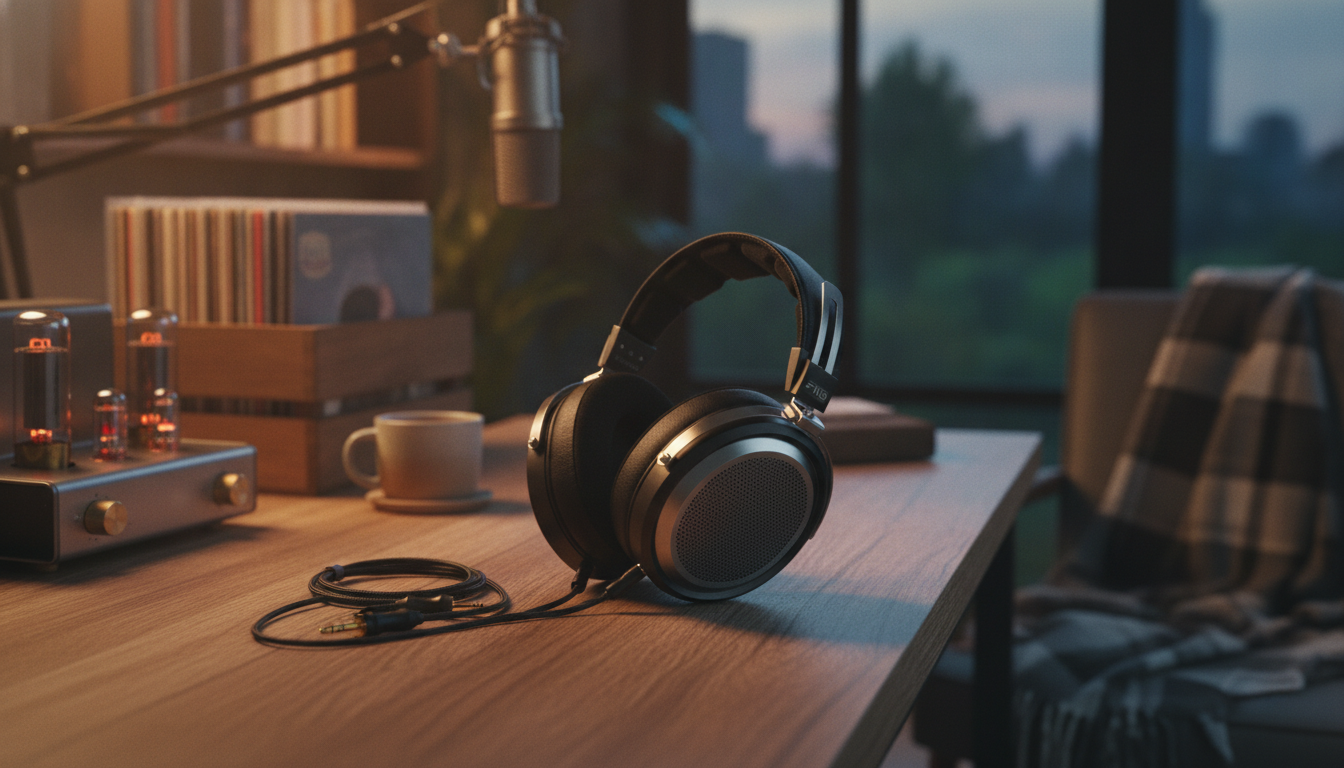
Open-back planar magnetic headphones are built for a spacious, speaker-like presentation and fine detail—useful for mixing decisions at the desk and immersive listening at home. Unlike sealed headphones that prioritize isolation, open-back planars prioritize realism, separation, and a sense of “air” around instruments. Below is a practical guide to how this style behaves, what to expect from open-back listening, and how to pair it with common studio interfaces and home gear. For more guidance, see OneOdio Monitor 60 Headphones Review – Prime Audio Reviews.
Planar magnetic drivers and open-back earcups each influence the listening experience in a distinct way. When combined with a wired connection, the result tends to favor critical listening: low distortion, fast transients, and stable imaging—assuming you’re in a quiet environment. For further reading, see Headphones – Wikipedia.
For terminology around audio reproduction and common hi-fi concepts, the Stereophile Glossary is a useful reference point.
Open-back planar headphones are often chosen because they reveal small mix decisions while keeping a natural sense of space. That said, comfort, seal consistency, and source power can shift what you hear more than many people expect.
If you’re doing audio work professionally, staying aligned with established practices and terminology can help when comparing gear and workflows; the Audio Engineering Society (AES) is a long-standing hub for audio engineering standards and education.
Open-back headphones trade privacy and isolation for space and natural presentation. In many homes and studios, that trade is either perfect—or a dealbreaker.
Planar headphones vary widely in sensitivity and impedance, and the “needs an amp” question depends on the model and how loudly you monitor. When underpowered, you’ll typically notice low maximum volume, flattened dynamics, or bass that feels less controlled. For a deeper look at the numbers behind loudness, see Headphonesty’s overview of impedance and sensitivity.
| Source | What to verify | Why it matters |
|---|---|---|
| Audio interface headphone out | Enough volume without maxing the knob | Avoids distortion and preserves dynamic range |
| DAC/headphone amp | Low noise floor and stable output | Cleaner quiet passages and better control |
| Laptop/desktop jack | Volume headroom and channel balance at low levels | Prevents uneven L/R balance and weak drive |
| Phone/tablet dongle | Compatibility and output level | Prevents underpowered playback and thin dynamics |
Usually no, because open-back designs leak sound and can cause click tracks or cue mixes to bleed into the microphone. Closed-back headphones are typically better for tracking, while open-backs are a strong choice for editing, mixing checks, and listening in quiet rooms.
It depends on the headphone’s sensitivity and impedance and on your source device’s output. If you’re getting low volume, flat dynamics, or weak bass control, a stronger interface headphone out or a dedicated amp may provide better headroom and consistency.
Because venting reduces internal reflections and pressure buildup inside the earcups, which can make imaging feel more open and speaker-like. The different ear-cup acoustics often improve perceived soundstage and make placement cues easier to judge.





Leave a comment