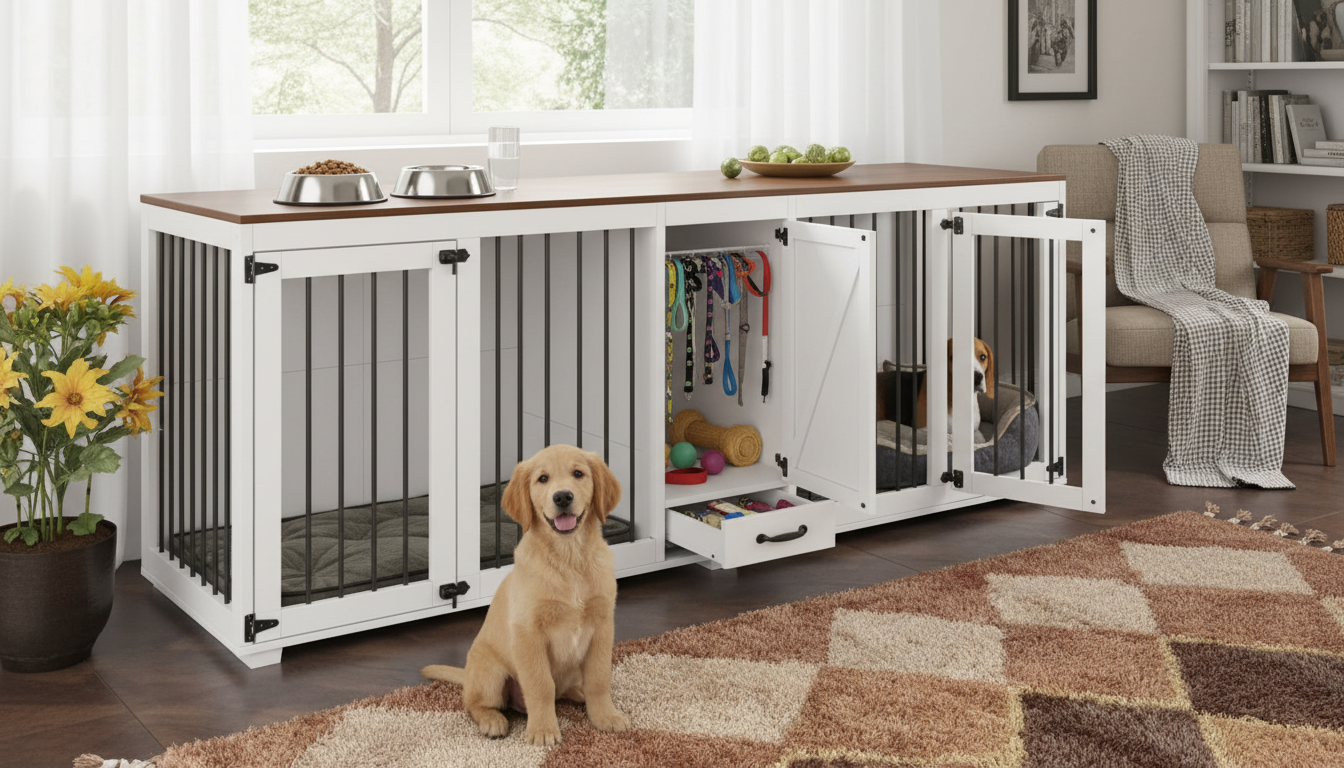
Wooden crates can be a good choice for dogs when they are sturdy, well ventilated, and suited to your dog’s behavior and daily routine. They can blend into your home more naturally than wire models and may include useful features such as a top surface, divider, or storage drawer. But wood is not the right material for every dog: persistent chewing, scratching, or attempts to escape can damage it and create safety concerns.
A wooden crate is often practical for a dog who is comfortable spending time in an enclosed space and is not inclined to chew or claw at the structure. Look for secure door hardware, smooth interior surfaces, stable construction, and openings that allow air to circulate. Your dog should be able to see and breathe comfortably through the crate’s ventilation openings.
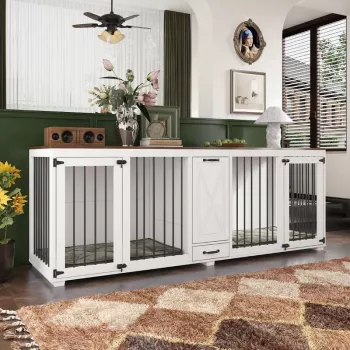
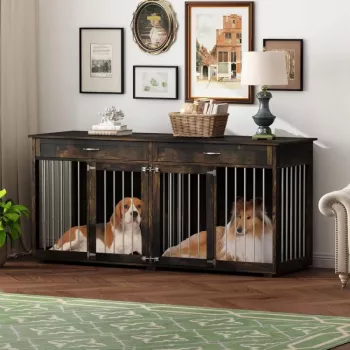
Wooden furniture-style crates can also help organize a room. Some designs combine the enclosure with storage or a usable tabletop. If you have two dogs, a double-crate arrangement may keep their spaces together while giving each dog a separate area. Our guide to double wooden dog crates with bowls and a storage drawer covers features to consider for that setup.
Inspect the crate for splinters, sharp edges, loose parts, and damaged latches before use. Keep it away from moisture that could warp the wood, and avoid placing it where direct heat or strong sunlight could make the interior uncomfortable. If your dog chews wood, pushes hard against doors, or becomes distressed when confined, choose a different setup and introduce crate time gradually.
Supervise your dog at first, especially when you are unsure how they will respond to the material or door. A wooden crate should not be used to contain a dog who is actively trying to break out. Stop using it if damage exposes sharp fragments or weakens the structure.
Think about your dog’s habits, the crate’s ventilation and hardware, and how easily you can clean the interior. A removable or accessible floor can make routine cleanup simpler. Check that the door opens and closes smoothly and that food or water bowls, if included, are secured against tipping. For a dog who is a determined chewer or escape artist, a more durable crate material may be a safer choice.
Remove loose debris, then wipe the interior with a pet-safe cleaner used according to its label. Dry the surfaces thoroughly and inspect for swelling, splinters, or finish damage before your dog uses the crate again.




Leave a comment