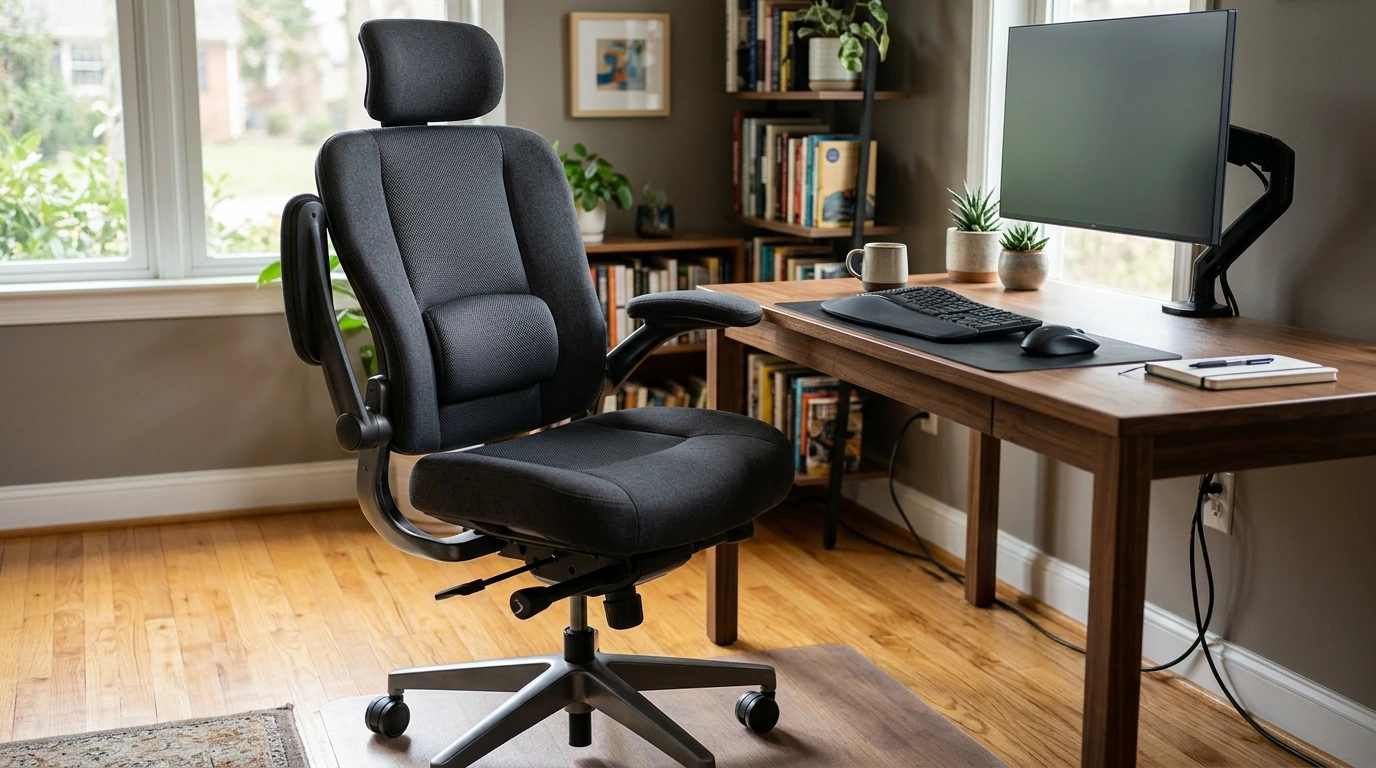
Long hours at a desk ask a lot from a chair—especially when standard sizes feel cramped, unstable, or too soft to stay supportive. Our 650lbs Big and Tall Ergonomic Office Chair with 5D Flip Arms and Spring Cushion is designed for bigger frames and longer sessions, pairing heavy-duty support with adjustable comfort features that help your workspace feel more open, flexible, and ready for daily use.
If you’ve ever sat down and immediately felt like a chair was “not built for you,” the right big-and-tall fit is less about luxury and more about stability and usable space. This chair is a strong match for:
A seat can feel “soft” and still be the wrong kind of soft. When a cushion compresses too easily, you end up perching, shifting, or bracing through your legs—small compensations that add up over a long day. A spring-cushion approach is meant to stay responsive, helping the seat keep its structure session after session.
| What to check | What “good” feels like | Simple adjustment to try |
|---|---|---|
| Seat feel after 2–3 hours | Supportive, not hard; still buoyant, not flat | Stand up for 60 seconds, then sit centered again |
| Pressure at hips and thighs | Even support without sharp pressure points | Adjust sitting depth and keep feet planted |
| Stability when shifting | Controlled movement with a planted base feel | Keep hips back in the seat; avoid perching |
| End-of-day fatigue | Less fidgeting and fewer “reset” moments | Add a short walk break every hour |
Arm position is one of the fastest ways to change how a chair “fits” your day. Flip-up arms add a practical advantage: you can create instant clearance when you want to pull in close, and bring arm support back when your shoulders need a break.
Even a heavy-duty chair performs best when your workstation is tuned to your body. Our team recommends a quick setup pass that prioritizes stability first, then comfort:
If you want more workstation detail from authoritative sources, you can review guidance from OSHA’s Computer Workstations eTool and Mayo Clinic’s office ergonomics guide.
For broader background on ergonomic risks and prevention, the NIOSH ergonomics resource is a helpful reference.
If your brain stays “on” after work, pairing a shutdown routine with a calming habit can help. Our team also keeps a small, low-effort wind-down tool in the shop: Essential Oils Relaxation Checklist – Simple Daily Ritual Guide.
| Product | Best for | Price |
|---|---|---|
| 650lbs Big and Tall Ergonomic Office Chair with 5D Flip Arms and Spring Cushion | Heavy-duty daily desk work with flexible arm positioning | $359.47 |
| Essential Oils Relaxation Checklist – Simple Daily Ritual Guide | Simple after-work decompression routine | $2.99 |
| Fuel Up & Fire Ahead: Your Entrepreneur Quote Action Checklist | Structured momentum for goals and projects | $5.99 |
They give you immediate side clearance so you can slide closer to your desk, tuck the chair in when you’re done, and reduce snagging in tight walkways. You can also switch arm support on or off quickly depending on whether you’re typing, taking calls, or leaning in for focused work.
Set seat height so your feet are flat, then sit all the way back so the backrest supports you. Adjust armrests until your shoulders can relax and your elbows rest naturally, and place your monitor high enough that you’re not craning your neck; then keep it sustainable with short movement breaks.
It can feel more supportive than a plush cushion at first, and that’s often the point: it’s meant to hold you up for hours instead of compressing quickly. Give it a few days while you dial in seat height and foot support, because good posture can change how “firm” the seat feels.




Leave a comment