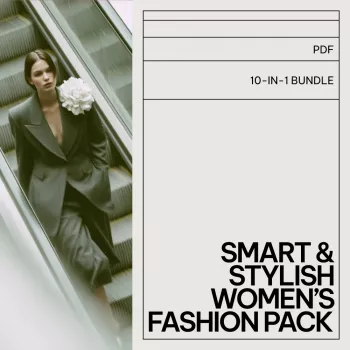
Getting dressed should feel clear, not chaotic. Our Smart & Stylish Women’s Fashion Pack is designed as a practical 10-in-1 bundle of fashion guides and checklists that turns “nothing to wear” into a repeatable system—so outfits come together faster, shopping decisions feel more confident, and your closet starts working like a curated collection instead of a cluttered storage unit.
This bundle is a structured set of guides and checklists built to support everyday style decisions: outfit planning, closet edits, and smarter shopping. It’s made for real-life mornings—workdays, weekends, events, and travel—when time and mental energy are limited.
Instead of improvising from scratch each day, you use a simple process that reduces decision fatigue: identify what already works, clarify what’s missing, and apply a few rules that keep purchases and outfits aligned with your actual life. If you want to look polished without constantly buying new pieces (or second-guessing what you buy), this approach is designed to fit.
Smart & Stylish Women’s Fashion Pack: 10-in-1 Bundle of Fashion Guides & Checklists
Pick one small zone—tops, jeans, or dresses—and do a quick keep/maybe/pass round using a checklist mindset: fit, comfort, condition, and how often it’s actually worn.
Identify pieces that consistently make outfits feel pulled together (a blazer, great jeans, a versatile dress) and set them aside as your reliable base.
Write down what’s missing (not what’s trending): shoes that work with most outfits, a layer for unpredictable weather, or a top that pairs with your existing bottoms.
Decide how dressy most days need to be—casual, smart casual, business, occasion—so your outfits and purchases align with your routine.
Create 3–5 repeatable combinations (top + bottom + layer + shoe). Rotate colors or accessories instead of reinventing the wheel every morning.
Outline a small “go-to” set for dinners, meetings, and last-minute invitations so getting ready doesn’t become a scramble.
Before you buy, apply constraints: it must match at least 3 existing items, fit your comfort goals, feel good on your skin (fabric), and suit your real-life care preferences.
If mornings feel rushed, start with outfit formulas and a quick weekly outfit plan. If shopping feels impulsive, start with a wardrobe gap checklist and a “matches 3 items” rule. If your closet feels full but options feel limited, start with a closet edit checklist plus a versatility check. For travel, use a capsule-style packing approach and map outfits before you pack. If your style feels inconsistent, begin with personal style clarity—silhouettes, colors, and comfort level that feel most like you.
| Goal | Best starting checklist approach | 20-minute first step |
|---|---|---|
| Look polished daily | Outfit formulas + weekly plan | Choose 3 outfits for the next 3 days and pre-pair shoes |
| Stop buying items that don’t get worn | Gap list + compatibility rules | List 5 items you regret buying and note why (fit, color, lifestyle mismatch) |
| Build a more versatile wardrobe | Closet edit + versatility audit | Pick 10 items and count how many outfits each can create |
| Pack lighter but look better while traveling | Capsule packing checklist | Select 2 bottoms, 5 tops, 2 layers, 2 shoes and map outfits |
| Refresh style without a full overhaul | Accessory and finishing-touch checklist | Create one “signature” finishing set (jewelry + bag + shoe style) |
A closet edit doesn’t have to be dramatic to be effective. Our team recommends editing in rounds, not all at once: first remove damaged or ill-fitting items, then evaluate duplicates, then assess lifestyle fit. This order keeps the process practical—because the easiest decisions come first.
For color direction and seasonal palette inspiration, resources like the Pantone Color Institute can help you think in coordinated color stories rather than random shades.
For broader perspective on the fashion industry and its standards, the Council of Fashion Designers of America (CFDA) is a helpful authority to explore.
If you like having a simple wind-down structure alongside your wardrobe reset, our team also keeps this on hand: Essential Oils Relaxation Checklist – Simple Daily Ritual Guide
If you enjoy the “checklist system” approach beyond style, you may also like: Fuel Up & Fire Ahead: Your Entrepreneur Quote Action Checklist
It supports both: you can build a capsule through closet editing and versatility checks, then expand options using outfit formulas and gap-based shopping rules that prevent random purchases. The system helps you keep your wardrobe focused while still increasing the number of outfits you can create.
Start small with one category at a time and work in short rounds: keep/maybe/pass. Focus first on fit and condition, and use 20-minute sessions plus a “maybe” holding zone so you can make progress without burning out.
Yes—use a capsule approach, map outfits before packing, and limit shoes and layers to what truly mixes and matches. Planning outfit combinations in advance helps you pack less while still feeling pulled together on the trip.





Leave a comment