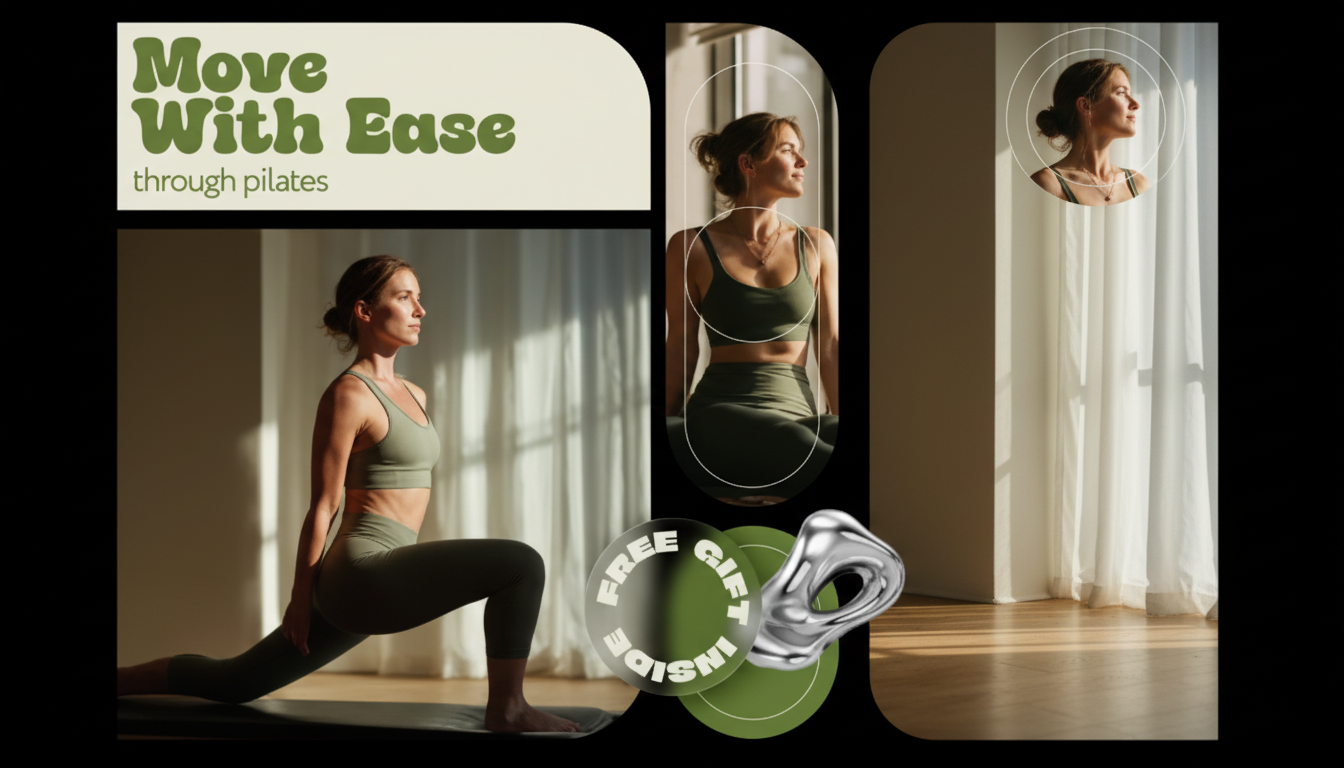
Building strength and mobility doesn’t have to mean punishing workouts or complicated routines. Pilates offers a practical way to improve core stability, posture, joint control, and body awareness—skills that translate into easier everyday movement. This digital guide is designed to help create a consistent practice that supports how the body moves in real life: getting up from the floor, carrying groceries, sitting at a desk, and walking with more comfort and confidence.
Pilates is often described as “low-impact,” but the real value is how it teaches the body to organize itself under everyday demands—without relying on tension or momentum.
For additional context on safe, effective movement standards, the CDC Physical Activity Guidelines for Adults offer a helpful framework for weekly activity—Pilates can fit neatly into that structure as a strength-and-mobility practice.
Instead of random workouts, the guide focuses on repeatable building blocks—so it becomes easier to show up, know what to do, and feel progress without guessing.
This style of Pilates practice works well for a wide range of bodies and backgrounds, especially when the goal is steadier movement—not “max effort” training.
If you’re looking to learn more about Pilates education standards and the broader community of certified instruction, the Pilates Method Alliance is a reputable reference point.
When Pilates is done with control and repeated often enough to “stick,” many people notice changes that show up outside workouts.
Use this as a simple weekly rhythm: short sessions done consistently tend to compound quickly. Choose a pace that feels steady and sustainable; form and breath come first. If a day is missed, resume the plan without trying to “make up” volume.
| Day | Focus | Time | What to prioritize |
|---|---|---|---|
| Day 1 | Core + posture | 10–20 min | Neutral spine, rib control, slow tempo |
| Day 2 | Hip mobility + glute strength | 10–20 min | Smooth hip motion without pinching |
| Day 3 | Upper back + shoulders | 10–15 min | Reach length through spine, relaxed neck |
| Day 4 | Full-body flow | 15–25 min | Breath-led transitions, steady control |
| Day 5 | Balance + standing strength | 10–20 min | Foot pressure, alignment, steady gaze |
| Day 6 | Gentle mobility + recovery | 8–15 min | Comfortable ranges, no forcing |
| Day 7 | Reset + review | 8–15 min | Repeat favorites; note what feels easier |
Even a brief practice can feel substantial when it’s organized and intentional—especially if the goal is to move better during daily life rather than chasing fatigue.
Yes—Pilates is scalable, low-impact, and built around control rather than speed or heavy load. Start with shorter sessions, focus on breath and clean form, and let your range of motion improve gradually over time.
Many people do well with 3–5 days per week, or a simple 7-day rhythm with shorter sessions. Consistency matters more than long workouts, and progress depends on your starting point and how steadily you practice.
Pilates can support posture and back comfort by improving core stability, thoracic mobility, and alignment awareness. For persistent pain—or any sharp symptoms—get medical guidance to rule out injury or underlying conditions.



Leave a comment