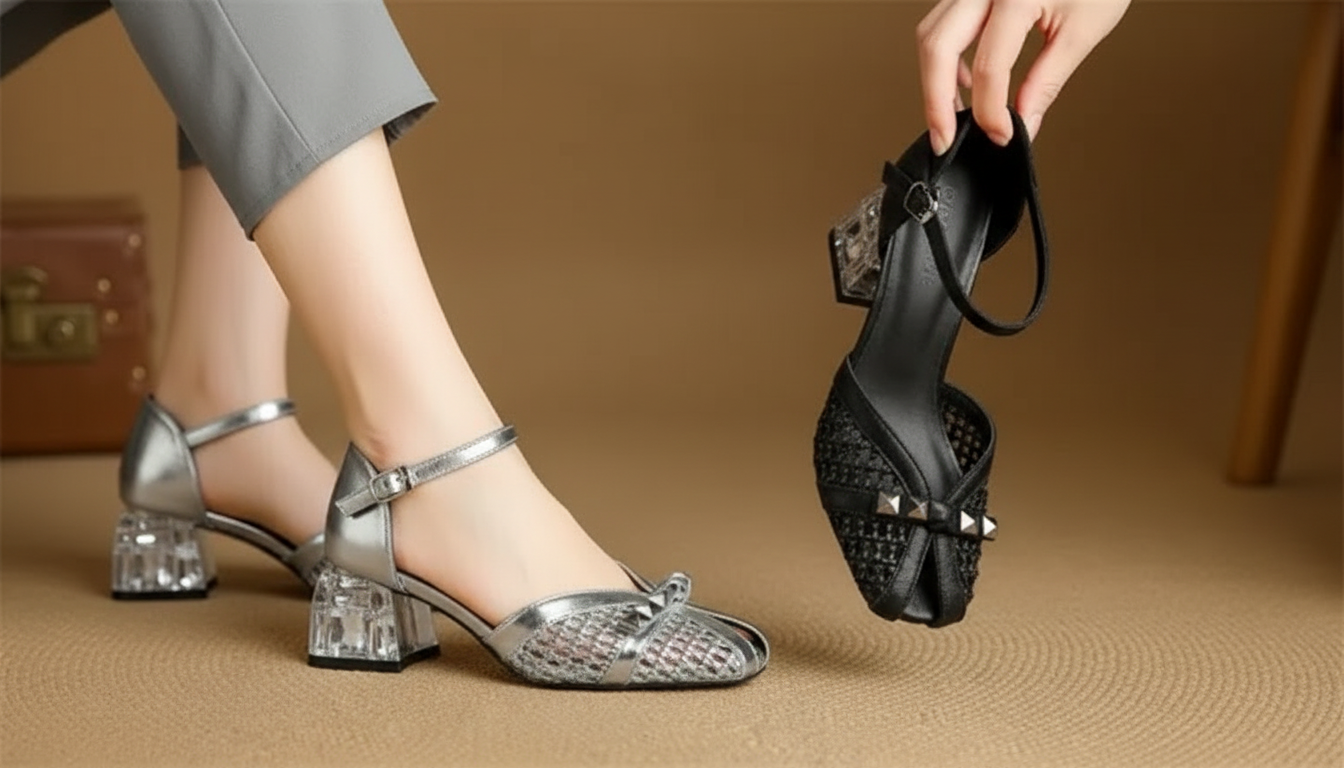
A high-heel summer sandal built around split leather and rivet detailing pairs dressy structure with warm-weather styling. If you’re shopping for a pair that can carry you from daytime plans to evening events, it helps to know what split leather feels like, how hardware changes fit, and which comfort details matter most in a higher heel.
Split leather is a real-leather option that commonly feels more structured than many fully synthetic uppers. That structure can help straps keep their shape and hold the foot more securely, especially when the heel height shifts weight forward.
Rivets add an embellished, slightly edgy finish that can make a simple outfit look intentional. If you usually keep jewelry minimal, the hardware effect can do the “accessory” work without needing extra layers.
A high heel creates a leg-lengthening line that pairs naturally with dresses, skirts, and tailored pieces. It’s also a smart choice when you want a sandal that reads “event-ready” rather than purely casual.
Open styling helps with breathability and makes these easy to style in warm weather—especially for outfits built around lighter fabrics like linen, cotton poplin, or satin blends.
High-heel sandals can look amazing, but comfort comes down to a few practical points. Before purchasing, look closely at how the straps, footbed, and heel are constructed, and consider where you’ll wear them most.
| Detail | Why it matters | What to confirm |
|---|---|---|
| Straps | Prevents rubbing and hot spots | No sharp edges; hardware sits away from skin |
| Footbed | Helps reduce fatigue in heels | Light cushioning; smooth lining |
| Heel stability | Improves balance while walking | Heel looks centered and firmly attached |
| Sole grip | Reduces slipping risk | Textured outsole or traction pattern |
| Fit adjustability | Allows fine-tuning across foot widths | Buckle/elastic/secure closure (if included) |
Fit is especially important with rivet detailing, since hardware can reduce “give” in straps compared to softer, unadorned designs. A few quick habits can improve the odds of a confident, stable fit.
For general footwear fit and foot health guidance, the American Podiatric Medical Association is a helpful reference point when you’re balancing style with comfort.
Pair high-heel sandals with denim shorts or a midi skirt and a crisp button-up. The rivets add interest, so the outfit can stay simple while still looking elevated.
For dinners, parties, or guest looks, match the sandals with a slip dress, satin skirt, or tailored jumpsuit. The contrast of sleek fabric and hardware detail looks intentional and modern.
Let the rivets act like jewelry. Solid colors, clean lines, and minimal prints keep the focus on the sandal’s detail without competing.
When possible, coordinate metal tones across your outfit—bag hardware, a belt buckle, or earrings—so the rivets feel like part of a cohesive set rather than a standalone accent.
Split leather benefits from gentle, consistent care—especially in summer, when dust and occasional moisture exposure are common.
For broader leather care standards and responsible material guidance, visit Leather Working Group.
Split leather is a layer separated from the hide (often from the lower portion), and it’s frequently finished or coated for a consistent look. Full-grain leather uses the outermost layer and typically has more natural texture and long-term durability, while split leather can still look polished with the right care and gentle cleaning.
Start with the best fit possible and adjust any straps so the foot feels secure without pinching. Add ball-of-foot gel cushions if needed, use blister-prevention where rubbing tends to occur, and plan short sitting breaks—especially on hard surfaces.
Wipe hardware gently with a soft, dry cloth after wear and keep it as dry as possible. Avoid harsh chemicals, and when spot-cleaning around rivets, use minimal product so the leather finish isn’t disturbed.




Leave a comment