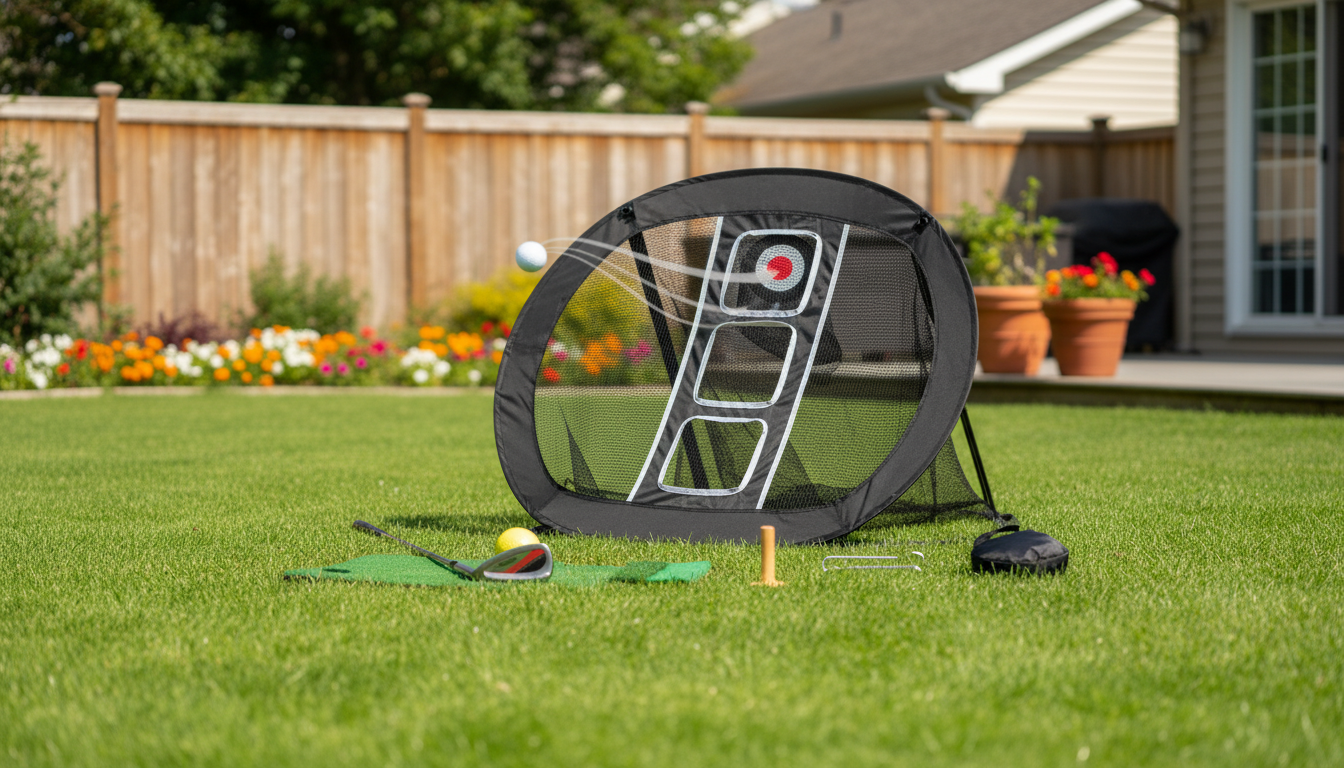
A portable chipping net makes it easier to practice short-game shots at home without turning the yard into a ball-hunt. This pop-up hitting aid is designed for quick setup, simple storage, and repeatable chipping drills that build touch and distance control. When the range is closed, the practice green is packed, or time is tight, a backyard net keeps the most important part of scoring—your short game—moving in the right direction. For more guidance, see I Tested 5 New Golf Practice Nets And One Really Stood Out.
If you’re building a reliable “get it on the green” motion, a net creates a clear target and a predictable routine. The goal isn’t just to hit balls—it’s to hit intentional shots with a repeatable setup and a consistent strike.
A good rule is to set up like you’re planning to miss once or twice. Give yourself extra margin, especially early on, and pick ball types that match your space. For general short-game fundamentals and drill ideas, the PGA of America short game resources are a helpful reference for structured practice.
Short-game gains come from feedback and intention. This quick plan is built around four mini-drills that fit most backyards and help you track improvement session to session.
Keep notes simple: date, ball type, drill score. Over a few weeks, that tiny log makes it obvious what’s improving (and what isn’t), without needing a launch monitor.
Backyard practice is a great place to learn how trajectory changes with club selection. If the net is close, practice “quiet” swings: shorter backswing, steady tempo, and a finish that matches the shot length. That’s the same blueprint for solid contact on the course—just in a more controlled environment.
Use the ball type that matches your space, noise tolerance, and realism needs. If practicing indoors or near property lines, prioritize safety over spin realism. For more detail on how balls are categorized and evaluated, the USGA golf ball overview provides helpful context.
| Ball type | Best for | Pros | Trade-offs |
|---|---|---|---|
| Limited-flight foam balls | Small yards, indoor garages | Safer, quieter, easy to retrieve | Less realistic feel and rollout |
| Limited-flight plastic balls | Medium yards | More feedback than foam, still safer than real balls | Can skid; flight may wobble in wind |
| Real golf balls | Large safe areas only | Most realistic contact, flight, and spin | Higher risk; requires strict safety zone |
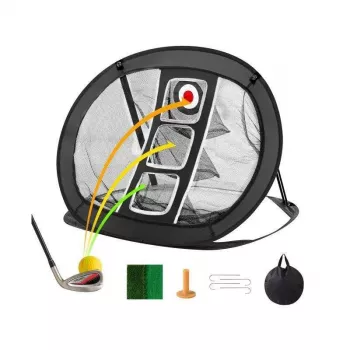
For golfers who want a quick, repeatable backyard routine, the Portable Golf Chipping Net for Backyard Swing Practice – Pop Up Golf Hitting Aid is an easy way to create a consistent target and cut down on time spent retrieving balls.
If you also like structured routines and tracking progress (on and off the course), the Money Mindset Makeover: Step-by-Step Guide to Financial Well-Being | Digital eBook for Personal Growth & Financial Confidence | Learn to Improve Your Financial Well-Being offers a guided format that pairs well with goal-based habits—similar to keeping a simple practice log and sticking to small, repeatable improvements.
Yes, if ceiling height and surrounding clearance are adequate. Use foam or limited-flight balls, protect nearby walls/objects, and keep swings compact to reduce risk.
Start around 6–10 feet for basic chips and move farther as control improves. The best distance is one that keeps misses safe while still giving you a meaningful target.
It’s best for chips and short pitches. Full swings typically require much more space, stronger netting, and a larger safety buffer than most pop-up chipping nets are designed for.

Leave a comment