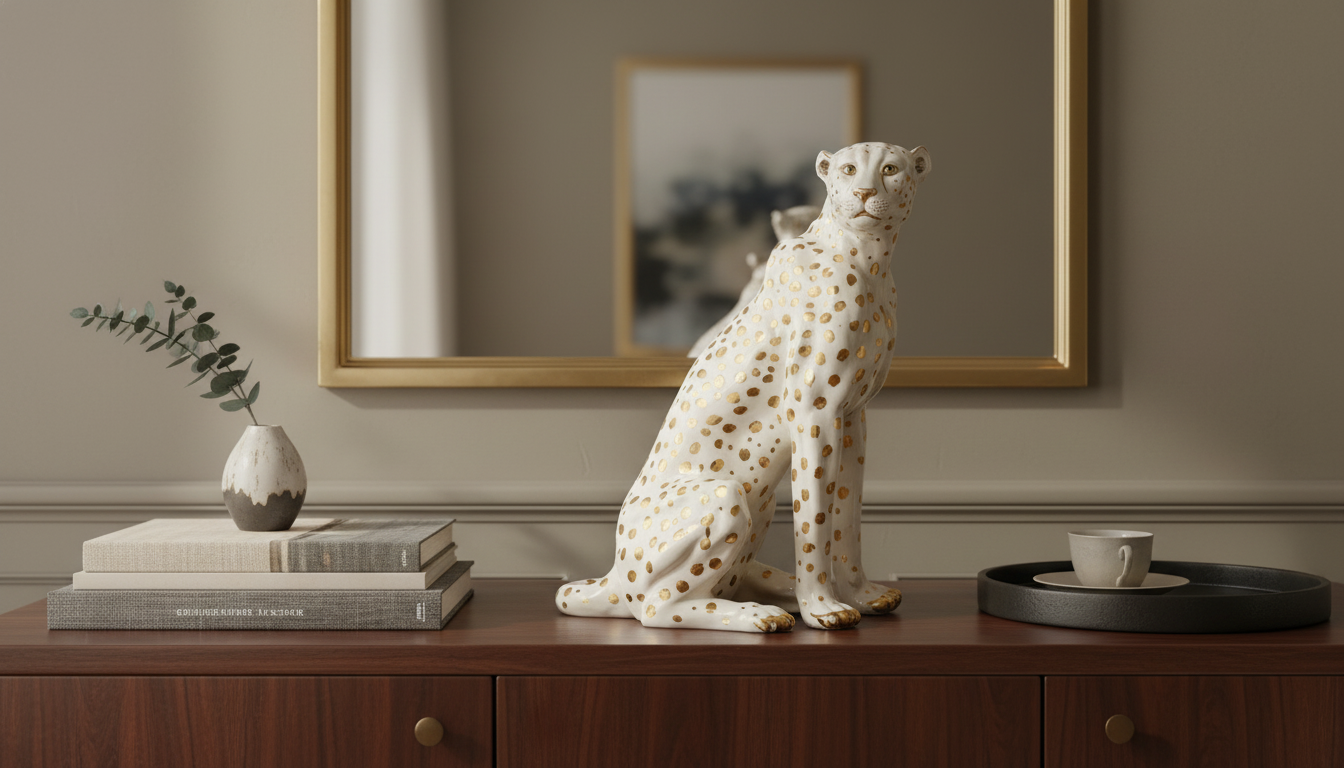
A leopard sculpture adds instant drama and refinement—equal parts wildlife inspiration and gallery-style décor. This piece is designed to stand out as a focal point on a console, mantel, bookshelf, or coffee table, bringing a sleek, confident presence to modern, classic, and eclectic interiors. With the right placement and a restrained supporting cast, a leopard form can read less “theme décor” and more “collected object,” the kind of accent that makes a room feel intentionally finished.
Elegance in sculptural décor comes down to restraint, proportion, and presence. A leopard, as an animal motif, naturally communicates strength and poise—qualities that translate beautifully into tabletop styling when the design is handled with care. (For a quick background on the animal itself, see Encyclopaedia Britannica’s leopard overview.)
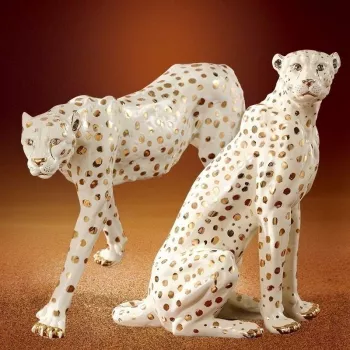
For a statement accent that leans refined and gallery-like, explore the Elegant Leopard Sculpture.
Before choosing a spot, take a moment to “audition” the sculpture with your room’s sightlines and surfaces. Small tweaks—angle, height, and nearby objects—make the difference between intentional styling and visual clutter.
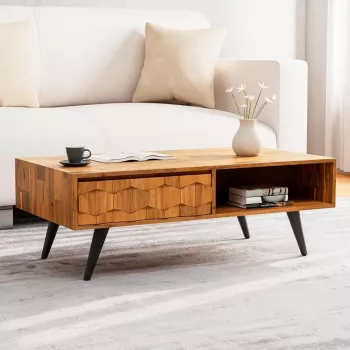
If the sculpture will live on a coffee table, choose a surface with clean lines so the silhouette stays crisp—something like the Stylish Wood Coffee Table creates a warm, grounded stage without stealing focus.
A leopard sculpture can move easily from space to space as your home evolves. The most successful placements give it enough negative space to feel curated while still connecting it to nearby materials and shapes.
| Location | Best Surface | Styling Tip |
|---|---|---|
| Entryway | Console or credenza | Pair with a mirror and keep surrounding objects low-profile |
| Living room | Coffee table or sideboard | Use a single stack of books or a tray to frame it |
| Office | Shelf or cabinet top | Balance with one plant or a clean-lined desk lamp |
| Bedroom | Dresser or nightstand | Add soft texture nearby (linen, ceramic) to contrast the sculpture |
| Dining room | Sideboard | Let it stand alone with one tall element (vase) placed at a distance |
The goal is to let the leopard be the hero without turning the surface into a crowded display. Think in terms of shapes (tall, mid, low), then edit until the sculpture reads clearly from across the room.
A practical approach for coffee table styling is to place the sculpture partially on a tray or next to a single book stack—this “frames” it and prevents small items from drifting too close.
Thoughtful care preserves the finish and keeps the sculpture looking crisp and intentional over time. For general best practices similar to museum handling, the Metropolitan Museum of Art’s collections care guidance is a helpful reference point.
For a bold, refined option that’s ready to become a focal point, consider the Elegant Leopard Sculpture.
Entryways, living rooms, offices, bedrooms, and dining rooms all work well—especially on consoles, shelves, coffee tables, and sideboards. Leave a little negative space around it so it feels more like a gallery object than a crowded accessory.
Dust with a soft, dry microfiber cloth and avoid abrasive pads or harsh chemicals. Keep it away from intense sunlight, heat sources, and high humidity; felt pads can help protect furniture surfaces.
Match the scale to the surface and keep enough breathing room so it doesn’t feel cramped. Consider sightlines from the doorway and keep surrounding décor lower and simpler, using a tray or a small book stack to frame the piece.


Leave a comment