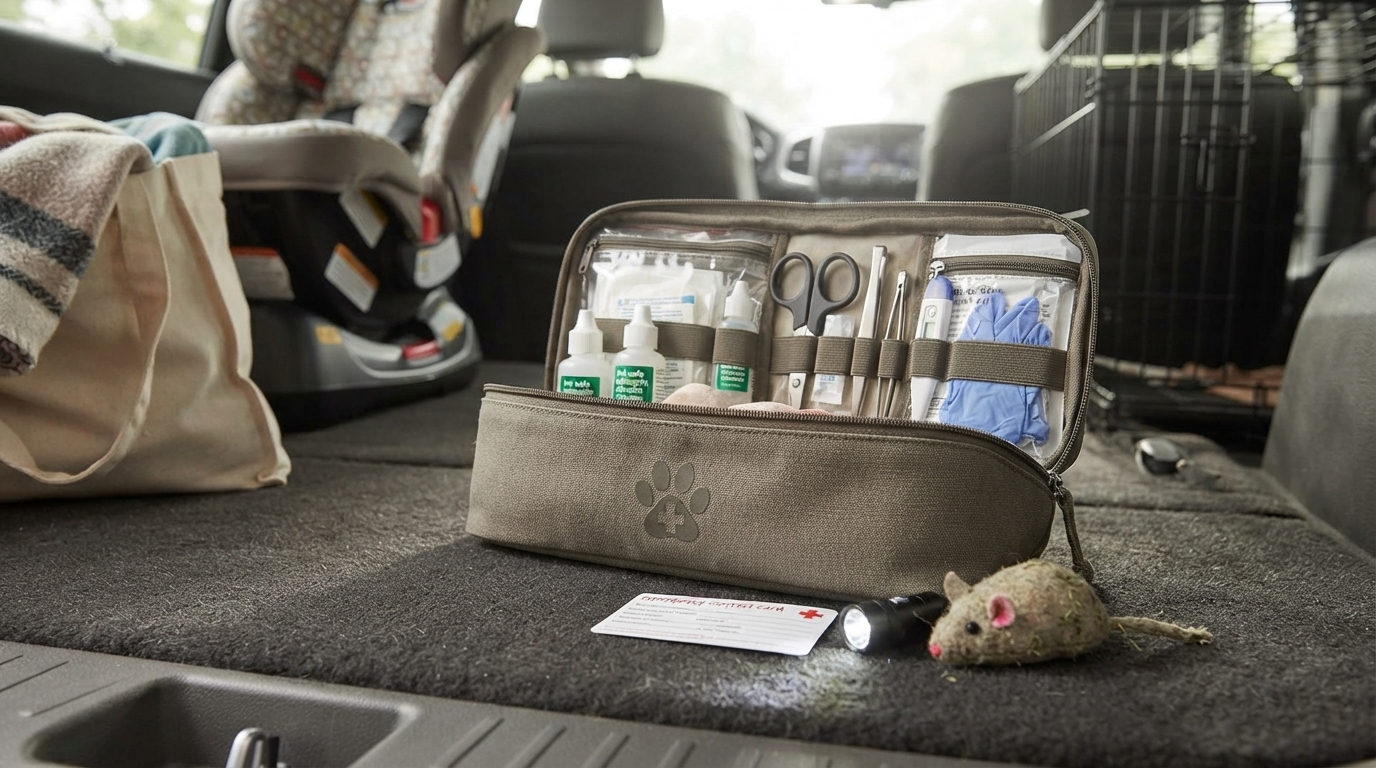
A well-stocked cat first aid kit should cover four basics: stopping bleeding, cleaning wounds, protecting injured areas, and keeping your cat stable until a veterinarian can help. Choose compact, cat-safe supplies and store everything in a hard-sided, clearly labeled container.
Include sterile gauze pads, non-stick wound pads, and a roll of gauze for covering cuts or scrapes. Add saline wound wash or sterile saline to gently flush debris. Keep a pet-safe antiseptic (such as chlorhexidine solution) for disinfecting around minor wounds, plus cotton balls or swabs for careful application. Avoid hydrogen peroxide for routine wound cleaning unless a vet instructs it.
Pack self-adherent wrap (vet wrap), medical tape, and blunt-tip bandage scissors. A small soft muzzle or an e-collar can prevent licking or biting during treatment (many cats will try). Nitrile gloves are useful for hygiene, and a clean towel can help safely wrap and steady a stressed cat.
Useful tools include tweezers (for removing visible debris), a digital thermometer with lubricant, and a small flashlight for checking paws, mouths, and ears. Add a tick remover if your cat goes outdoors. A disposable instant cold pack can help reduce swelling after minor bumps.
Include a pet-safe styptic powder or pencil for nail bleeds, and a few doses of any vet-prescribed medications your cat relies on (stored as directed). Add a spare leash/harness or carrier label, plus a printed card with your veterinarian’s number, the nearest emergency clinic, and your cat’s medical details. For a broader approach to cat wellness and safety planning, see the full guide here: https://fancinella.com/guide-5-in-1-pet-care-bundle-vaccines-cat-first-aid-temperament-holistic-pain-signs/.
Skip human pain relievers (like acetaminophen, ibuprofen, or aspirin) unless explicitly prescribed by a veterinarian. If your cat has trouble breathing, ongoing bleeding, suspected poisoning, heatstroke, seizures, or major trauma, go to an emergency vet immediately.
Rinse the area with sterile saline, apply a pet-safe antiseptic around the wound, and cover with a non-stick pad and light wrap if your cat will tolerate it. If the wound is deep, punctured, swollen, or won’t stop bleeding, seek veterinary care right away.







Leave a comment