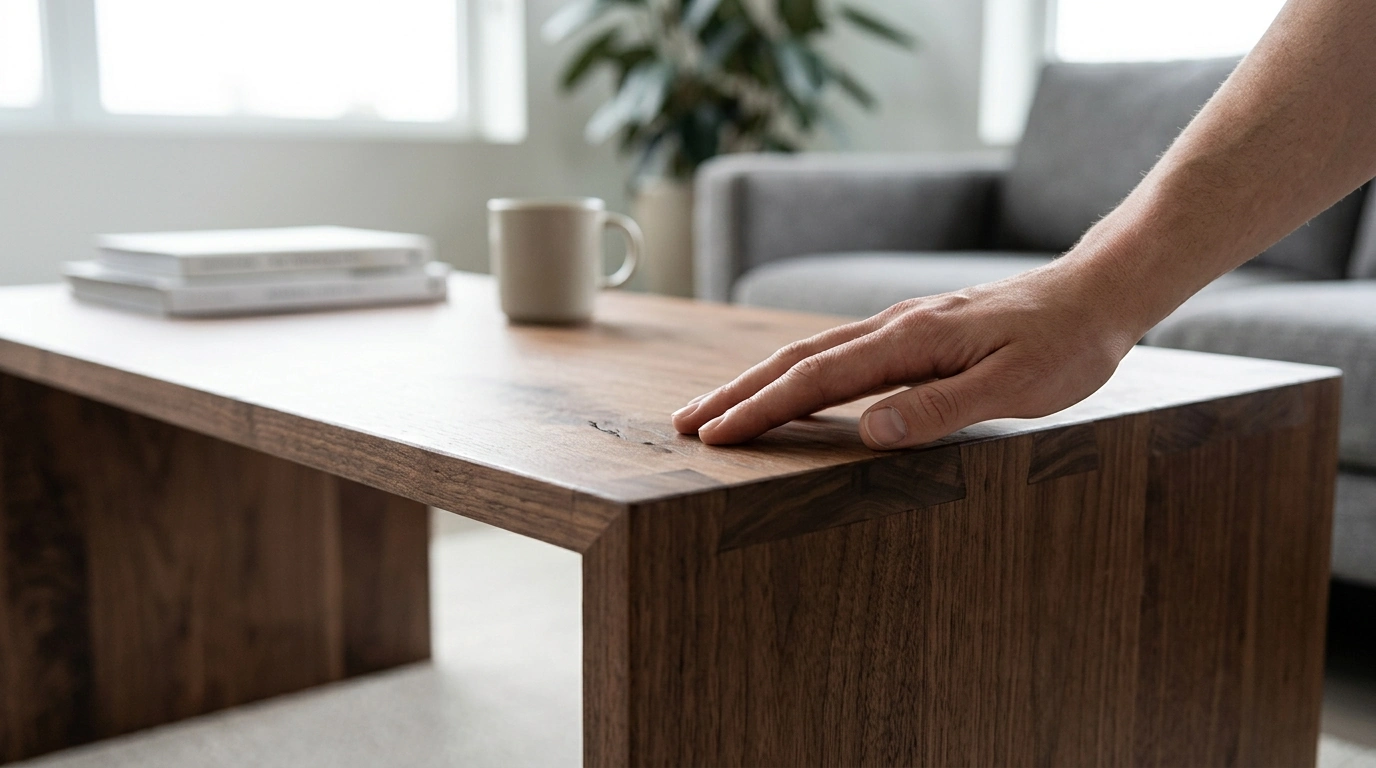
A solid wood coffee table typically costs anywhere from about $250 to $2,000+, with most well-made options landing in the $400–$1,200 range. The wide spread comes down to wood species, construction quality, size, and finish details—not just the “solid wood” label.
Budget solid wood ($250–$500): Often smaller tables or simpler designs. You may see softer woods (like pine or rubberwood) or mixed construction (solid top with solid legs). Expect fewer joinery details and simpler finishes.
Mid-range ($500–$1,200): The sweet spot for many living rooms. Commonly features hardwoods like oak or acacia, sturdier bases, better finishing, and cleaner craftsmanship. This range is where you’ll most often find a durable, “buy-it-for-years” table.
Premium ($1,200–$2,000+): Larger statement pieces, high-end hardwoods (like walnut), thicker tops, refined joinery, and custom-like finishing. Handmade or small-batch production can push prices higher.
Wood species: Walnut and white oak generally cost more than pine. Grain clarity and board selection also matter—uniform, knot-free surfaces tend to be pricier.
Construction: Real joinery (mortise-and-tenon, dovetails) and a heavier base usually increase price, while simpler screw-and-bracket builds tend to cost less.
Size and thickness: A thick, wide slab top costs more in both material and shipping. Lift-top mechanisms or integrated storage also add to the total.
Finish and detailing: Multi-step staining, hand-rubbed oils, or protective topcoats add labor and can improve longevity, especially for everyday use.
For help narrowing down style, size, wood tone, and practical features, see the full guide: https://fancinella.com/guide-choose-stylish-wood-coffee-table/.
Solid wood uses real wood throughout the visible parts, while veneer uses a thin layer of real wood over a core (often plywood or MDF). Veneer can look beautiful and stay stable, but solid wood is easier to refinish and can feel more substantial.





Leave a comment