
Poetry gets much easier to begin when it’s broken into small, repeatable steps: noticing, drafting, shaping, and revising. Instead of trying to “write something profound” on command, you can build confidence by capturing one clear moment, experimenting with form, and returning to the page in short sessions. Over time, creative expression starts to feel natural—less like a performance and more like a practice.
The hardest part of writing poems is often the expectation that every line must be deep, polished, or original from the start. A more workable goal is to catch one vivid moment: a sound in a hallway, the sting of cold air, a sentence someone said that stayed with you.
When you don’t know what to write, a routine gives you a reliable path forward. The goal is movement, not perfection.
Reading aloud is especially useful because poetry is physical: it lives in breath, rhythm, and the ear. If a line is hard to say, it often needs tightening.
You don’t need a big vocabulary to write strong poems. Small craft moves can turn plain notes into vivid lines.
For additional examples and inspiration, browsing poets and forms at Poetry Foundation and craft resources at the Academy of American Poets can help you hear how different approaches work on the page.
Forms aren’t cages; they’re containers. They can reduce decision fatigue and help you generate momentum—especially when you’re new.
| Form | Typical length | What it teaches | Easy starting tip |
|---|---|---|---|
| Free verse | Any | Voice, line breaks, imagery | Write 10 lines, then cut 3 and reorder |
| Haiku (3 lines) | 3 lines | Precision, observation | Focus on one image and one shift |
| Acrostic | Any | Structure, idea generation | Use a single word as the spine (e.g., “HOME”) |
| List poem | 10–20 lines | Rhythm through repetition | Repeat a phrase every 3 lines |
| Found poem | Any | Editing as creativity | Circle strong words, then connect them with minimal glue |
Inspiration is easier to find when you treat it like noticing, not waiting. A few small habits can keep your notebook stocked.
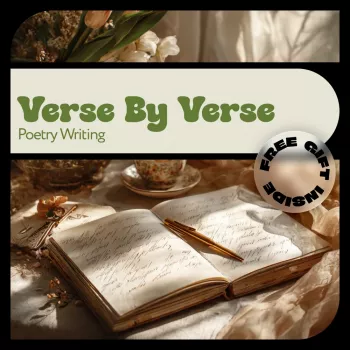
If you prefer guidance you can follow week by week, a structured resource can make practice feel simpler and more consistent. Verse by Verse Poetry Writing Ebook is designed for new writers who want help with creative expression, poetic forms, and building a steady writing habit—without turning poetry into a confusing rulebook.
For readers who also like structured exercises around mindset and consistency, Money Mindset Makeover: Step-by-Step Guide to Financial Well-Being offers a similarly step-by-step format that pairs well with daily writing routines: short sessions, clear progression, and practical reflection.
Start with short observational drafts: write 8–12 lines about one clear image or moment, focusing on concrete details and strong verbs. Use a simple daily routine and allow messy first drafts—revision is where the poem tightens.
Free verse is often easier because it reduces rule pressure and helps you develop voice, imagery, and line breaks. Rhyme can be added later once clarity and vivid language feel more natural.
Keep sessions to 5–15 minutes, use micro-moments as material, and write to a timer or a single song. An image bank or two-column note system makes it easier to start quickly without waiting to “feel inspired.”






Leave a comment