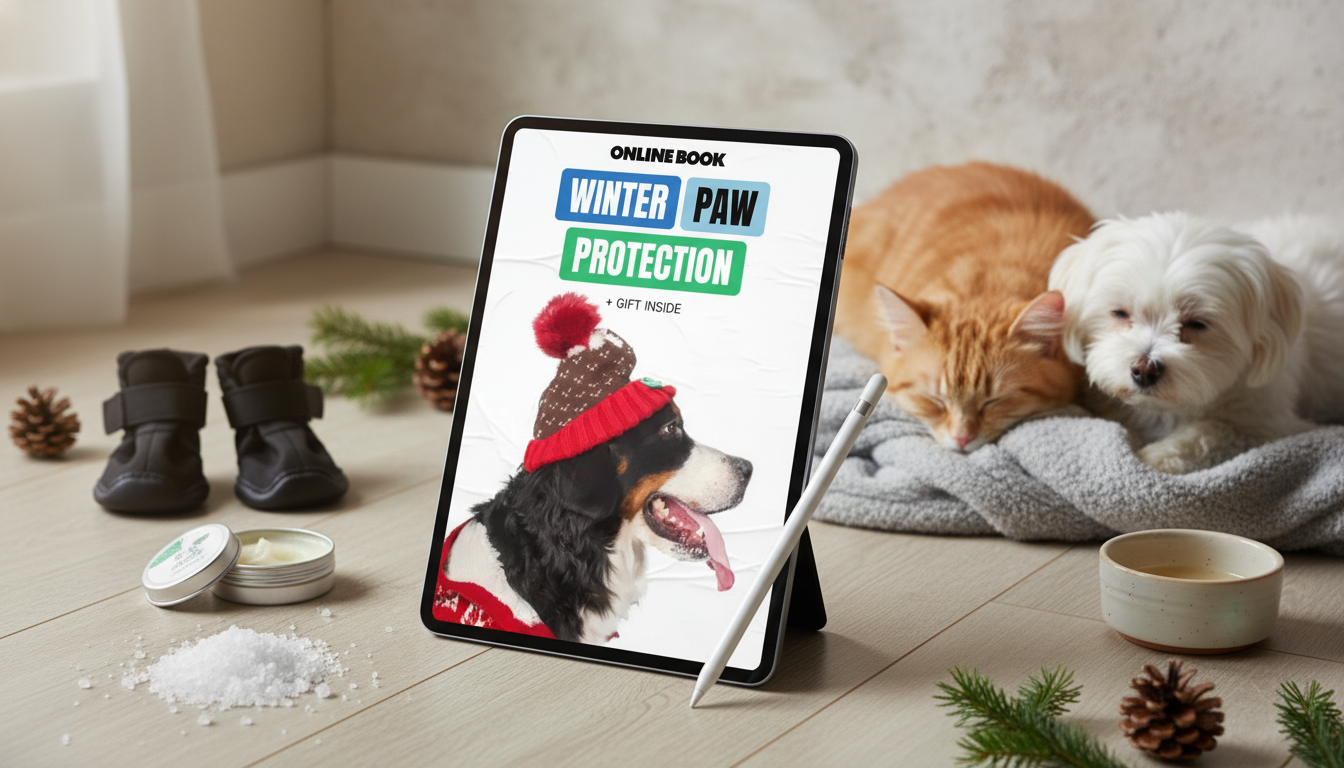
Cold weather can be rough on paws: ice, road salt, slush, and dry indoor heat all increase the risk of cracking, irritation, and painful injuries. A simple routine before, during, and after outdoor time helps dogs and cats stay comfortable all season—whether they take long winter walks or just quick potty breaks.
Even hardy pets can struggle when winter conditions stack up day after day. Paw pads are tough, but they’re not invincible—especially when the ground alternates between wet slush and freezing pavement.
For additional cold-weather safety guidance, see the American Veterinary Medical Association (AVMA) cold weather safety tips.
Spotting trouble early can prevent a minor irritation from turning into a painful limp.
| Hazard | Prevention before going out | After-walk care |
|---|---|---|
| Road salt & de-icers | Use pet-safe routes; consider booties; trim toe fur to reduce residue sticking | Rinse/wipe paws; dry well between toes; discourage licking |
| Ice & sharp snow crust | Shorten exposure time; choose cleared paths; booties for long walks | Check pads for nicks; clean and monitor for swelling |
| Dry cracking | Apply a pet-safe paw balm before exposure; limit time on very cold ground | Moisturize pads; keep nails trimmed to reduce pad strain |
| Snowballs between toes | Trim fur around toes; booties for fluffy-footed dogs | Warm water rinse; dry thoroughly; remove clumps gently |
The AKC’s winter paw care guidance also highlights how quickly salt and ice can irritate pads—especially on longer outings.
A two-minute prep can dramatically reduce how much winter “stuff” sticks to paws.
If you want a step-by-step routine you can reuse after every storm, Winter Paw Protection – Practical Winter Paw Protection Tips ebook for Dogs & Cats | Cold Weather Paw Care Guide lays out simple checklists for prep, cleanup, and troubleshooting common winter paw problems.
For more general winter safety reminders (including how cold affects vulnerable pets), the ASPCA’s cold weather safety tips are a helpful reference.
If your dog tends to track in slush and then overgroom or chew at irritated feet, having a calm, contained rest spot can help while paws dry. A furniture-style crate with room for towels and supplies—like the 86.6″ Wooden Dog Crate for Two Dogs with Bowls and Storage Drawer—can make it easier to manage post-walk cleanup in multi-dog homes.
Yes—road salt and de-icers can irritate skin and, in some cases, cause chemical burns. If a pet licks residue off their paws, it may also trigger stomach upset, so rinsing or wiping paws after walks is a smart habit.
They can help by adding a protective barrier against salt and drying, especially when applied before heading out and touched up after cleaning. Choose pet-safe formulas and remember that balm doesn’t replace rinsing when paws contact de-icers.
Trim excess fur around the toes, consider booties for long-haired or “fluffy-footed” dogs, and shorten time in wet snow when possible. After walks, a warm-water rinse followed by thorough drying helps remove clumps before they tug at skin.






Leave a comment