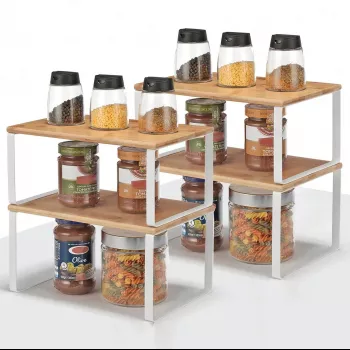
Crowded cabinets and cluttered countertops usually come down to one problem: not enough vertical space. A stackable, expandable shelf organizer set adds an extra “level” wherever items pile up—so mugs, plates, spices, pantry staples, or cleaning supplies become easier to see, reach, and keep tidy. Instead of reshuffling stacks every time you need one bowl or one jar, you get clear zones with built-in breathing room.
Adding a second tier is one of the fastest ways to make a kitchen feel more functional without renovating. You’re not changing the cabinet—you’re changing how the cabinet works.
That visibility also supports smarter food management—when you can actually see what you have, you’re more likely to rotate items and use them before they expire. For practical storage guidance (especially for refrigerated and pantry staples), the USDA FoodKeeper App is a helpful reference.
A mixed-material organizer looks at home whether it’s hidden behind a cabinet door or sitting out on a countertop. Metal brings structure; wood brings warmth—so it reads more like intentional decor than a purely utilitarian rack.
| Location | Best for | Arrangement tip |
|---|---|---|
| Upper cabinets | Mugs, glasses, small bowls | Use one shelf to separate everyday items from occasional-use pieces |
| Pantry shelves | Cans, snacks, boxes, jars | Expand to match shelf width; keep labels facing forward for quick scanning |
| Countertop | Coffee/tea setup, oils, frequently used seasonings | Stack two to create a tiered station without taking extra footprint |
| Under-sink cabinet | Sponges, dish soap refills, cleaning bottles | Use the extra level for smaller items that get lost behind tall bottles |
| Utility/linen cabinet | Paper goods, toiletries, first-aid supplies | Dedicate one shelf per category to prevent mixed piles |
The biggest advantage of having four pieces is flexibility. You can build one “super station” in a pantry or distribute order across the whole kitchen so every cabinet gets easier to use.
For a cohesive look, keep like items together and repeat the same arrangement logic: “short on top, tall beside or below.” That simple rule prevents wasted headroom and makes everything readable at a glance.
A great organizer still needs the right fit. Two minutes of measuring prevents the most common frustrations: doors that don’t close, shelves that can’t expand fully, or tiers that block the items you meant to highlight.
For general kitchen cleaning and sanitation tips (especially around food-contact surfaces and safe cleaning habits), NSF International’s consumer resources are a reliable place to start: NSF International home and kitchen sanitation resources.
Yes—most do, as long as you measure cabinet width, depth, and the vertical clearance between shelves. Expandability helps match different shelf widths, and stacking works best when you have enough height for items both on the lower level and the raised tier.
Mugs, plates, bowls, spices, cans, snack boxes, jars, and many cleaning supplies are great fits. For the clearest visibility, place shorter items on the elevated tier and keep taller bottles or canisters beside the organizer or on the lower level.
Start by cleaning the cabinet surface so the organizer sits flat, then distribute weight evenly across the top. If the surface is slick, add non-slip pads or a thin shelf liner underneath for extra grip.





Leave a comment