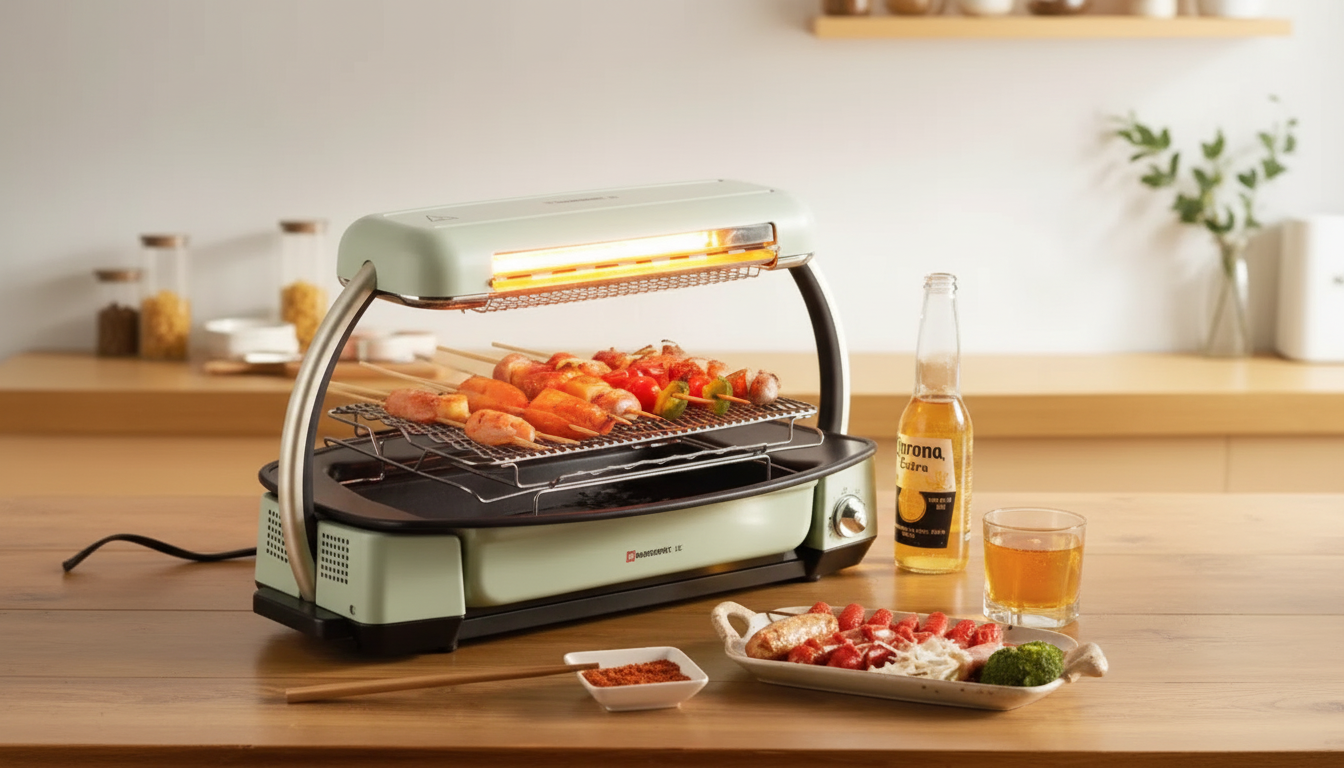
An indoor electric grill can deliver the char-grilled experience without stepping outside or filling the kitchen with smoke. With a non-stick surface and adjustable temperature control, it’s built for weeknight dinners, countertop entertaining, and apartment-friendly cooking—while keeping cleanup simple and results consistent. If outdoor grilling isn’t practical (or allowed), an indoor grill helps keep the ritual: preheat, sear, flip, and serve—minus the weather and the flare-ups.
If you’re looking for a straightforward option designed around these benefits, Effortless Indoor Electric Grill – Non-Stick, Smokeless BBQ Stove with Temperature Control is a practical countertop pick for everyday BBQ-style meals.
It’s also a strong fit for “small batch” entertaining—two people making dinner together, friends building tacos at the counter, or a quick Sunday brunch spread without a sink full of pans afterward.
A good non-stick grill plate changes the whole indoor-grilling experience. Instead of fighting stuck-on marinades or fragile fish, food releases more cleanly—especially once the plate is properly preheated and lightly oiled (if needed).
For the smoothest cleanup routine, wipe the plate once it’s warm (not hot) to remove excess grease, then wash after it cools. That small habit helps prevent baked-on residue and keeps the surface performing like new.
“Smokeless” indoor grills are designed to reduce visible smoke, not magically remove it in every situation. The cleanest results come from pairing the grill’s design with smart heat and ingredient choices.
For broader indoor comfort, the EPA’s guidance on improving indoor air quality is a helpful reference—especially if you cook frequently in a smaller space.
| Food | Best approach | Temperature strategy | Finish cue |
|---|---|---|---|
| Burgers | Preheat well, avoid pressing | Medium-high to start, then moderate | Well-browned outside; safe internal temp reached |
| Chicken breast | Even thickness, light oil | Moderate, steady heat | Juices run clear; safe internal temp reached |
| Salmon / fish | Minimal flipping, gentle tools | Moderate heat | Flakes easily; surface releases cleanly |
| Vegetables | Cut evenly, light seasoning | Moderate to medium-high | Tender-crisp with char marks |
| Skewers | Soak wooden sticks, rotate | Moderate heat | Even color on all sides |
Adjustable temperature control is where indoor electric grilling becomes reliably “repeatable.” Instead of guessing, you can build a simple pattern: preheat for color, reduce heat for thicker cuts, and finish with confidence.
For safe minimum internal temperatures, the USDA’s chart is a clear go-to reference: USDA Food Safety and Inspection Service: Safe Minimum Internal Temperatures.
For everyday indoor grilling that prioritizes easy release, reduced mess, and consistent heat, Effortless Indoor Electric Grill – Non-Stick, Smokeless BBQ Stove with Temperature Control fits the moment—especially when outdoor grills aren’t available, the forecast won’t cooperate, or you want a faster cleanup path after dinner.
To round out a cozy “cook-and-unwind” evening, pair your meal with a simple wind-down routine like the Essential Oils Relaxation Checklist – Simple Daily Ritual Guide for a calmer end to the day after the plates are cleared.
No—smokeless-style grills are designed to reduce visible smoke, but you can still get smoke at very high heat or when fat drips and burns. For the cleanest results, manage temperature, trim excess fat, and keep basic ventilation running.
It’s better to use silicone, nylon, or wooden utensils because metal can scratch the coating and shorten the life of the non-stick surface. Gentler tools also help delicate foods release without tearing.
Use a food thermometer, especially for poultry and ground meats, since color alone can be misleading. Let thicker items rest briefly after cooking so juices redistribute and temperatures finish leveling out.




Leave a comment