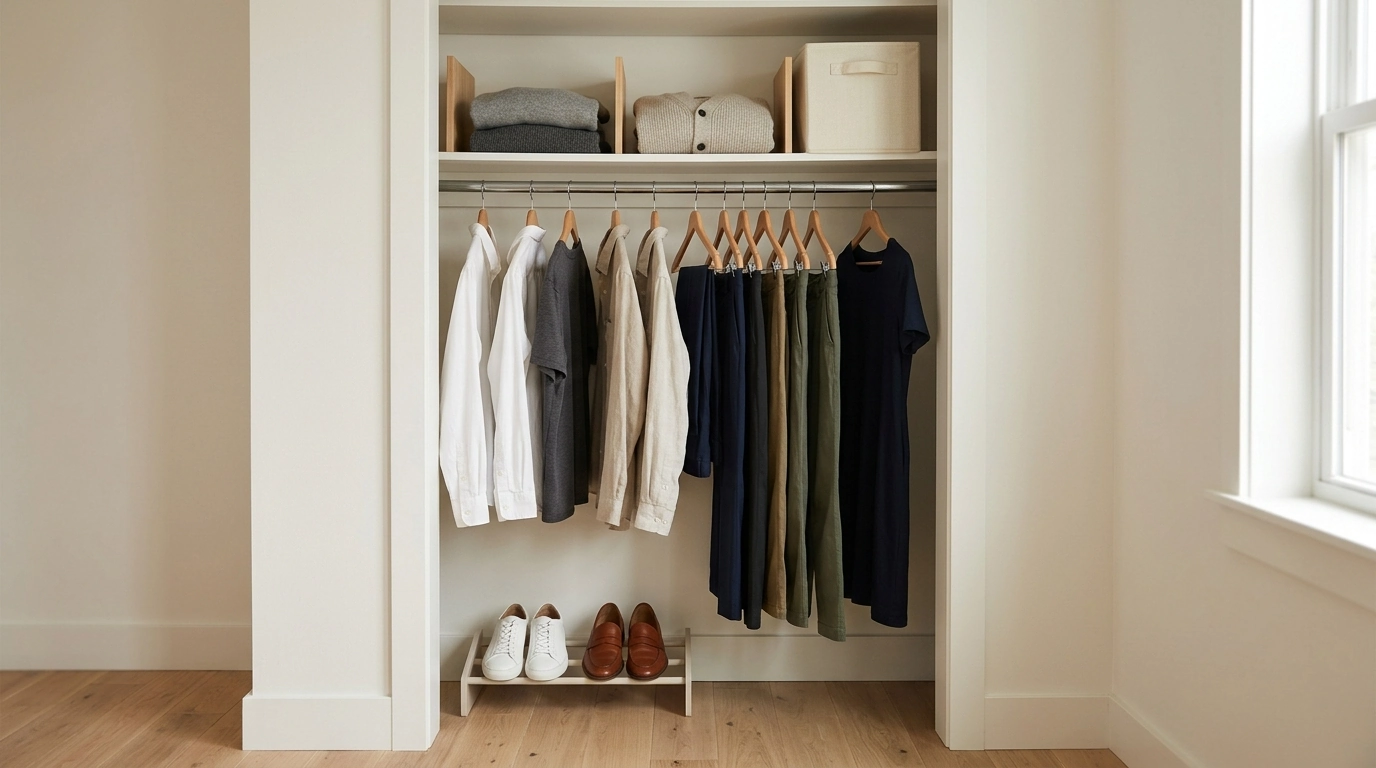
Small closets can feel cramped fast—especially when daily routines depend on finding outfits quickly and keeping items in good condition. A “luxe” approach focuses on fewer, better systems: clear zones, consistent hanger direction, smart vertical storage, and a simple decluttering rhythm that prevents rebound mess. Use the steps below to reset your closet in a weekend, then maintain it with a quick weekly sweep.
A fast audit prevents the classic mistake: dumping everything on the bed and losing steam halfway through. Keep the momentum by working in tight sections.
That last step matters: a small, specific goal helps you stop at a satisfying finish line instead of reorganizing endlessly.
Minimalism in a closet isn’t about owning a tiny number of items—it’s about keeping what earns its space. Make decisions once, then move on.
| Item type | Keep when… | Release when… | Store when… |
|---|---|---|---|
| Jeans | Fits comfortably and pairs with 3+ tops | Requires a belt to stay up or never feels right | Off-season weight (very heavy/light) |
| Shoes | Worn at least monthly and comfortable | Painful after 10 minutes or scuffed beyond repair | Special-occasion pairs used a few times a year |
| Handbags | Holds shape and gets regular use | Broken straps/lining or never suits outfits | Seasonal color or formal clutch |
| Knits | No pilling and layers well | Stretched cuffs/hem or itchy fabric | Bulky winter-only sweaters in summer |
If your “Release” pile is headed to donation, a quick check of Goodwill donation guidelines can prevent last-minute uncertainty at drop-off. For broader waste-reduction basics, the EPA’s Reduce, Reuse, Recycle guidance is a helpful reference.
Zoning is the difference between a closet that looks good for a day and one that stays calm. When every category has a home, clothes stop migrating.
| Zone | Best location | Storage method | Maintenance habit |
|---|---|---|---|
| Everyday tops | Eye level on main rod | Slim non-slip hangers | Weekly: re-center the “go-to” section |
| Bottoms | Adjacent rod space or lower bar | Clips or fold once over hanger | Monthly: remove stretched waistbands |
| Shoes | Floor or lowest shelf | Vertical rack or clear boxes | Weekly: return pairs to same spots |
| Bags & accessories | Top shelf + door space | Shelf dividers + hooks | Seasonally: swap out colors/styles |
| Special occasion | Outer edge of rod or garment bag | Breathable cover | Before events: quick try-on check |
“Luxe” storage doesn’t mean filling the closet with gadgets. It means choosing a few upgrades that reduce friction and protect your items.
When you’re ready to let go of items responsibly, Donation Town can help you locate donation options and pickup resources in many areas.
There’s no single number that fits everyone; the best starting point is what comfortably fits your space and supports your real weekly routine. Build a small “core” capsule you reach for often, then adjust seasonally based on climate, work needs, and lifestyle.
Time-block it: do a quick audit, declutter in sections, then set zones before adding any storage tweaks. Stop once the floor is clear and each category has a defined home—you can refine folding and color-order later.
Rely on habits and consistency: keep clear zones, use uniform hangers if possible, follow one-in/one-out, and do a five-minute weekly reset. Repurpose sturdy boxes or bins you already have before upgrading selectively.





Leave a comment