Furniture lasts longer when care is consistent and tailored to the material. A clear routine prevents dull finishes, fabric wear, water rings, and premature sagging—without turning cleaning into a weekend project. The goal is simple: remove grit early, manage light and moisture, and use the mildest method that gets the job done.
Most “aging” is really daily wear stacking up. These are the biggest accelerators—and the easiest to control.
Furniture care works best when the method matches the surface. If a piece is valuable, antique, or has an unknown finish, take the conservative route and test any product in a hidden spot first. For museum-style guidance on long-term preservation, see the National Park Service furniture care notes.
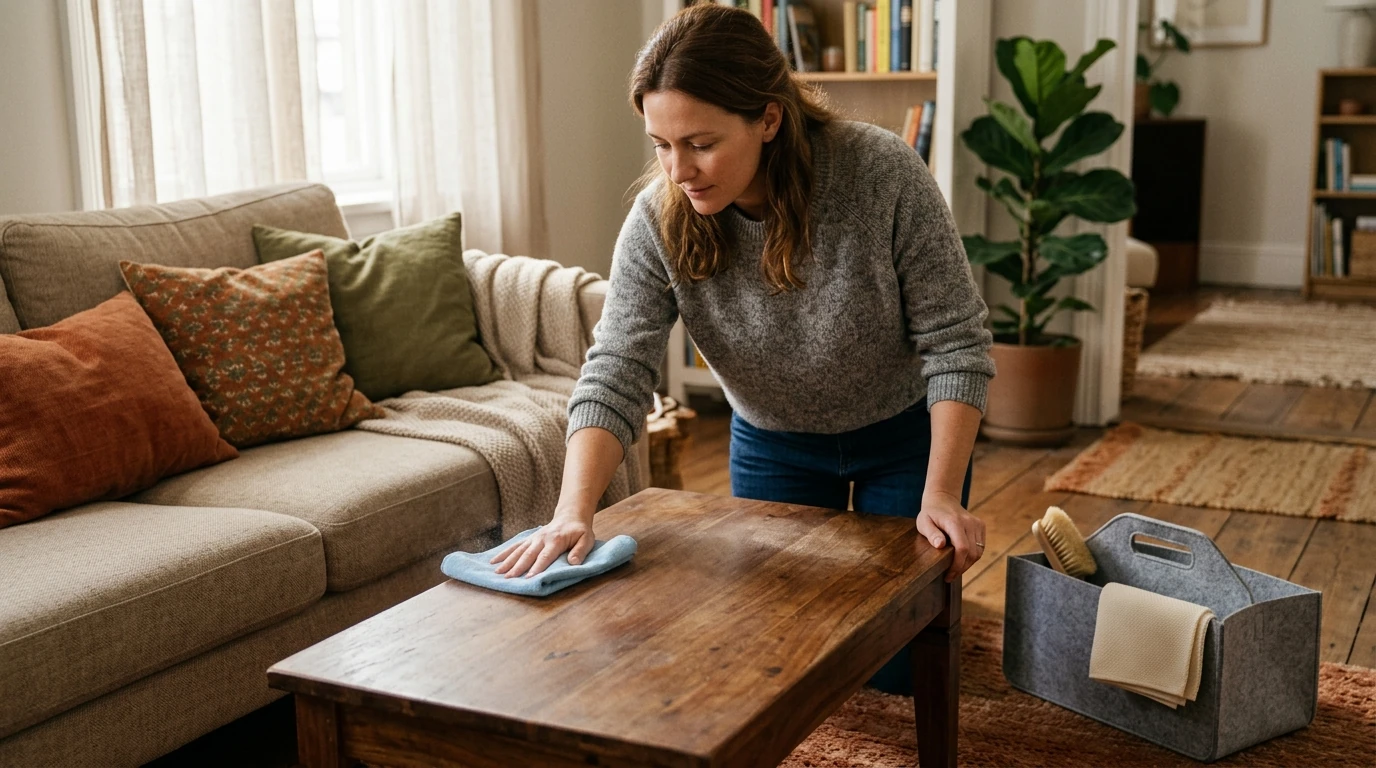
Dust with a microfiber cloth; damp-wipe only when needed and dry immediately to avoid water marks. Skip heavy “shine” sprays that can build up over time.
Avoid water; use a soft dry cloth and a product appropriate to the existing finish (wax vs. oil vs. lacquer). When in doubt, keep it dry and gentle rather than experimenting with multi-surface cleaners.
Dry-dust weekly; clean with a slightly damp cloth. Condition genuine leather periodically and keep it out of direct sun. For additional industry resources on leather cleaning and conditioning, reference the American Leather Chemists Association.
Vacuum with an upholstery attachment; treat spots based on the care code (W, S, WS, X). The biggest win is keeping abrasive grit out of seams, arms, and cushion edges.
Use non-abrasive cloths; for glass, avoid overspray onto wood frames. Wipe metal dry to prevent corrosion, especially around joints and decorative crevices.
Consistency matters more than intensity. Build a “tiny reset” into normal life and save deep cleaning for when it’s truly needed.
| Frequency | Wood & Veneer | Upholstery & Cushions | Leather/Faux Leather | Glass/Metal |
|---|---|---|---|---|
| Daily / As needed | Wipe spills immediately; use coasters and placemats | Blot spills; lint-roll pet hair | Wipe spills; keep away from heat sources | Wipe fingerprints; dry to prevent streaks |
| Weekly | Microfiber dusting with the grain | Vacuum seams, arms, and under cushions | Dry dust; wipe lightly with damp cloth | Gentle cleaner on cloth (not sprayed directly) |
| Monthly | Damp-wipe (lightly) then dry; check for sticky buildup | Spot-clean stains according to care code; rotate cushions | Clean with leather-safe cleaner if needed | Inspect for corrosion; tighten wobbly hardware |
| Seasonal | Assess sun exposure; refresh protection plan (shades, placement) | Deep vacuum; consider professional cleaning for heavy use | Condition genuine leather; check for cracking | Polish/restore only if appropriate; avoid abrasives |
Fast action prevents “permanent” problems. Keep clean cloths somewhere easy to reach—kitchen drawer, console table, or a small cleaning caddy.
Maintenance doesn’t have to feel like cleaning. These small defaults reduce wear without adding time to your schedule.
If you want a ready-to-use routine you can print or save on a phone, Keep Your Furniture Looking Fresh – Printable Home Care Checklist (Digital Download) keeps daily resets, weekly upkeep, and seasonal reminders in one place.
Handle spills and fingerprints as needed, do a quick weekly dusting/vacuuming, check for buildup monthly, and do seasonal tasks like cushion rotation and leather conditioning. Frequent light care keeps you from needing harsh products later.
Avoid soaking the surface, abrasive pads, ammonia-heavy cleaners, and silicone-based polishes that leave buildup. If you damp-wipe, use minimal moisture and dry immediately; test any new product in a hidden area first.
Vacuum first, then spot-treat based on the upholstery care code (W/S/WS/X) while blotting rather than scrubbing. Use minimal moisture and consider professional cleaning for delicate textiles or stains that keep returning.







Leave a comment