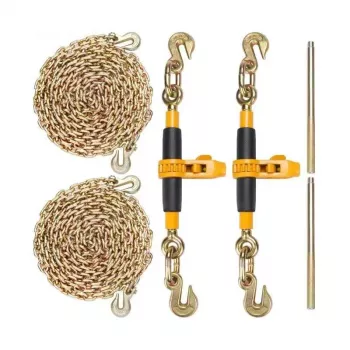
A heavy-duty ratchet chain binder set helps tension transport chain securely for hauling equipment, vehicles, building materials, and other high-weight cargo. The goal is simple: keep the load from shifting forward, backward, or side-to-side when you brake, turn, or hit uneven pavement. Below is a practical guide to how ratchet binders work, what to confirm before buying, safe step-by-step use, and how to keep your set dependable job after job.
A ratchet chain binder is a mechanical tensioner that pulls two points of chain together and holds that tension in place. When used correctly, it reduces slack, limits load movement, and helps keep tie-down angles stable throughout the trip.
Most tie-down problems come from mismatched components: a strong chain with an under-rated binder, a hook that doesn’t seat properly, or a take-up range that runs out before the load is tight. Confirm the basics before placing an order.
For regulatory context and best practices, review the FMCSA Cargo Securement Rules and industry guidance from the WSTDA.
Before you tighten the first click, take a minute to confirm the system is working as a system. This checklist helps prevent common fit and geometry issues.
| Item to Check | Why It Matters | What to Look For |
|---|---|---|
| WLL (binder and chain) | Prevents under-rated securement | WLL markings on hardware; use the lowest WLL in the system |
| Chain grade | Different grades have different strength and intended use | Transport applications commonly use Grade 70 chain; confirm binder is rated accordingly |
| Hook type | Affects seating, retention, and angle tolerance | Hooks that fit the chain and anchor points without side-loading |
| Tension range | Avoids running out of adjustment | Enough take-up to snug the load without forcing the ratchet past its safe travel |
| Anchor geometry | Reduces twisting and accidental unhooking | Straight-line pulls, secure tie-down points, and protected edges |
A ratchet binder is easier to control than a snap-over lever binder, but it can still store significant energy under tension. Build a consistent routine that keeps hands clear and hardware aligned.
For general workplace safety considerations around materials handling, consult OSHA’s materials handling guidance.
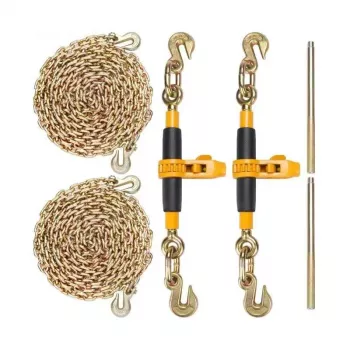
If controlled tightening and predictable release are priorities for frequent hauling, a dedicated ratchet binder set is a practical upgrade. The Heavy-Duty Ratchet Chain Binder Set is built for high-tension chain securement tasks where gradual take-up helps you dial in tension without sudden movement.
Ratchet binders tighten in smaller increments using a geared mechanism, which generally makes tensioning and release more controlled. Lever binders can be faster to set, but they may release abruptly and can be harder to manage under high tension.
Many loads use two binders for balance, but the right number depends on the load’s weight, length, tie-down points, and applicable securement requirements. Use enough tie-downs to prevent movement in all directions and follow the rules that apply to your hauling situation.
Light surface rust may be acceptable if the metal is intact and the mechanism operates smoothly, but deep pitting, stiff links, cracks, or deformation are warning signs. Replace any chain or binder with reduced cross-section, damaged welds, or worn ratchet components.




Leave a comment