Foot Calf Massager: Comfort, Recovery, and Circulation Support at Home
A foot calf massager can ease end-of-day heaviness, help after workouts, and make downtime feel restorative. The best results come from matching the massage style to your goals—relaxation, recovery, or swelling support—then using it with the right session length, intensity, and safety checks. Used thoughtfully, a consistent routine can help feet and calves feel more comfortable without turning every session into a “more pressure is better” moment.
- Daily fatigue: reduces the “tired feet” feeling after standing, walking, or long desk hours.
- Workout recovery: supports relaxation of overworked calves and arches after runs, lifting sessions, or long hikes.
- Comfort for tightness: encourages a looser sensation through the plantar area and calf belly.
- Swelling and heaviness: can complement movement, hydration, and elevation habits (not a medical treatment). For context on swelling causes, see Mayo Clinic’s overview of edema.
- Sleep wind-down: creates an evening “downshift” cue when used at low intensity and a steady time.
Common Massage Styles and Sensations
- Kneading/rolling: deeper, hands-like pressure that targets arches and the calf muscle belly.
- Compression: wraparound squeeze that feels like rhythmic hugging; often chosen for “heavy legs” days.
- Vibration: lighter stimulation that can work well as a warm-up or for people sensitive to deep pressure.
- Heat: a comfort add-on that may feel soothing when feet are cold or muscles feel stiff (avoid if contraindicated).
- Programs and timers: preset cycles help prevent overdoing intensity or duration. For background on massage approaches, see Cleveland Clinic’s massage therapy guide.
Quick guide to choosing a massage style
| Goal |
Best-fit features |
What it feels like |
Tips for best results |
| Relaxation after a long day |
Gentle kneading + optional heat + timer |
Warm, slow pressure that melts tension |
Use low intensity for 10–15 minutes; elevate legs afterward |
| Post-workout recovery |
Stronger kneading/rolling + multiple intensity levels |
Deeper, targeted pressure on calves and arches |
Start medium; increase gradually; hydrate and add light stretching |
| Heavy, swollen-feeling legs |
Compression cycles + adjustable fit |
Rhythmic squeeze up the calf |
Keep sessions shorter (10–12 minutes) and avoid excessive pressure |
| Sensitive feet |
Vibration or low-pressure modes |
Light stimulation without deep kneading |
Use a sock barrier and keep heat off if it irritates |
Key Features That Matter Before Buying
- Fit range: opening size and calf coverage determine whether it’s primarily a foot device or true foot-and-calf coverage.
- Intensity control: more levels make it easier to find comfortable pressure, especially for beginners.
- Massage coverage: distinct zones for arch, heel, and calf often feel more balanced than a single pressure point.
- Heat settings: ideally optional and independently controlled so you can massage without heat when needed.
- Noise level: important for evening use, shared spaces, or when winding down before sleep.
- Controls and readability: straightforward buttons or remote-friendly operation helps consistency.
- Hygiene: removable liners or wipe-clean materials keep it usable long-term.
- Auto shutoff: a comfort and safety must-have to reduce overuse.
How to Use It for Better Results
- Start low, then build: keep the lowest intensity for the first 2–3 sessions so your tissues adapt.
- Keep sessions reasonable: 10–15 minutes is a practical baseline; longer isn’t always better.
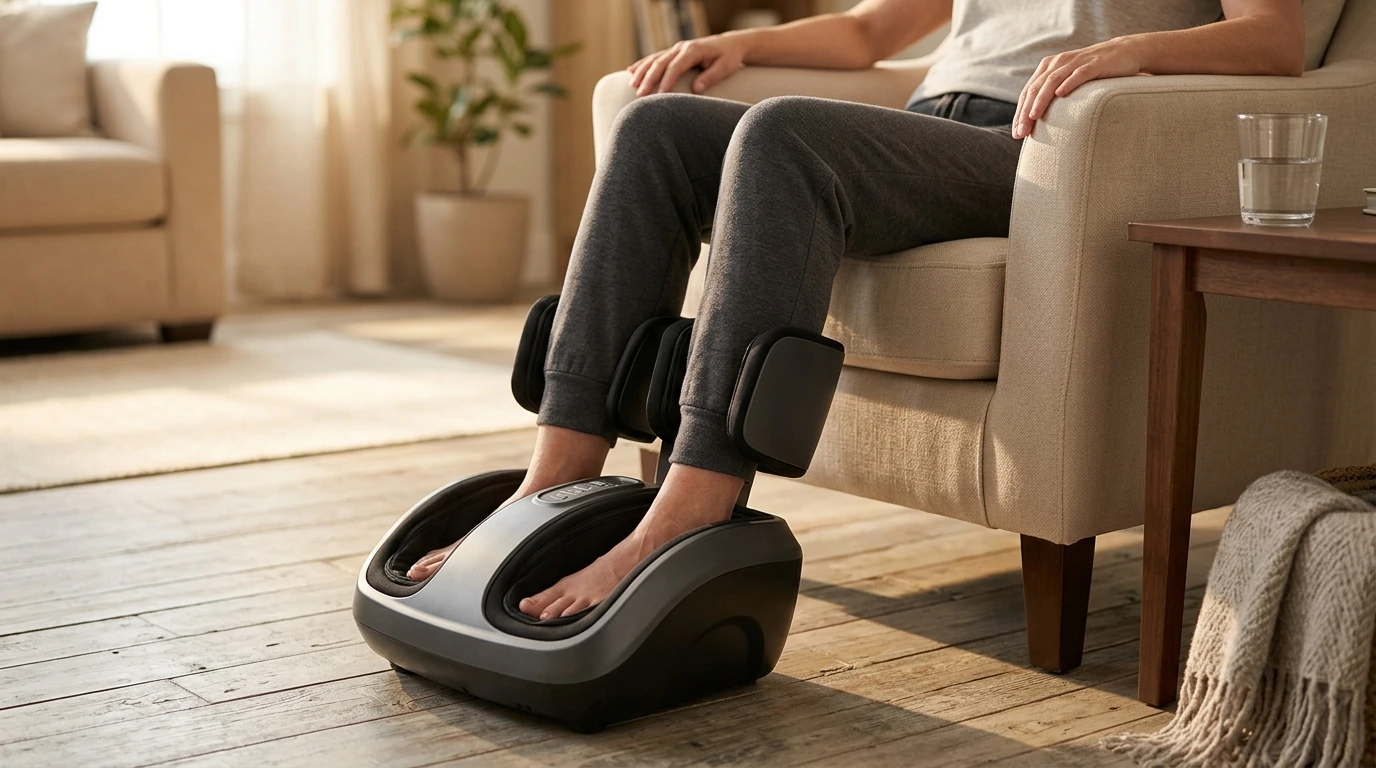
- Positioning: sit with knees near 90 degrees; for calf focus, keep feet fully seated in the unit.
- Breathing and relaxation: steady breathing reduces the urge to tense against pressure (which can make massage feel harsher).
- Pair with simple habits: add a short calf stretch afterward, then a brief walk to reintroduce movement.
- Consistency beats intensity: 3–5 sessions per week often feels better than sporadic high-pressure sessions.
Safety Notes and When to Skip a Session
- Stop if there is sharp pain, numbness, or increased swelling; discomfort should not escalate.
- Avoid use over open wounds, rashes, or active skin infections.
- People with a blood clot history, severe varicose veins, or vascular disease should consult a clinician before compression-style massage. Learn more about varicose veins at the NHS overview.
- Pregnancy, neuropathy, or reduced sensation: use only with professional guidance and conservative settings.
- Heat caution: skip heat if it causes redness or burning sensations, or if heat is medically contraindicated.
- If symptoms persist or worsen, seek medical evaluation rather than increasing intensity.
A Simple Routine for Desk Days vs. Active Days
Care, Cleaning, and Long-Term Comfort
Product Picks
FAQ
How long should a foot and calf massage session be?
For most people, 10–15 minutes is plenty—especially when starting out. Longer sessions can irritate tissues or leave you sore, while consistent moderate sessions tend to feel better over time.
Is it okay to use a foot calf massager every day?
Daily use is often fine if intensity stays moderate and there’s no pain, numbness, or worsening swelling. If tenderness builds, take a rest day and restart at a lower setting; follow medical guidance if you have circulation or nerve concerns.
Should heat be used with a foot and calf massager?
Heat can feel soothing, but it’s best when it’s optional so you can turn it off as needed. Avoid heat if it causes redness or burning sensations, or if you have reduced sensation or a condition where heat is not recommended.
Recommended for you





Leave a comment