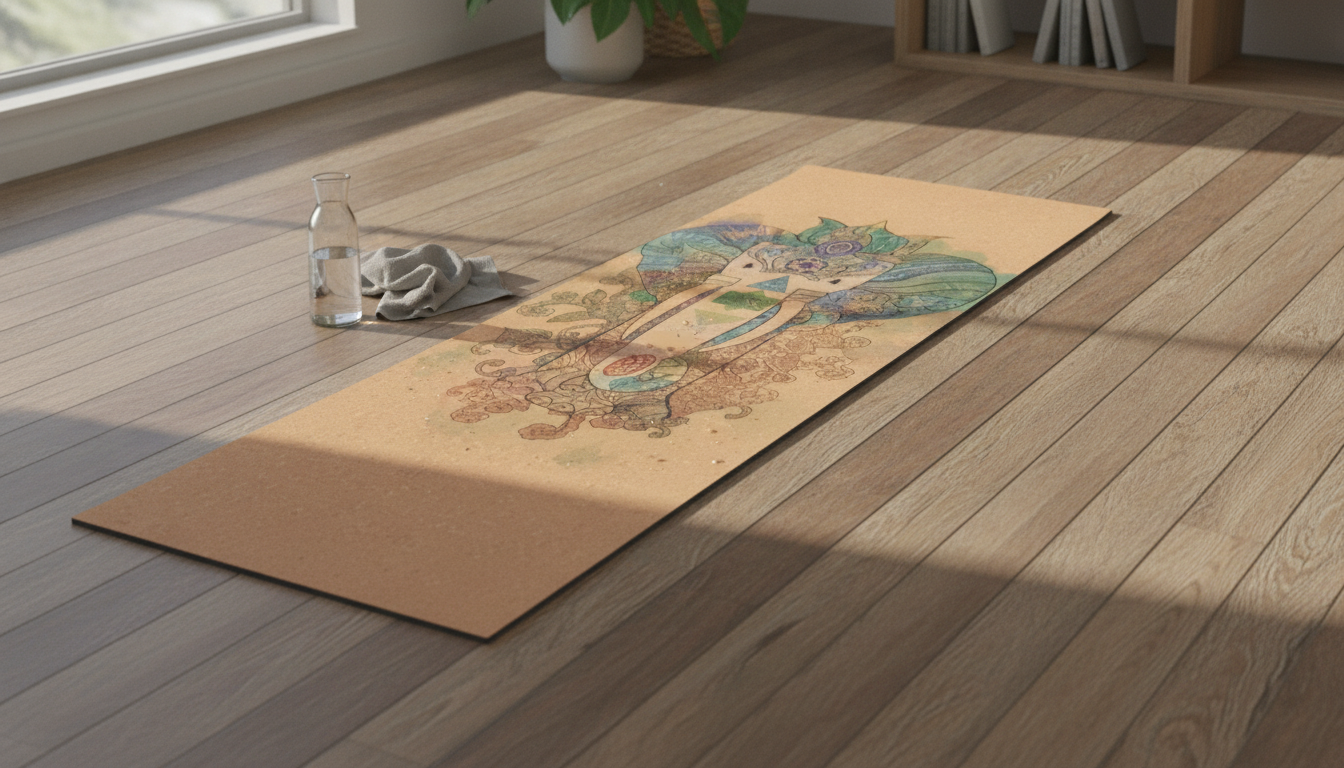
A cork yoga mat brings together stable traction, a warm natural feel, and a look that stands out. The Eco Printed Cork Yoga Mat is designed for confident footing during slow flows or sweatier sessions, while keeping your space looking calm and intentional. Cork’s lightly textured surface can feel grounded and steady, especially once practice heats up and moisture naturally increases grip. For more guidance, see The urbivore the ultimate cork yoga mat eco alternatives.
Cork has a distinctive “natural traction” that’s less about aggressive stickiness and more about secure, predictable contact. That difference is noticeable the first time hands land in Down Dog or feet set up for a long Warrior II hold. For further reading, see 13 Eco-Friendly & Non-Toxic Yoga Mats Without Plastic.
For a quick material overview, cork is harvested from bark and valued for its unique texture and resilience (learn more from Encyclopaedia Britannica’s cork overview).
If you want a mat that looks elevated in a living room corner but performs reliably when practice gets sweaty, cork is a strong option.
| Detail | Info |
|---|---|
| Product page | https://fancinella.com/eco-printed-cork-yoga-mat/ |
| Price | $93.47 USD |
| Stock status | In stock (limited quantity shown on-site) |
| Surface material | Cork (natural feel and texture) |
| Style | Printed design |
Grip is where cork tends to shine—especially when practice ramps up. If you’re used to a very tacky mat, cork can feel different at first, but many people prefer the stable contact without the “stuck” sensation during transitions.
The printed design can be more than decoration: it can act like a subtle alignment reference. Use pattern edges to check whether feet are evenly spaced, or whether hands are drifting wider than intended during Plank holds.
Cork mats often land in a sweet spot: firm enough for stability, but not harsh. That firmness is helpful for balance work and for building consistent positioning over time.
If you like to finish practice with seated breathing, having a supportive perch nearby can make a noticeable difference. A stable seat like the Household Retro Solid Wood Saddle Chair can help maintain an upright spine without fighting tight hips—especially when you want a calm, intentional setup.
Cork tends to stay relatively neutral in odor compared to some synthetic surfaces, but consistent drying and gentle cleaning matter. The goal is to clean without soaking the material.
| Surface | Dry grip | Sweaty grip | Feel under hands | Best use cases |
|---|---|---|---|---|
| Cork | Medium (can be boosted with light mist) | High | Natural, lightly textured | Warm/hot practice, balanced traction |
| Natural rubber | High | High (can feel very “tacky”) | Sticky and dense | Vinyasa, strong grip seekers |
| Microfiber top | Low to medium | High (needs moisture) | Soft, fabric-like | Hot yoga with towel-like feel |
| PVC | High | Medium to high (varies) | Smooth, sticky | Studio durability, strong tack feel |
For a simple post-practice ritual, the Essential Oils Relaxation Checklist – Simple Daily Ritual Guide can help structure a quick routine that feels consistent without becoming complicated.
Cork commonly grips better with moisture, so many people find it feels more secure as practice gets sweaty. If the mat feels a bit smooth at the beginning, a quick water mist can add immediate traction, and fully air-drying afterward helps keep the surface fresh.
Wipe it down with a lightly damp cloth after practice, and use mild soap diluted in water when needed. Avoid harsh chemicals and let the mat air-dry completely before rolling it up for storage.
Cork mats often feel firm and stable, which supports balance and alignment, but sensitive joints may want extra padding. A folded towel or a small knee pad can make kneeling poses and tabletop work more comfortable.






Leave a comment