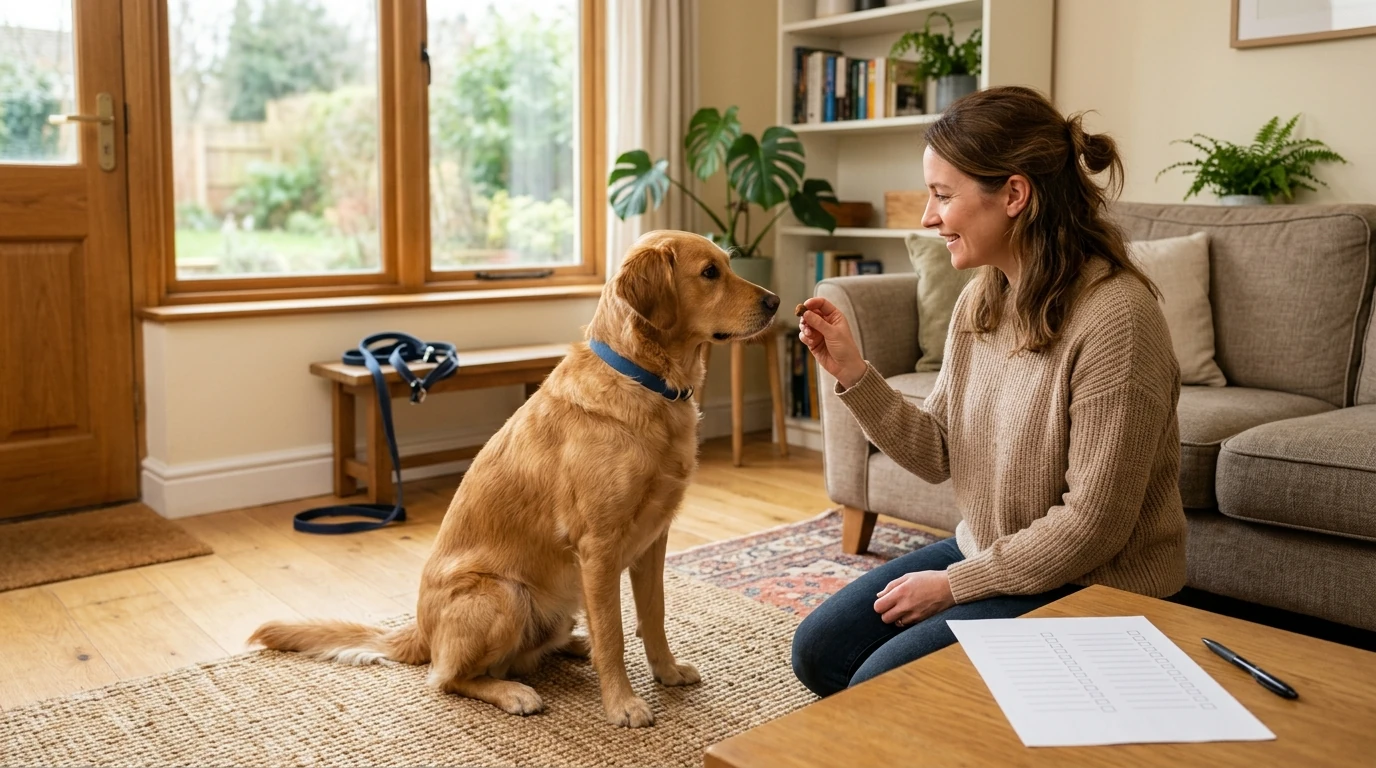
A well-behaved dog isn’t created by one big training “breakthrough.” It’s built through small, repeatable routines: clear cues, consistent reinforcement, and a plan the whole household can follow. The The Well-Behaved Dog Training Pack – 10-in-1 Bundle of Guides, eBooks, and Checklists is designed to turn everyday moments—walks, greetings, meals, and quiet time—into structured practice using guides, checklists, and trackers that keep training simple and measurable.
Instead of relying on scattered tips, this toolkit helps set a clear sequence for each skill (setup → cue → reward → reset), so daily training feels less like guesswork and more like a habit.
The core value of a checklist-based training bundle is follow-through. When the steps are written down, it’s easier to practice the same way every time—especially when multiple people share dog responsibilities.
| Week focus | Daily practice (10–15 min total) | Real-life reps to look for | How to measure progress |
|---|---|---|---|
| Attention & name response | 3 short sessions; reward eye contact and fast turns toward handler | Before meals, at doors, on walks | Responds on first call in low distraction settings |
| Loose-leash basics | Reinforce slack leash; stop/turn when pulling starts | Mailbox walks, driveway, quiet street | More steps between pulls; fewer resets per walk |
| Settle on a mat | Lure to mat, reward calm, add duration gradually | During dinner prep, while guests arrive | Longer calm periods without reminders |
| Polite greetings | Practice sit-to-greet; reward four paws on floor | Family members entering rooms; visitors | Less jumping; quicker recovery after excitement |
| Leave it / impulse control | Build up from easy items to moving distractions | Dropped food, toys, sidewalk “treasures” | Can disengage and reorient to handler reliably |
These principles align with widely recommended, reward-based approaches supported by organizations like the American Veterinary Society of Animal Behavior (AVSAB) and training basics outlined by the American Kennel Club (AKC).
Reward-based guidance can also be cross-referenced with welfare-focused resources like the RSPCA’s dog training advice, especially when troubleshooting arousal and impulse control.
If you want a single, organized resource to keep everyone on the same page, start with The Well-Behaved Dog Training Pack – 10-in-1 Bundle of Guides, eBooks, and Checklists (digital format, in stock, $416.99).
| Item | Details |
|---|---|
| Bundle name | The Well-Behaved Dog Training Pack – 10-in-1 Bundle of Guides, eBooks, and Checklists |
| Format | Digital guides/eBooks/checklists |
| Availability | In stock |
| Price | $416.99 USD |
Yes. Puppies typically need shorter sessions and more frequent rewards, while adult dogs often need more distraction-proofing and consistent habit replacement in real-life situations.
Small wins can show up in a few days with daily practice, especially for attention, mat work, and greeting routines. More reliable behavior usually takes several weeks, and longer-term consistency can take months depending on the dog, environment, and training history.
This can happen when a dog tests behaviors that used to work (often called an extinction burst). Stay consistent, increase reinforcement for the desired behavior, and immediately reduce difficulty—more distance, fewer distractions, and more management—so the dog can succeed again.







Leave a comment