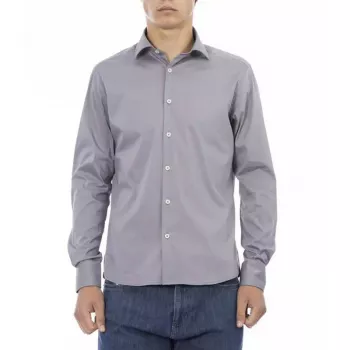
A slim shirt works best when the fit is sharp without pulling, the fabric stays comfortable through long hours, and the styling can shift from office-ready to evening casual with small changes in shoes and layers. Done right, a slim silhouette keeps you looking polished while still moving naturally—no strained buttons, no bunching sleeves, no collar you can’t wait to undo.
If you’re building a wardrobe that needs to cover meetings, dinners, and the occasional event, a streamlined option like the Baldinini Trend Men’s Slim Shirt can act as a reliable “center piece” that pairs cleanly with tailored trousers, tapered chinos, and refined outerwear.
A slim cut should read neat and intentional—not restrictive. Use these checkpoints to tell the difference between “sharp” and “too tight.”
If you want a measurement refresher before buying, Proper Cloth’s overview is a straightforward reference: How to Measure Yourself for Clothing (Men’s Measurements Overview).
This shirt is designed around a streamlined profile that reads smart-casual with minimal effort and cleans up well for dressier moments. It’s especially effective in a compact wardrobe where you want one shirt to cover multiple settings without looking like it’s trying too hard.
| Item | Value |
|---|---|
| Product | Baldinini Trend Men’s Slim Shirt |
| Price | 108.59 USD |
| Availability | In stock |
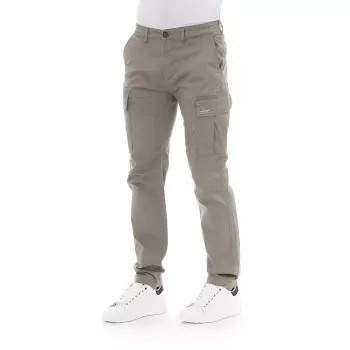
For the most balanced look, keep proportions consistent: pair a slim shirt with tapered chinos or tailored trousers rather than wide-leg fits.
Before committing to a “this is the one” verdict, run this quick test. It catches the most common slim-shirt issues immediately.
For a clear explanation of how different shirt fits are intended to sit on the body, Brooks Brothers provides an easy-to-compare overview: Dress Shirt Fit Guide.
Tuck it in, add a belt that matches your shoes, and finish with a structured blazer. The slim line under a jacket keeps the look clean at the waist and chest, especially when you’re moving between meetings.
Open one button at the collar and swap to clean sneakers or loafers. Roll sleeves once or twice so the forearm shows; it relaxes the shirt without losing the tailored feel.
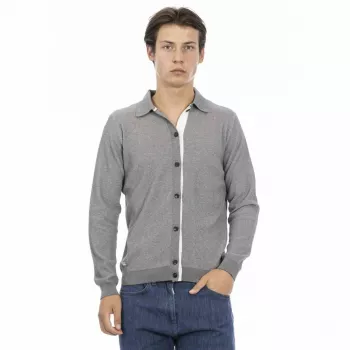
Layer with a lightweight cardigan or an overshirt. The slim torso prevents bulk, while the top layer softens the overall silhouette.
| Issue | What it means | Best fix |
|---|---|---|
| Buttons pull at chest | Not enough ease across chest/back | Size up or choose a cut with more room through torso |
| Collar feels tight | Neck size too small | Increase neck size; keep shoulders consistent |
| Sleeves bunch at cuffs | Sleeves too long | Alter sleeve length; confirm shoulder fit first |
| Excess fabric at waist | Too much room through midsection | Waist suppression via tailoring or a truer slim cut |
| Hem too short when tucked | Insufficient shirt length | Choose a longer body length if wearing tucked |
For practical guidance on reducing shrinkage and avoiding excessive heat, the U.S. Department of Energy has a helpful primer: Clothes Dryer Tips: Using Heat Settings and Preventing Shrinkage.
It should contour the torso without straining the buttons, even when you sit. Use the pinch test at the waist: a small pinch is ideal; if the chest pulls, size up, and if only the waist is loose, tailoring is usually the cleaner fix.
Yes—if the hem length and shape support it. A clean untucked length typically ends around mid-fly, and pairing it with tapered pants keeps the proportions sharp rather than boxy.
Focus on the collar, cuffs, and placket when steaming or ironing, and hang the shirt promptly after washing to prevent deep wrinkles. Avoid high heat, and consider a lightweight undershirt to reduce sweat marks and keep the outer fabric looking smoother.



Leave a comment