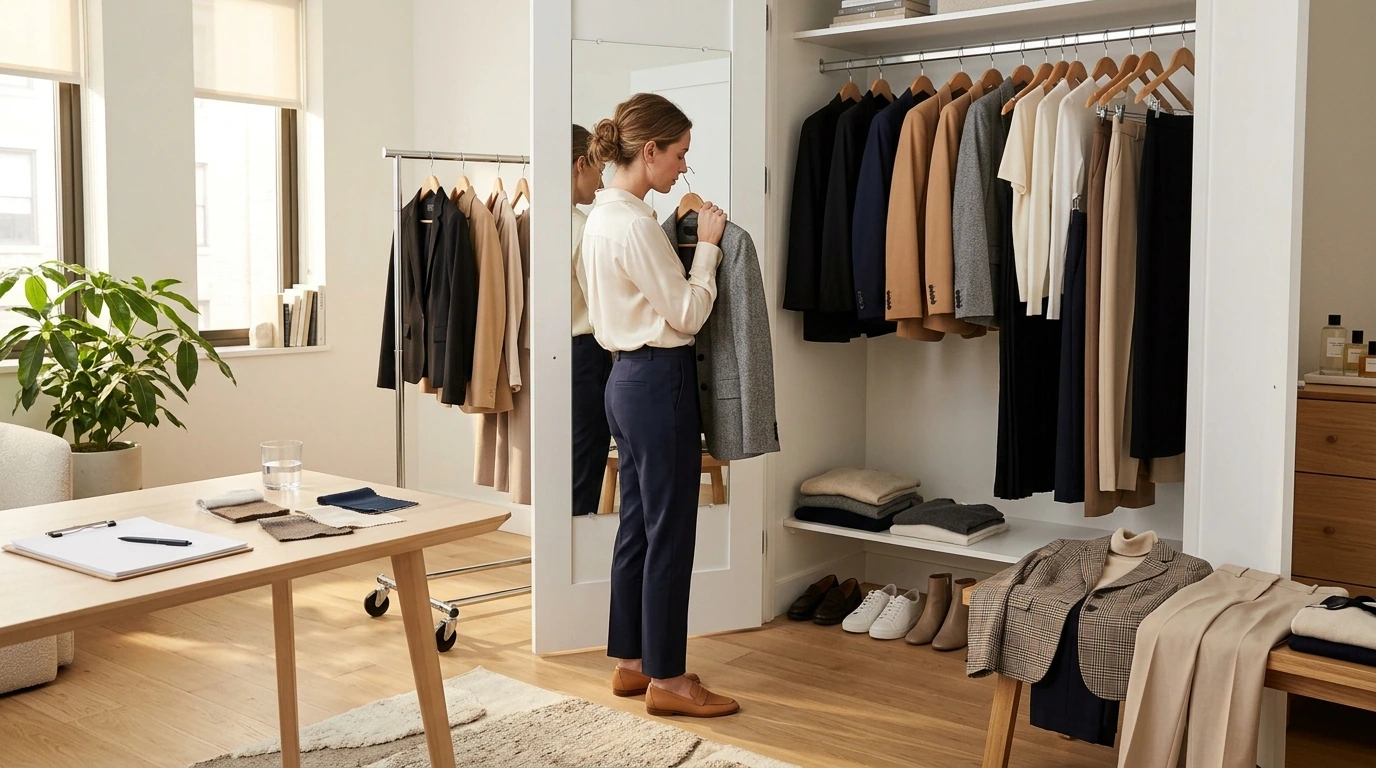
Getting dressed for work feels easier when the process is repeatable: a clear set of outfit formulas, a reliable checklist, and a plan for what to buy (and what to stop buying). This 5-in-1 office wardrobe pack is built to reduce decision fatigue, tighten up a professional look, and help a work closet function like a system instead of a random collection of pieces.
Effortless doesn’t mean “no effort ever”—it means the effort is front-loaded so weekdays run smoothly. In a practical office wardrobe, the best outfits aren’t the most complicated ones; they’re the ones that repeat reliably with small swaps.
If you want a research-backed nudge toward a dependable “work uniform” approach, Harvard Business Review has covered the value of dressing in a way that supports credibility and reduces friction at work: Harvard Business Review: What to Wear to Work.
The goal of a bundle like this is clarity. Instead of collecting scattered tips from different sources, you get a single workflow that turns “I have nothing to wear” into a repeatable routine.
For a ready-to-use system, see the Office Wardrobe Pack for Effortless Style: 5-in-1 Bundle of Work Fashion Guides & Checklists.
Outfit formulas work because they control the variables. You’re not reinventing your style every morning; you’re running a proven template with interchangeable parts.
| Formula | Best for | Easy upgrades |
|---|---|---|
| Blazer + knit top + tailored trousers | Meetings, client calls, polished business casual | Add a belt; swap to pointed-toe flats or low heels |
| Cardigan-jacket + blouse + midi skirt | Office days that need comfort with structure | Add a simple necklace; choose a monochrome palette |
| Button-down + straight-leg pants + loafers | Classic professional, travel days | Roll sleeves; add a lightweight trench or structured tote |
| Fine-gauge sweater + trousers + sleek sneakers (if allowed) | Long workdays, hybrid office settings | Match sneaker color to outfit; add a blazer for instant elevation |
For quick fabric sanity-checks (and to understand how materials behave), a solid reference point is textile basics and care guidance from organizations like Textile Exchange.
If mornings are stressful beyond clothing decisions, pairing wardrobe planning with a short wind-down routine can help. A simple add-on is the Essential Oils Relaxation Checklist – Simple Daily Ritual Guide for calmer evenings and smoother starts.
If you’re also building better work habits around planning and follow-through, the Fuel Up & Fire Ahead: Your Entrepreneur Quote Action Checklist pairs well with a systemized wardrobe approach.
| Item | What it helps with |
|---|---|
| Work fashion guides | Outfit structure, styling direction, practical combinations |
| Checklists | Closet editing, gap identification, smarter shopping decisions |
| Bundle approach | A single workflow instead of scattered tips |
It works for both because the formulas scale up or down: swap in a blazer, sharper fabrics, and dress shoes for more formal days, or use softer layers and simple flats for business casual. The system focuses on structure, cohesion, and repeatability rather than a single dress code.
A realistic timeline is a weekend to audit, identify gaps, and build outfit formulas, with noticeable day-to-day improvement within 1–2 weeks once you’re following a rotation. Consistency builds fast when you stop improvising every morning.
That usually points to cohesion issues: inconsistent fits, a scattered color palette, or missing “connector” pieces like layers and shoes that pull outfits together. Using checklists to remove duplicates and keep only what works in combination often fixes the problem without buying more.




Leave a comment