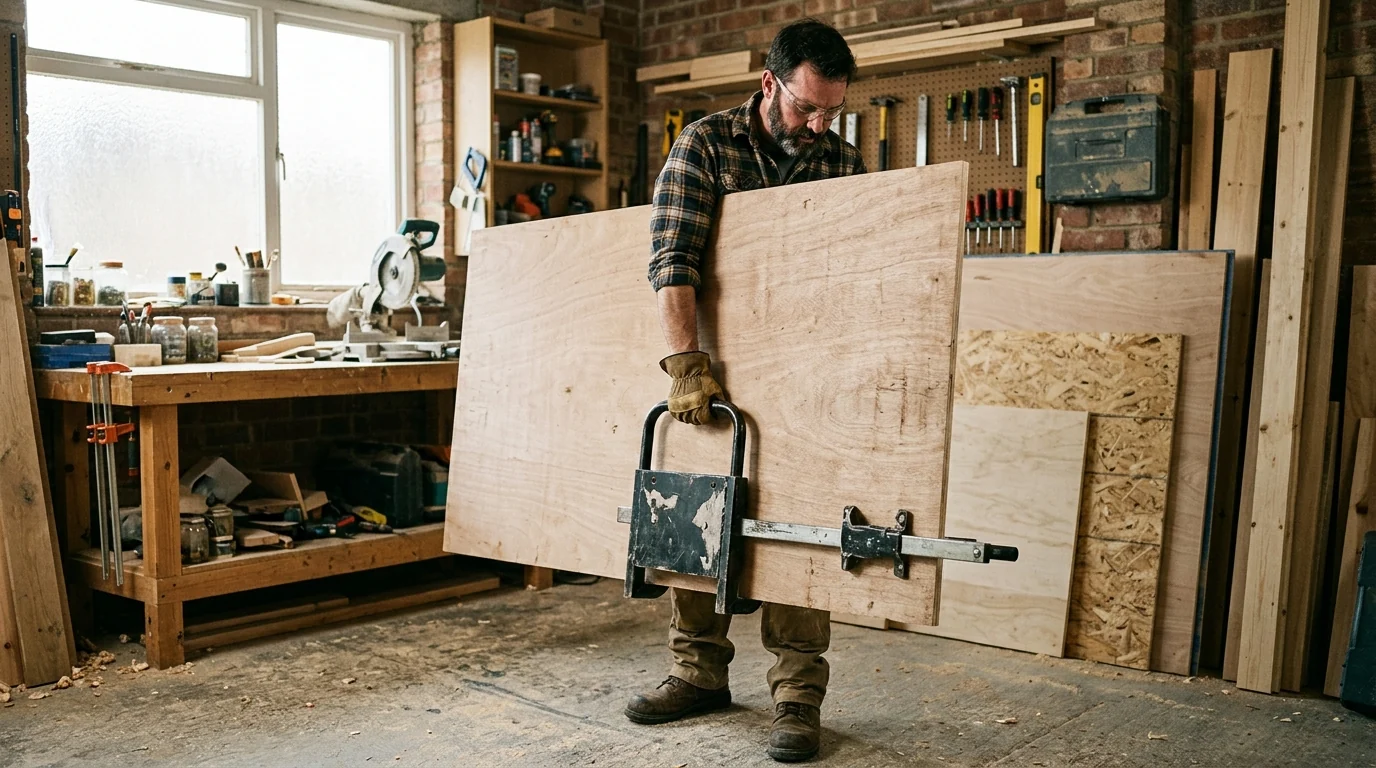
Moving plywood, drywall, doors, and large panels is awkward even when the weight is manageable. A panel carrier shifts the load into a safer, more balanced hold, reducing hand strain and helping keep edges from banging into walls, frames, and finished surfaces. This guide covers what to look for, how to use an adjustable-grip carrier correctly, and where it fits best on a jobsite or in a home workshop.
What a panel carrier helps with (and when it’s worth using)
A panel carrier is a simple tool, but it solves a few common problems that show up whenever sheet goods or large boards have to move from a stack to a cut station—or from the store to the truck to the house.
- Improves control on wide sheets by giving a single, consistent grab point instead of a slippery edge pinch.
- Reduces fatigue in fingers and wrists compared with “edge pinch” carrying—especially over longer distances.
- Helps protect panel edges and finished surfaces by stabilizing swing and tilt during turns.
- Useful for solo carries of manageable loads; for oversized sheets or long carries, a second person or cart can still be the safer choice.
- Best suited to flat boards/panels up to the tool’s rated capacity and within the adjustable thickness range.
Ergonomics still matter even with a carrier. For an overview of safer lifting variables—like distance from the body and twisting—see the guidance from CDC/NIOSH on lifting and OSHA’s ergonomics resources.
Key features to evaluate before buying
- Load rating: Choose a carrier with a clearly stated maximum load; avoid exceeding it, including when panels are wet or laminated.
- Adjustable grip range: Confirm the carrier’s jaw opening matches the board thicknesses commonly handled (e.g., 0–1 in covers many panels and boards).
- Grip surface and clamping style: Look for a design that bites securely without crushing delicate edges; test on offcuts when working with softer materials.
- Handle comfort and clearance: A comfortable handle reduces fatigue; adequate knuckle clearance helps when wearing work gloves.
- Locking/engagement behavior: Prefer predictable clamping that increases with load (self-tightening) and releases deliberately when unloading.
- Material and build: Thicker metal, quality fasteners, and robust pivot points matter for longevity in dusty, gritty jobsite conditions.
Quick checklist for matching a carrier to the job
| Consideration |
Why it matters |
What to look for |
| Board thickness |
Prevents slipping or incomplete bite |
Adjustable grip range that covers common materials |
| Panel weight |
Avoids tool overload and sudden release risk |
Rated capacity with a safety margin |
| Surface sensitivity |
Protects finished edges and veneers |
Non-marring or controlled clamping contact |
| Carry distance/terrain |
Affects fatigue and balance |
Comfortable handle and stable clamp behavior |
| Glove use |
Changes handle feel and control |
Handle shape with enough clearance and grip texture |
Using an adjustable-grip panel carrier safely
A carrier should make handling easier, not introduce surprises. A consistent routine helps reduce slips and edge damage.
- Inspect before each use: Check for cracks, bent parts, loose fasteners, or worn grip pads; replace or stop using if damaged.
- Confirm thickness fit: Set the adjustable grip to match the board; verify full contact before lifting.
- Engage the clamp on a clean edge: Remove dust or debris that could reduce friction; avoid clamping on chipped, delaminated, or crumbling edges.
- Lift with stable posture: Keep the load close, use legs instead of back, and avoid twisting—turn with feet.
- Test the hold at low height: Lift an inch or two first to ensure secure engagement before committing to the carry.
- Mind pinch points: Keep fingers clear of the clamping area during engagement and release.
- Plan the route: Open doors, clear obstacles, and watch for uneven floors; set down safely rather than “catching” a slipping panel.
Best uses: plywood, drywall, doors, and shop panels
Care, storage, and longevity tips
Product snapshot: Heavy-Duty 200 lbs Panel Carrier (0–1 in adjustable grip)
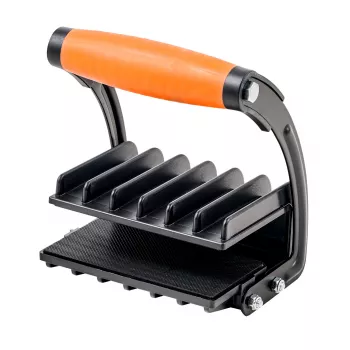
If the goal is a practical, everyday carrier for common sheet goods and boards, Heavy-Duty 200 lbs Panel Carrier with Adjustable Grip for 0–1 in Boards is designed to cover the basics: a thickness range that fits many panels and a load rating that works for light-to-medium handling tasks.
At-a-glance details
More in-stock picks for a smoother workshop day
FAQ
Will an adjustable-grip panel carrier work on drywall and plywood?
Yes, as long as the panel thickness is within the tool’s grip range and the edge is sound. Test the clamp at low height first and avoid crumbling or damaged edges.
Can a 200 lb-rated carrier be used at the full rating every time?
It’s smarter to stay under the rated capacity and leave a safety margin. Awkward shapes, wet materials, poor edges, and long carries can reduce control even if the weight seems acceptable.
How do you prevent the clamp from marking finished panels?
Test on a scrap/offcut first, clamp on an unfinished edge when possible, and keep contact surfaces clean. Use steady pressure and avoid clamping on delicate veneers or already-damaged corners.
Recommended for you




Leave a comment