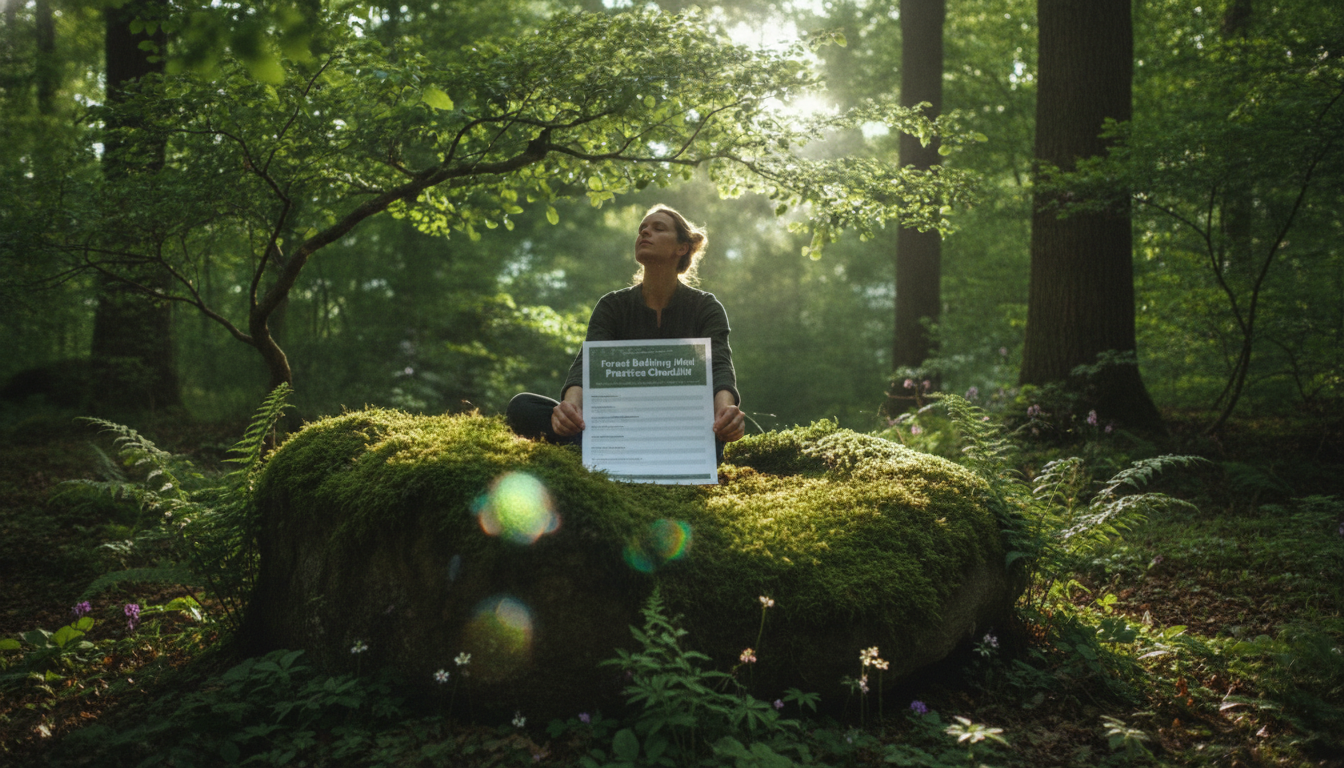
Forest bathing is a slow, sensory way of spending time outdoors—less about distance and more about noticing. A simple checklist turns a walk in the trees (or any green space) into a mini reset for attention, mood, and nervous system comfort—without needing special gear or a full day off.
Forest bathing is a mindful nature practice that invites your senses to do the leading. Instead of pushing for progress or pace, it’s about letting sight, sound, smell, and touch guide you into a steadier rhythm.
When your mind is already full, “just relax” can feel like one more assignment. A short, repeatable routine makes it easier to begin—and easier to stop—so the experience feels complete even on a tight schedule.
The best “escape” is the one you’ll actually do. Choose ease over perfection, and set your session up so you’re not negotiating with your phone, your schedule, or your clothing the whole time.
If you want something you can save or print for repeat sessions, the Forest Bathing Mini Practice Checklist – A Mindful Nature Escape keeps the routine simple and consistent—especially helpful for lunch-break resets and weekend wandering.
This is a low-pressure sequence you can repeat in almost any green space. If distraction shows up, nothing is “ruined”—just return to the next step.
| Minutes | Focus | Simple prompt |
|---|---|---|
| 0–2 | Arrive + breathe | What changes in the body when the pace stops? |
| 2–6 | See life | Find five living things and notice color, shape, movement. |
| 6–9 | Listen | What is the closest sound? The farthest sound? |
| 9–12 | Touch | What texture feels soothing or interesting? |
| 12–15 | Smell + air | What does the air feel like in the nose—cool, warm, moist, dry? |
| 15–19 | Slow walk | Take 10 slow steps, pause, repeat. |
| 19–20 | Close | Name one word for how you feel now. |
If you tend to “try hard” at relaxation, choose one prompt and stick with it for a minute or two. The point is to notice more, not to do more.
Stress can show up physically—tight shoulders, shallow breathing, restless thoughts—and calming practices can help you notice and respond earlier; the American Psychological Association summarizes common stress effects on the body here.
For a cozy extension at home—especially in winter or in places where outdoor scent is minimal—pair your walk with a simple aroma ritual using the Essential Oils Relaxation Checklist – Simple Daily Ritual Guide Featuring the best essential oils for relaxation for Stress Relief, Sleep & Calm Living. For general relaxation practice ideas, the NIH’s NCCIH overview of relaxation techniques is a helpful reference here.
Ten to twenty minutes is a practical minimum, especially if you use a clear opening and closing. For deeper settling, 45–90 minutes can feel more immersive, but consistency matters more than duration.
No—any green space with living elements can work, including parks, gardens, and tree-lined streets. The focus is on sensory noticing rather than the specific location.
Use a simple structure (breath, sound, touch, slow steps) and set a timer so you’re not checking the clock. Distraction is normal; return to one sense and continue from there.





Leave a comment