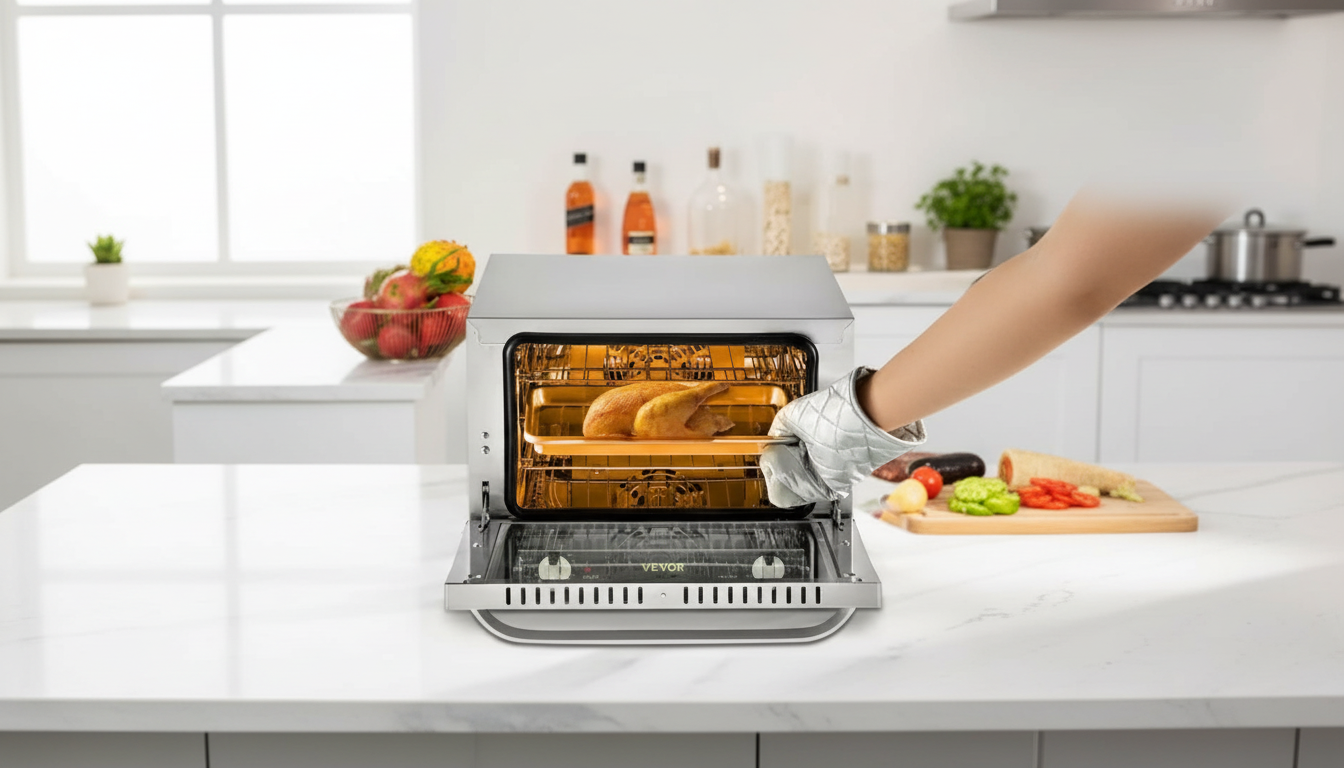
Yes—countertop convection ovens are built for baking, and many of them can turn out cookies, cakes, quick breads, casseroles, and even multi-tray batches with impressively even browning. The key difference from a traditional oven is the fan: convection circulates hot air continuously, so food cooks more uniformly and often a bit faster.
Because the hot air is moving, countertop convection baking typically benefits from a small temperature adjustment and a closer eye on timing. A common rule is to reduce the recipe temperature by about 25°F (or keep the same temperature and start checking earlier). This helps prevent over-browning on the edges before the center is fully set—especially with cookies, pastries, and thinner pans.
Most everyday bakes do great in a countertop convection oven:
Pan choice matters more in small ovens. Light-colored, low-sided metal pans encourage even heat circulation. If a recipe calls for a large pan that crowds the cavity, heat can’t move freely and baking becomes less consistent.
For a deeper look at multi-tray batch baking, rack strategies, and choosing a countertop model that performs like a workhorse, see the complete guide here: countertop electric convection oven multi-tray batch baking.
A common starting point is lowering the recipe temperature by about 25°F and checking for doneness earlier than the listed time. Fine-tune after a test batch since small ovens can vary by model and load.




Leave a comment