
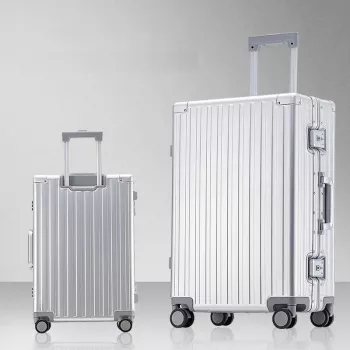
A carry-on built from aluminum-magnesium alloy is designed for travelers who prioritize a rigid shell, impact resistance, and smooth handling through terminals, train stations, and city sidewalks. The right metal carry-on can feel “built like equipment” rather than a disposable suitcase—especially when it’s paired with stable wheels, a stiff telescopic handle, and hardware that closes cleanly every time. Below is a practical breakdown of how alloy shells behave in real travel, what separates a comfortable roller from a frustrating one, and how to keep a metal finish looking sharp trip after trip.
Aluminum-magnesium alloy carry-ons are popular because they deliver structure. Unlike many soft-sided bags that can bulge, a rigid metal shell tends to keep its shape in overhead bins and crowded luggage stacks.
Wheels decide whether a carry-on feels effortless or exhausting. Airports are smooth; sidewalks and station platforms are not. A good wheel setup should handle both without wobble, dragging, or tipping.
A premium shell doesn’t feel premium if the handle flexes like a fishing rod. Small details—like height stops and balanced grab handles—make a noticeable difference when you’re sprinting to a gate or lifting into an overhead bin.
| Check | What to confirm | Why it matters |
|---|---|---|
| Exterior dimensions | Measure including wheels/handles | Avoid surprises at the sizer |
| Empty weight | Weigh the case before packing | Helps stay under airline limits |
| Wheel roll test | Roll loaded on tile and rougher surfaces | Predicts comfort across airports and streets |
| Handle stability | Extend fully; check flex and lock points | Reduces wobble and wrist strain |
| Security closure | Confirm locks/latches function smoothly | Prevents jams during inspections |
| Interior organization | Straps, dividers, and pockets work as intended | Faster packing and easier access |
For packing rules and restricted items, it’s also worth reviewing FAA: Pack Safe (What Can I Bring?) and general cabin baggage guidance from IATA: Cabin Baggage.
Aluminum-Magnesium Alloy Carry-On Rolling Luggage with Wheels is positioned as a premium rigid carry-on option for frequent travel. It’s best suited for travelers who want a structured case, smooth rolling through busy terminals, and a durable shell for overhead-bin use. Before purchasing, confirm preferred dimensions, your typical airline weight tolerance, and whether you prefer zipper-style access or latch-style closure.
Generally yes, but carry-on approval depends on the bag’s exterior dimensions (including wheels and handles) and the airline’s size and weight limits. Always verify limits for your specific carrier and aircraft type.
Metal luggage can scuff or pick up small dents from rough handling, especially around corners. The benefit is that the shell stays rigid and continues to protect your contents even with cosmetic wear.
Spinner wheels are usually easier to maneuver in tight spaces and long airport lines. Two-wheel designs can feel more stable on uneven sidewalks, so the best choice depends on where you roll most often.




Leave a comment