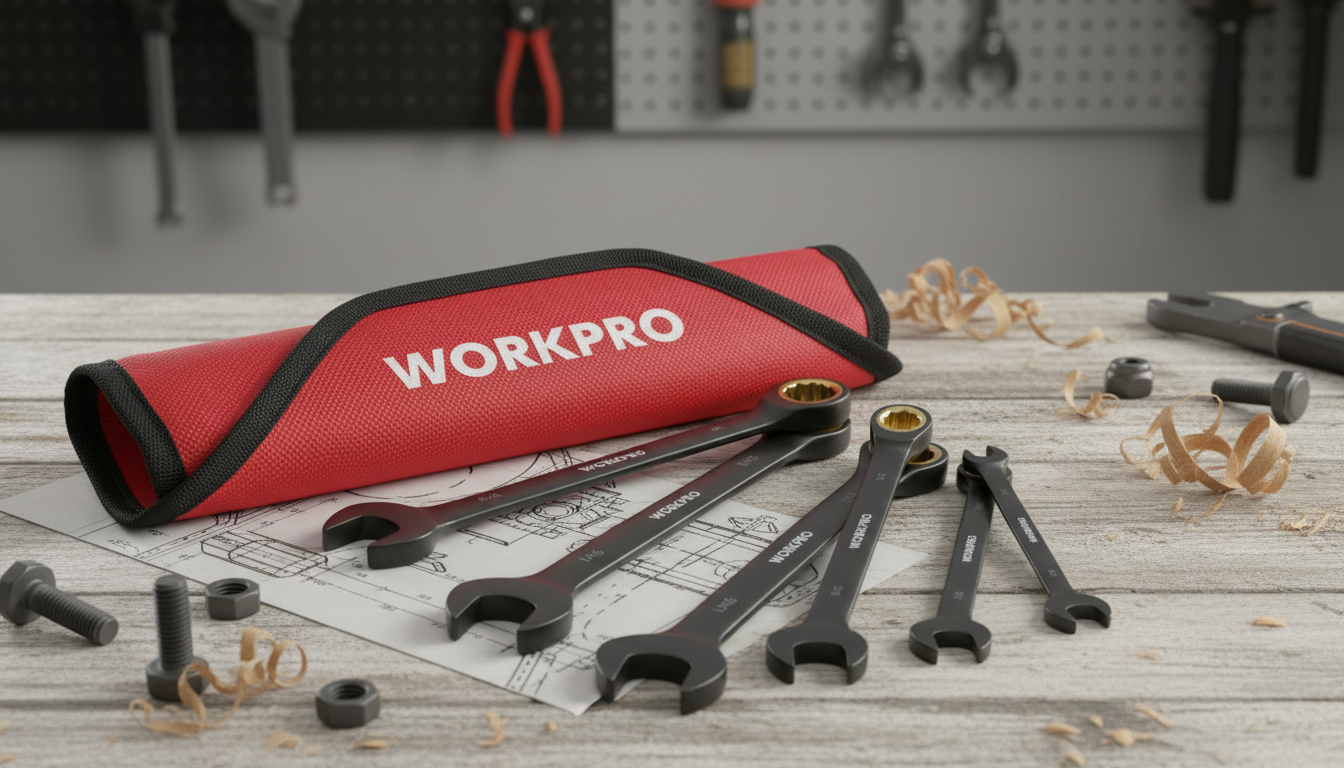
A compact ratcheting wrench set can make everyday fastening feel less like a chore—especially when you’re moving between different bolt standards and working in tight, awkward spots. This 9-piece anti-slip ratcheting wrench set is built for common automotive, home, and shop tasks by combining SAE and metric coverage with a grip-focused design that helps reduce slipping when you’re applying steady torque.
If most of your wrench work involves routine repairs and assembly—rather than extreme, seized fasteners—ratcheting wrenches are often the fastest way to keep momentum. They’re especially handy when you can’t get a full swing arc and would otherwise need to lift and reposition a standard box-end wrench after every partial turn.
It’s also a practical option for assembly tasks where you’re tightening multiple bolts in a sequence—such as setting up household furniture or crates that arrive with mixed hardware and limited access around corners.
This 9-piece set covers commonly used SAE and metric ranges, which is ideal for a shared toolbox that sees everything from car maintenance to household repairs. Using the closest correct size matters: even near-matches (especially between SAE and metric) can slip under load and increase the chance of rounding the fastener corners.
| Measurement system | Range covered |
|---|---|
| SAE | 5/16″–3/4″ |
| Metric | 8–19mm |
That coverage hits many of the fasteners encountered on brackets, accessory mounts, engine bay components, and general home hardware—without forcing you to carry a large, heavy set everywhere.
An anti-slip wrench profile is designed to improve contact on the flats of the fastener, helping reduce cam-out as force increases. That’s valuable when bolts are slightly dirty, lightly corroded, or positioned in a way that encourages the wrench to walk upward under load.
For general hand-tool safety guidance—especially around pinch points and maintaining tool control—review OSHA’s recommendations on safe tool use: OSHA — Hand and Power Tools. For performance and safety expectations for hand tools, ASME’s B107 standards are a helpful reference point: ASME B107 Standards.
Ratcheting wrenches tend to shine when access is limited—behind engine components, under sinks, around appliances, or near furniture frames. The key is ensuring the head can fully seat before you apply meaningful torque.
When clearance is extremely tight, it’s worth slowing down and checking alignment from multiple angles. A few seconds of positioning can prevent minutes of dealing with a rounded head.
Rounded corners are usually caused by a size mismatch, incomplete seating, or excessive breakaway force applied with the wrong tool. A few disciplined habits go a long way toward protecting both the fastener and the wrench.
These steps help maintain clean tool engagement and improve torque transfer—especially on older hardware where corrosion or previous tool damage has already weakened the corners.
Yes. It includes SAE sizes from 5/16″ to 3/4″ and metric sizes from 8mm to 19mm, which is helpful when a job mixes standard and metric hardware and you want the correct fit without improvising.
It can, but use controlled, steady force and ensure the wrench is fully seated. For extremely tight or seized fasteners, it’s safer to break them loose first with a non-ratcheting wrench or a breaker bar, then switch to the ratcheting wrench to speed up removal.
Use the exact size (avoid near metric/SAE substitutes), fully seat the wrench on the fastener, and apply steady pressure rather than quick jerks. If the fastener is already damaged, switching to a dedicated extractor or a six-point socket can prevent further rounding.







Leave a comment