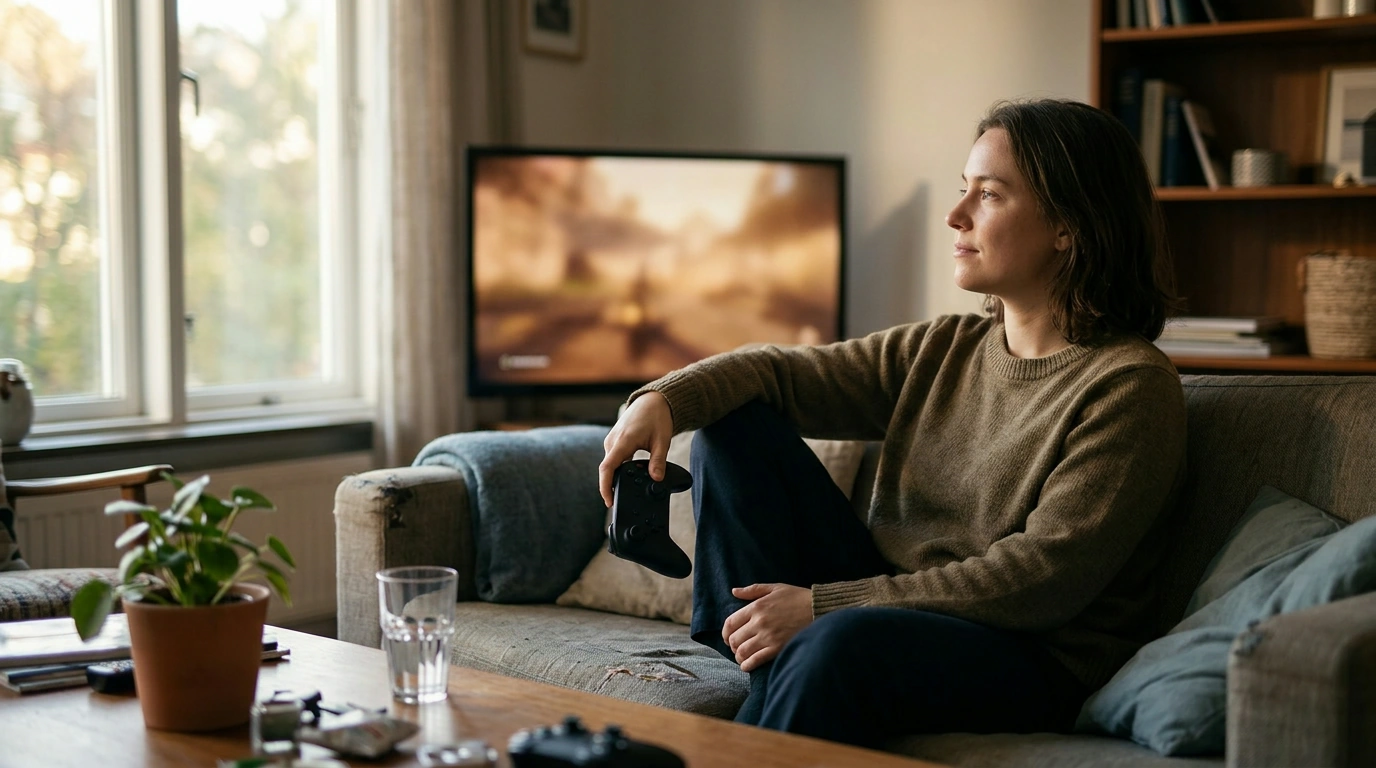
Can video games improve mental health? For some people, a session brings enjoyment, connection, relaxation, or the satisfaction of getting better at a skill. For others, the same game can feel draining on a different day. What matters is not just what you play, but why you’re playing, how you feel afterward, and whether gaming leaves room for the rest of your life. Our team put together this check-in to help you make those decisions without turning play into another chore.
Games offer different kinds of experiences. You might explore a creative world, solve a puzzle, laugh with friends, or practice a challenging move until it clicks. Naming what you want before you start makes it easier to choose well. If you want to unwind, a calm solo game may serve you better than a high-pressure competitive match. If you want company, a cooperative session might be the better fit.
Gaming works best as one activity in a full routine, not a replacement for sleep, offline relationships, responsibilities, or mental health care. You don’t need every session to be productive. Enjoyment is a good enough reason to play; the useful question is whether that enjoyment still feels worthwhile when you step away.
Use this table as a quick self-check, not a set of rigid rules. Adapt the questions to your schedule and needs. You can begin with just one change, such as picking a stopping point before you start or noticing your mood when you finish.
| When | Ask yourself | Try this |
|---|---|---|
| Before playing | What am I hoping to get from this session? | Choose a game and a time window that match your goal. |
| During play | Am I still enjoying this, and how does my body feel? | Pause for water, movement, and a screen break. |
| When stopping | Do I feel refreshed, connected, or more wound up? | Make a note of what worked and adjust next time. |
| Later in the day | Did gaming leave room for sleep and other priorities? | Move the next session earlier or shorten it if needed. |
Your answers may change from day to day. A lively multiplayer session can be exactly what you want on a free afternoon and too stimulating when you’re already tired. Treat the check-in as information for your next choice, not a grade on your current one.
A stopping cue can make the end of a session feel less abrupt. Decide to finish a level, set a timer, or agree that the next match will be the last one before it begins. If other players ask for another round, you can decline without defending your plans. A simple “That was my last one tonight” is enough.
Pay attention to timing as well as duration. If late-night play makes it harder to settle down or pushes bedtime back, try ending earlier and choosing a quieter wind-down activity. The Centers for Disease Control and Prevention’s sleep guidance is a useful reminder that adequate sleep supports health. You don’t need to give up an evening game to make sleep a priority; you may only need a more reliable finish time.
Intensity and spending deserve a check-in, too. After a stressful day, a low-pressure game may feel more restorative than a ranked match. If a game offers in-game purchases, decide what you’re comfortable spending before you play, rather than making the decision in an exciting or frustrating moment.
An occasional long session does not, by itself, define a problem. Look instead for a recurring pattern: regularly losing sleep to play, feeling unable to stop when you intend to, or repeatedly setting aside responsibilities or relationships. Notice whether gaming is causing distress or having a meaningful effect on daily life. The World Health Organization’s explanation of gaming disorder distinguishes persistent, impairing patterns from simply spending a lot of time gaming.
If something feels off, start with a manageable reset. Take a short break, try a different type of game, or move your usual session to an earlier time. Talking it through with someone you trust can also help you see a pattern more clearly. If gaming feels difficult to control or mental health concerns persist, seek support from a qualified professional rather than trying to solve everything with a new schedule.
If you’d like a dedicated place to reflect, our Play Smarter and Strengthen Your Mental Health digital gaming wellness checklist is an optional tool for checking in with your habits. It isn’t a treatment or a promise of a particular outcome. You can also use the table above on its own; the best approach is one you’ll actually use.
For a quieter transition after an evening session, our Essential Oils Relaxation Checklist offers another optional way to plan a wind-down ritual. Choose what fits your preferences rather than adding steps you don’t enjoy.
Next time you play, pick one question from the table and answer it when you stop. Keep the habits that help play feel worthwhile, and adjust the ones that don’t.
Gaming may offer enjoyment, connection, or relaxation for some people, depending on the game and their circumstances. It is not a treatment; consider its effect alongside sleep, responsibilities, and how you feel afterward.
There is no single session length that fits everyone. Pay attention to recurring missed sleep, neglected priorities, distress, or difficulty stopping, and seek professional guidance if those concerns persist.






Leave a comment