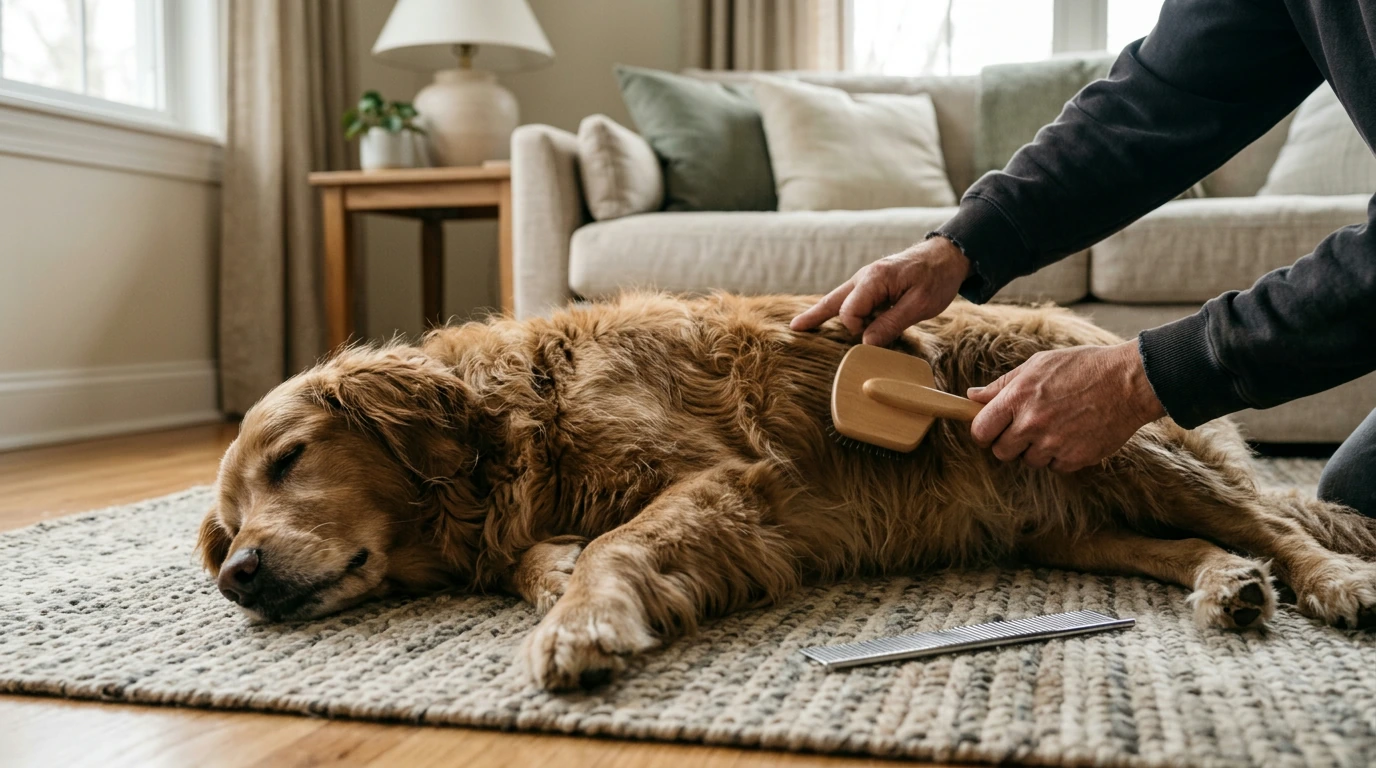
A good brushing routine does not have to be complicated. Start with your dog’s coat, choose a tool that feels comfortable, and keep sessions short enough to stay pleasant. We find that a few calm minutes spent checking for loose hair and tangles can be more useful than trying to follow a rigid calendar.
How often you brush depends on your dog’s coat length and texture, how much they shed, what they do each day, and how readily their hair tangles. A short, smooth coat may need brushing mainly when loose hair builds up. A long or mat-prone coat often needs more frequent attention, especially around places that rub.
Run your fingers through the coat regularly. If you notice more loose hair, small knots, or areas your dog cannot comfortably reach, add a gentle brushing session rather than waiting for a scheduled day. Seasonal shedding may also call for extra sessions for a while. If you are unsure what your dog’s coat needs, a groomer can help you set a practical schedule. Ask your veterinarian for guidance if sensitive skin affects grooming.
There is no brush that suits every dog. A soft bristle or rubber brush can work for some short, smooth coats. Longer coats may call for a slicker brush and a suitable comb to find tangles beneath the surface. If the coat type is unfamiliar, ask a groomer which tool to start with instead of buying several and guessing.
Whatever you use, apply gentle pressure and brush in the direction of hair growth. Watch your dog’s response: pulling away, flinching, or irritated skin are signs to stop and reassess. The goal is to remove loose hair and work through manageable tangles, not to force a tool through resistance.
| Coat or situation | Starting approach | What to watch for |
|---|---|---|
| Short, smooth coat | Check regularly; brush when loose hair builds up | Skin irritation or unexpected hair loss |
| Long or tangle-prone coat | Brush more frequently and check friction areas | Knots behind the ears, under the legs, and around the collar |
| Heavy seasonal shedding | Add gentle sessions as needed | Tool pressure and your dog’s comfort |
Choose a quiet spot where your dog can stand or settle comfortably. Let them inspect the tool, then brush one small area before moving on. Work in manageable sections, checking with your fingers for tangles as you go. Finish with praise or a reward, even if the session was brief. Ending on a comfortable note makes it easier to return to the routine.
Pay particular attention to friction areas, including behind the ears, under the legs, and wherever a collar or harness rests. A coat can look smooth on top while hiding a knot closer to the skin. If your dog becomes restless, take a break. You can return to another section later rather than trying to finish everything at once.
Do not pull on a tight mat or cut close to the skin at home. Mats can sit nearer to the skin than they appear, and tugging can hurt. When gentle brushing cannot remove one comfortably, contact a professional groomer for help. For additional general grooming guidance, see the ASPCA’s dog grooming tips.
If remembering each step is harder than doing the brushing, our The Ultimate Dog Brushing Routine Checklist is a $3.99 digital download designed to prompt you about brushing frequency, grooming tools, and routine tips. It gives you a simple place to start without treating one schedule as right for every coat.
Try pairing your checklist with a recurring reminder. When the reminder comes up, assess the coat before deciding how much brushing your dog needs that day. You might do a full gentle session, focus on a friction area, or simply note that the coat feels clear. Adjust the reminder as shedding, tangles, and your dog’s comfort change.
If you also like keeping your own daily habits organized, we offer an Essential Oils Relaxation Checklist for personal routines. Keep any essential oils separate from your dog’s grooming routine unless your veterinarian advises otherwise.
Pause grooming and contact your veterinarian if you find persistent redness, sores, bald patches, suspected parasites, or pain when your dog is handled. Brushing cannot resolve every coat or skin concern, and continuing over a sore area may make your dog more uncomfortable.
Our team’s simplest rule is to let the coat tell you when attention is needed and let your dog’s comfort set the pace. A consistent, gentle routine is more valuable than forcing a particular number of brushing sessions each week.
There is no single schedule for every dog. Base brushing frequency on coat type, shedding, and tangles, and ask a groomer for help if the coat mats easily.
Start with brief, gentle sessions and rewards. Stop if brushing hurts, and seek professional advice for mats or ongoing discomfort.






Leave a comment