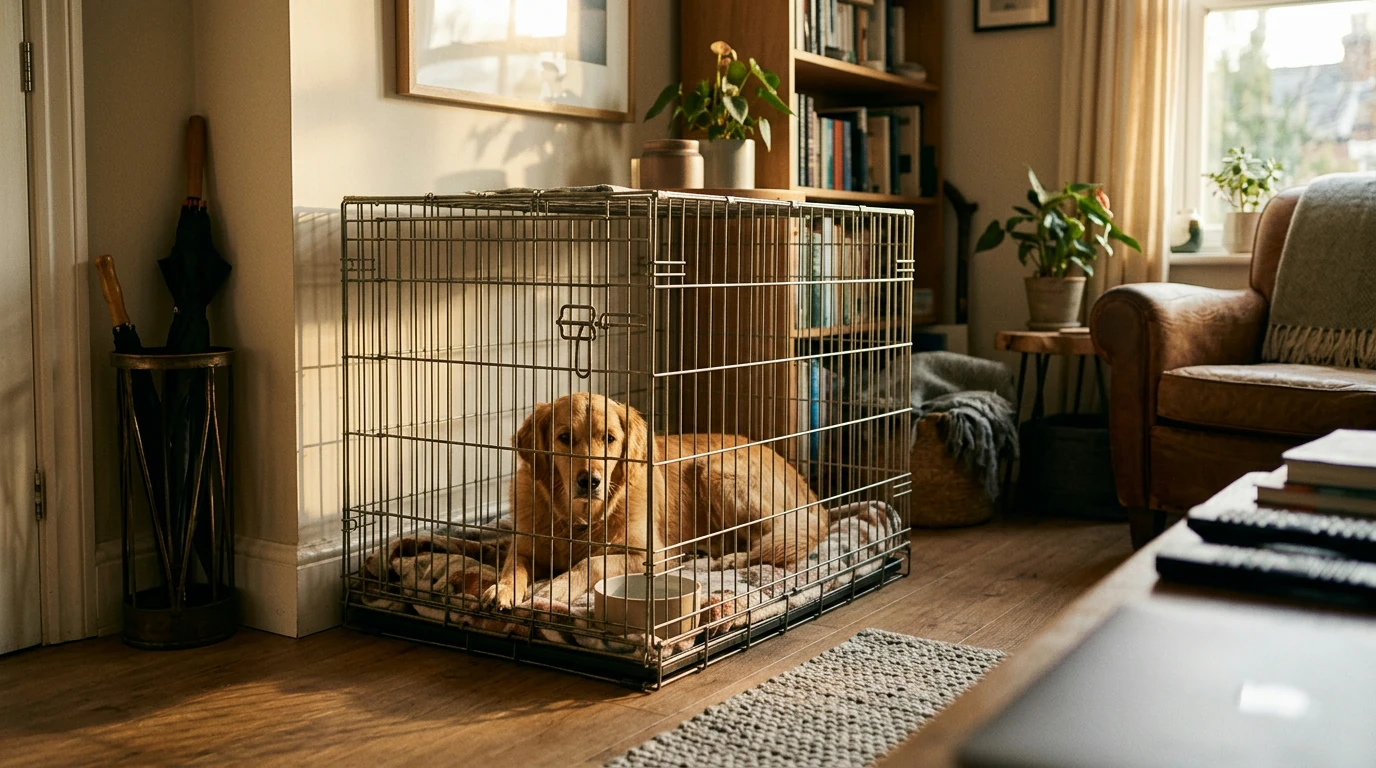
For most healthy adult dogs, aim for no more than about four hours in a crate at a time during the day. Some adult dogs may manage up to six hours occasionally, but that shouldn’t become a routine substitute for breaks, exercise, and company. Your dog’s age, health, temperament, and usual bathroom needs all matter.
Puppies usually need much shorter stretches because they have smaller bladders and are still learning. A commonly used starting point is roughly one hour per month of age, plus one hour, but it is only a general guide—not a target every puppy can manage. Take your puppy out more often if they show signs of needing a bathroom break or become distressed.
Older dogs and dogs with medical, mobility, or anxiety concerns may need more frequent breaks. Follow your veterinarian’s advice when a health condition affects how long your dog can comfortably wait. If your dog is panting, whining persistently, trying to escape, or having accidents, shorten crate sessions and reassess the routine.
Give your dog a bathroom opportunity and some movement before crating, then arrange a timely break. If you’ll be away longer than your dog can comfortably wait, ask someone you trust to let them out or use another safe care option. A crate is meant to be a comfortable, voluntary resting place—not a way to leave a dog confined through a full workday or as punishment.
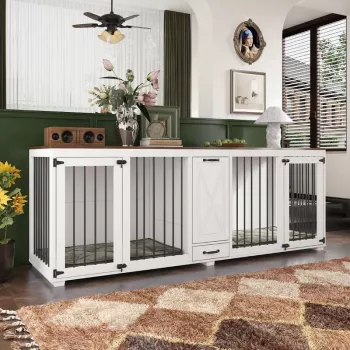
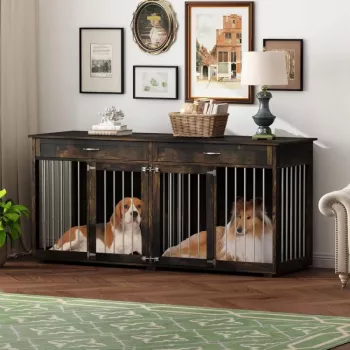
For homes with two dogs, a double crate can provide each dog with a separate space while keeping their setup together. Our guide to a double wooden dog crate with bowls and a storage drawer explains what to consider when choosing this kind of setup. Separate spaces do not change the need for regular breaks: plan crate time around each dog’s individual routine.
It is generally safer to give each dog a separate crate space, especially when they are unsupervised. Individual spaces help prevent conflict over room or resources and let you manage each dog’s needs separately.



Leave a comment