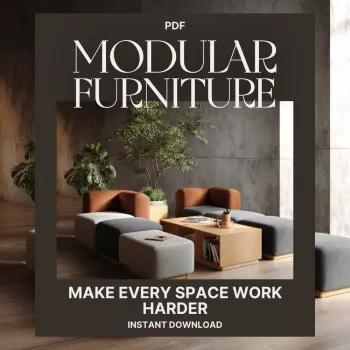
Multi-use rooms are the new normal: living rooms that become offices, dining areas that double as craft zones, and studios that need to feel calm without feeling cramped. Modular furniture makes that possible by letting one space shift roles quickly—without constant heavy lifting or visual clutter. Our team uses the plan below to help you choose the right modules, arrange them for real life, and build a flexible setup that still looks intentional day after day.
Before you measure every wall, decide what your room must do on an average week. Most spaces only need 2–4 “modes” to cover real life—everything else is a bonus.
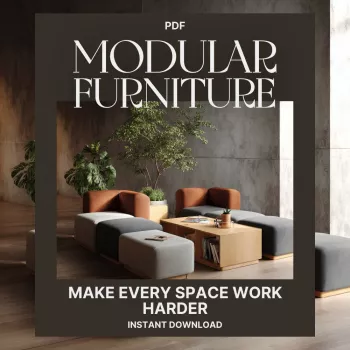
If you want a step-by-step framework you can reuse room to room, our digital guide Make Every Space Work Harder with Modular Furniture walks you through layouts, shopping checklists, and reset routines you can implement in a single afternoon.
Modular doesn’t have to feel temporary. The trick is to keep a few elements consistent so the room still has a “home base,” even when pieces move.
Pick one steady visual target: a TV wall, bookshelf, window, or large artwork. Modules can shift, but the focal point stops the room from feeling like it’s always mid-move.
Give everyday clutter a first stop: a slim console, shelf, or lidded bench. When bags, mail, and chargers get intercepted early, they don’t spread across every surface.
Create a simple sequence you can repeat without thinking (nesting table slides under, ottoman flips to tray, chair tucks, panels fold). A rug or lighting can “outline” the main zone so the room keeps its boundaries while modules rearrange.
For a single piece that can pull double duty as extra seating and a design anchor, our team often recommends a statement chair with a compact footprint—like the Household Retro Solid Wood Saddle Chair—paired with a small side surface or nesting tables.
Build a “day sofa / night bed” plan using modular seating or a daybed plus a divider. Keep the center open and push storage vertical to protect circulation.
| Room goal | Best modular combo | Reset time target | Small-space tip |
|---|---|---|---|
| Lounge + Work | Ottoman + nesting table + compact desk surface | 60–120 seconds | Hide cables in one lidded bin |
| Lounge + Guests | Sectional modules + divider + closed storage | 3–5 minutes | Keep one “guest kit” basket |
| Dining + Everything | Drop-leaf/extendable table + stackable seating | 2–3 minutes | Choose seating that stores flat |
| Play + Calm | Modular cubbies + rolling bins + soft seating | 2–4 minutes | Label bins by activity |
If calm is a priority because your space is doing a lot, pairing a tidy modular plan with a simple wind-down routine can help the room feel like it “turns off” at night. Our Essential Oils Relaxation Checklist is an easy add-on for an end-of-day reset that doesn’t require more stuff on your surfaces.
For additional space-planning inspiration and small-space principles, we like referencing guidance from ASID, plus practical small-space coverage from Architectural Digest and Apartment Therapy.
Start with one modular workhorse—like an ottoman, nesting tables, or a small set of storage cubes—then assign it a fixed “home” position. Set a 60–120 second reset routine so switching modes feels quick instead of chaotic.
Use closed storage to reduce visual noise, repeat a small set of finishes so pieces coordinate, and define zones with a rug and lighting. When the room has clear boundaries, it reads as organized even when modules move.
Measure door swings, hallway/stair access, and walkway clearance, then check outlet access so power isn’t blocked in your main mode. Also compare the footprint in both “in-use” and “stored” configurations so you know where pieces go when they’re not active.





Leave a comment