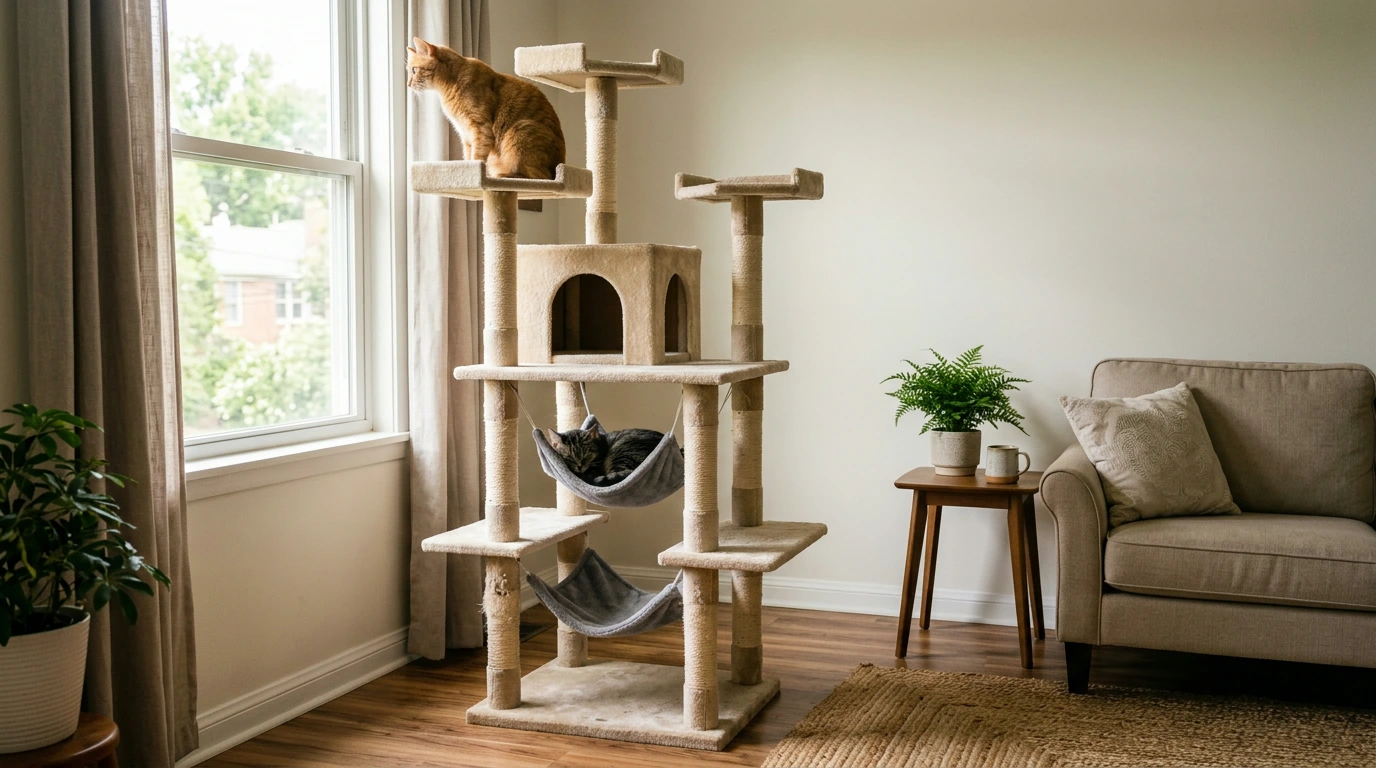
A tall, multi-level cat tree can turn unused vertical space into a daily routine of climbing, scratching, lounging, and hiding—especially helpful for indoor cats that need enrichment. This 56.3-inch design combines scratch-friendly posts with a hammock and an enclosed cave so cats can alternate between active play and secure rest throughout the day.
For many cats, a “cat zone” works best when it offers both visibility (high perches) and privacy (a covered retreat). The combination of platforms, a hammock, and a cave helps replicate the choice cats naturally seek: observe, rest, or disappear for a while.
Multiple tiers do more than add height—they create pathways. Cats often move through a room by hopping from one “safe” surface to another, and staggered levels make that movement feel intentional and rewarding. Placed near a window, upper platforms can quickly become a favorite spot for bird-watching and neighborhood patrol.
A hammock provides a slightly cradled lounge that contours to your cat’s shape. Many cats settle faster in a suspended bed because it feels snug without being enclosed. It’s also a good middle option: more open than a cave, but cozier than a flat perch.
The cave offers a darker, den-like retreat that can reduce stress for shy cats or cats that get overstimulated. In multi-cat homes, it can also serve as a “do not disturb” zone—especially when the tree is positioned away from busy foot traffic.
Scratching is a normal behavior used for stretching, scent-marking, and shedding nail layers. Dedicated posts help keep claws off sofa corners and rugs by giving your cat a better, more consistent option in the same general area.
Indoor enrichment guidance from organizations like the ASPCA emphasizes meeting cats’ needs for play, exploration, and appropriate scratching outlets. A taller tree helps combine those needs into a single, repeatable daily routine.
| Item | Why it helps | What to check at home |
|---|---|---|
| 56.3-inch height | Adds climbing and “safe above” perching | Ceiling clearance and nearby shelves/windowsills |
| Scratching posts | Supports healthy scratching and stretching | Distance from sofa corners and rugs (for redirecting) |
| Hammock | Comfortable suspended lounging spot | Room for cats to jump on/off safely |
| Enclosed cave | Private retreat that can reduce stress | Quiet location away from loud appliances |
| Multiple levels | Encourages movement and play routes | Enough space so cats aren’t forced to pass too closely |
Behavior and handling resources from the American Association of Feline Practitioners (AAFP) can be helpful when introducing new home setups—especially for timid cats that prefer slow, choice-based exploration.
The overall height is 56.3 inches. It fits in most rooms, but measuring helps: confirm ceiling clearance, check for nearby shelves or windowsills, and leave open landing space around the base for safer jumps.
Yes—different resting styles can reduce tension because cats can choose separate zones. One cat can retreat into the cave while another lounges higher up, and placing the tree in a calmer corner (plus providing an extra water station) can further support harmony.
Place the tree right next to the most-scratched couch corner so the better option is immediately available. Reward scratching the post, use catnip if your cat responds to it, and temporarily cover or block the couch corner while the new habit sticks.




Leave a comment