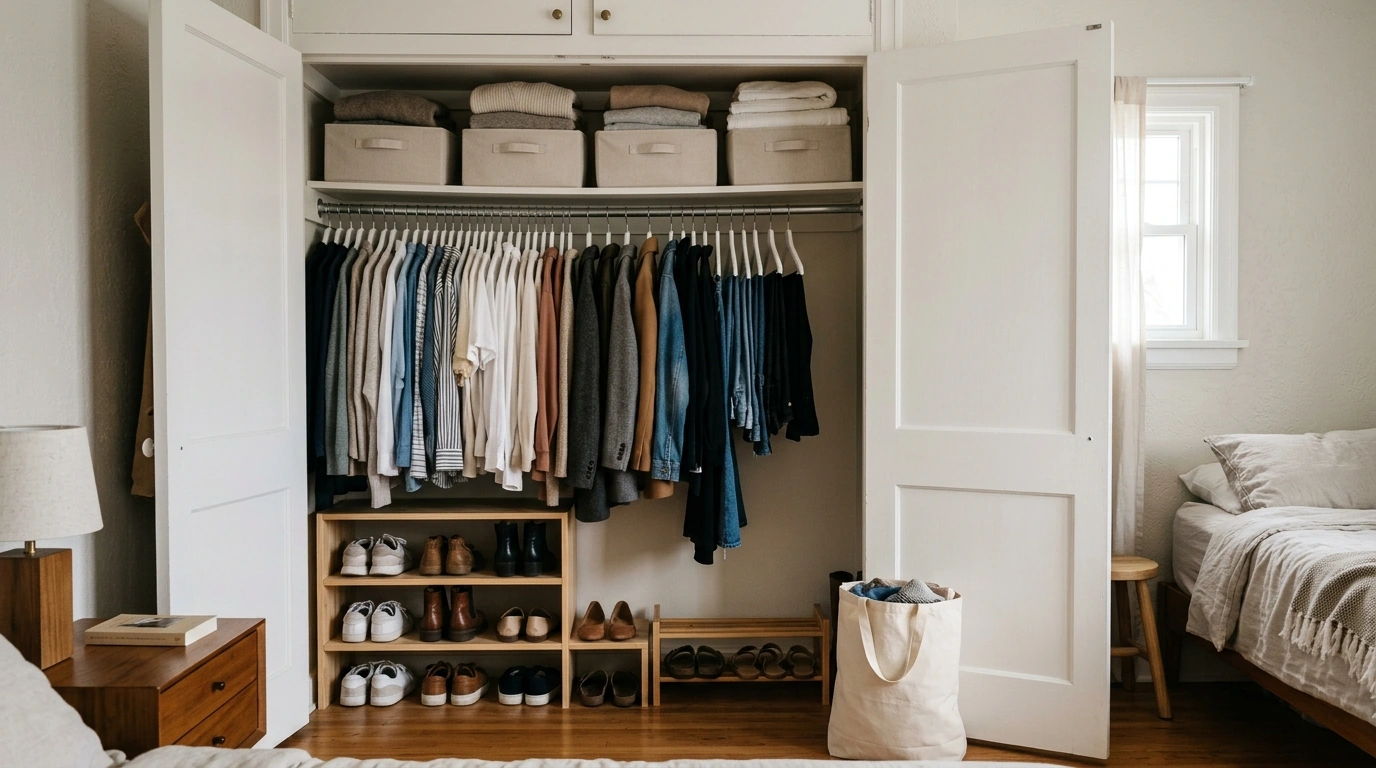
Small closets can feel impossible when every inch is doing double duty. A simple plan—sort, zone, store, and maintain—turns tight spaces into easy-to-use storage that stays tidy. Below is a practical, repeatable routine designed for apartments, shared closets, and compact bedrooms—plus space-smart storage ideas that don’t require renovation.
Before you buy bins or rearrange hangers, run a quick reset that builds momentum without turning into an all-day event.
Small closets don’t fail because of a lack of space—they fail because too many “maybes” take up the best real estate. Use rules that make decisions fast and consistent.
If you’re donating, check local donation requirements first. These Goodwill donation guidelines are a helpful reference point for what’s typically accepted.
Zoning is what keeps a closet organized after the first week. Once every category has a home, “putting it away” becomes automatic.
| Zone | Best for | Storage approach |
|---|---|---|
| Eye-level / Easy reach | Daily outfits, most-worn shoes, go-to bag | Slim hangers, a small tray for jewelry, shoe rack for top pairs |
| Upper shelf | Off-season items, extra linens, special-occasion pieces | Lidded bins, labeled boxes, vacuum bags for bulky textiles |
| Lower area | Shoes, folded denim, handbags, laundry basket | Stackable bins, shoe cubbies, pull-out baskets |
| Back corners | Rarely used items, backups, travel gear | Clear bins, narrow organizers, labeled pouches |
Once you’ve zoned your closet, storage tools should support the system (not create more stuff to manage). Focus on high-impact upgrades first.
| Tool | Best for | Common mistake to avoid |
|---|---|---|
| Slim hangers | Maximizing hanging space, reducing visual clutter | Mixing hanger types that snag or vary in thickness |
| Over-the-door organizer | Small items: scarves, socks, accessories | Overloading pockets so the door won’t close smoothly |
| Stackable clear bins | Seasonal items and categories that need grouping | Using unlabeled bins that become mystery storage |
| Shelf dividers | Sweaters, denim, handbags on shelves | Divider spacing too wide so stacks topple |
| Under-shelf basket | Extra folded tees, clutches, small bags | Placing heavy items that bend the shelf |
For more organizing education and professional best practices, browse the National Association of Productivity & Organizing Professionals (NAPO) resources. For donation and reuse concepts that keep usable goods in circulation, the U.S. EPA recycling and reuse guidance is a solid starting point.
Set a 15-minute timer, do a quick surface sweep first, then sort only what’s visible into Keep, Donate/Sell, Repair, and Relocate. Stop after one zone and keep a donation bag in the closet so discards don’t boomerang back in.
Use lifestyle-based rules: keep what fits well, feels good, and gets worn in the last 12 months. Add category caps for duplicates, and move “maybe” items into a labeled holding box with a short deadline.
Start with slim matching hangers to reclaim hanging space, then consider a second rod if height allows. Clear labeled bins, shelf dividers, and an over-the-door organizer add structure without taking up precious floor space.






Leave a comment