Name It Like a Pro: A Practical Naming Workbook for Creators and Shop Owners
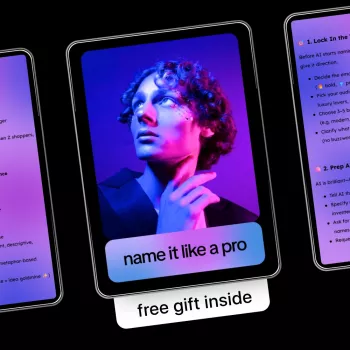
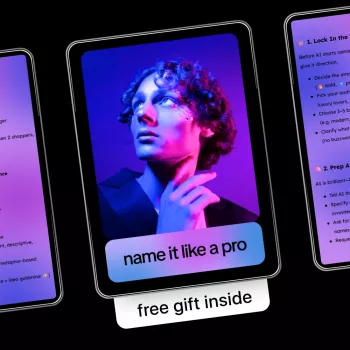
Strong product names make listings easier to find, easier to remember, and easier to trust. Name It Like a Pro (digital workbook) pairs a clear naming framework with AI-assisted idea generation, helping creators and shop owners move from vague concepts to name candidates that fit their brand, audience, and product benefits—without getting stuck in endless brainstorming.
What this workbook helps solve
Naming often feels “creative,” but the friction usually comes from missing constraints and no clear way to evaluate options. This workbook turns naming into a repeatable workflow you can use again and again.
- Turning a product description into name directions (benefit-led, feature-led, story-led, or vibe-led)
- Generating many name options quickly while keeping them on-brand
- Avoiding common naming traps: hard-to-spell words, confusing pronunciations, generic terms, and misleading claims
- Creating a repeatable process for naming new product lines, variants, bundles, and seasonal releases
- Narrowing down options with a simple scoring method that reduces second-guessing
Who it’s for (and when it’s most useful)
This approach works especially well for businesses where you’re naming often—and need clarity and consistency more than a once-in-a-lifetime “perfect” name.
- Handmade sellers naming new collections, scents, colors, or limited editions
- Digital product creators naming templates, toolkits, courses, and mini-guides
- Print-on-demand shops that need consistent naming across designs and variants
- Brand refresh projects when existing names feel inconsistent or too generic
- Busy launches when a “good and clear” name is better than waiting for a “perfect” name
A simple naming framework that works across niches
A strong name is usually the result of a few deliberate choices, not a lightning-bolt moment. The workbook walks through a practical sequence you can reuse for every new release:
- Start with the product promise: what outcome, feeling, or transformation should the name imply?
- Choose a naming lane: descriptive (clear), evocative (emotional), invented (distinctive), or hybrid (balanced).
- Define brand boundaries: words to use, words to avoid, tone (playful, premium, minimal, quirky), and length limits.
- Build a word bank: customer language, ingredients/materials, use cases, location cues, and sensory words.
- Create structured combinations: benefit + object, adjective + noun, metaphor + category, or brand + variant.
Four common naming lanes
| Naming lane |
Best for |
Watch-outs |
| Descriptive |
Clarity in listings and marketplaces |
Can sound generic; may be hard to differentiate |
| Evocative |
Lifestyle, giftable, or emotion-driven products |
May require a clear subtitle/descriptor |
| Invented |
Brandable lines and long-term differentiation |
Harder to understand at a glance; check pronunciation |
| Hybrid |
Most creator businesses needing both clarity and personality |
Balance is key—avoid overly long names |
How AI fits in (without losing the human touch)
AI is most useful as a fast expansion tool. It can multiply your options in minutes—if you give it the guardrails your brand already needs.
- Use AI to expand options, not to make final decisions.
- Feed AI constraints: audience, tone, category, benefits, and words to avoid.
- Generate batches by pattern (e.g., “two-word names,” “myth-inspired,” “minimal,” “premium-sounding”).
- Ask for variations: shorter, easier to spell, more playful, more luxurious, more modern.
- Keep a human check for clarity, cultural meaning, unintended phrases, and promise accuracy.
That last step matters: a name can sound beautiful and still confuse buyers at checkout. The workbook’s process keeps the “human reality check” built in.
Narrowing down: a fast scoring method
When you have 30+ candidates, decision fatigue is normal. Scoring turns “which one do I like?” into “which one performs best for what I need right now?”
Practical checks before committing
- Marketplace search check: look for overly similar competitors in your category.
- Domain and social handle check: if building a standalone brand, aim for consistency where possible.
- Trademark considerations: avoid choosing names that could create confusion with existing marks. Helpful starting points include the USPTO Trademark Electronic Search System (TESS) and the WIPO Global Brand Database.
- Claim safety: avoid names that imply medical or guaranteed results unless compliant with applicable rules.
- Read-aloud test: say it 5 times fast; if it keeps stumbling, simplify.
What’s included in the digital download
Name It Like a Pro (digital workbook) is designed to move you from “I kind of know what this product is” to a short list of name candidates you can confidently publish.
At-a-glance product details
| Item |
Detail |
| Format |
Digital download |
| Designed for |
Creators and shop owners naming products and collections |
| Use case |
Brainstorming, refining, and selecting product/brand names |
| Price |
$4.99 USD |
Helpful add-ons for creator workflows
FAQ
How is this different from a random name generator?
It focuses on constraints and brand fit first, then uses structured word banks, naming patterns, and scorecards to help you choose—not just browse a one-off list. The result is a repeatable process you can use for future products, collections, and variants.
Do the names need to be trademarked to use them?
Many shops use product and collection names without trademarks, but it’s still important to check for potential conflicts—especially if you’re building a long-term brand. For trademark decisions and risk, professional legal guidance is the safest route.
What if a name sounds great but doesn’t clearly explain the product?
Pair it with a short descriptor (subtitle) for instant clarity, or shift to a hybrid approach that blends personality with a clear category cue. If buyers can’t quickly tell what it is, the name usually needs either support text or simplification.
Recommended for you





Leave a comment