Aromatherapy Safety Cheat Sheet: Essential Oil Guidelines You Can Check Off
Essential oils can be a supportive part of holistic routines, but they’re also concentrated plant chemicals that require clear, consistent safety habits. This guide organizes the most important aromatherapy precautions into an easy, check-off workflow for home users and professionals—covering dilution, diffusion, storage, special populations, and what to do if something goes wrong.
What “safe essential oil use” means in real life
- Treat essential oils like potent ingredients: small amounts, careful handling, and thoughtful context (age, health conditions, medications).
- Aim for repeatable habits: measure dilution, label blends, track reactions, and store oils properly every time.
- Safety is route-specific: what’s fine for diffusion may not be appropriate for skin application or bathing.
- When unsure, choose simpler options: fewer oils in a blend, lower dilution, shorter diffusion sessions, and more ventilation.
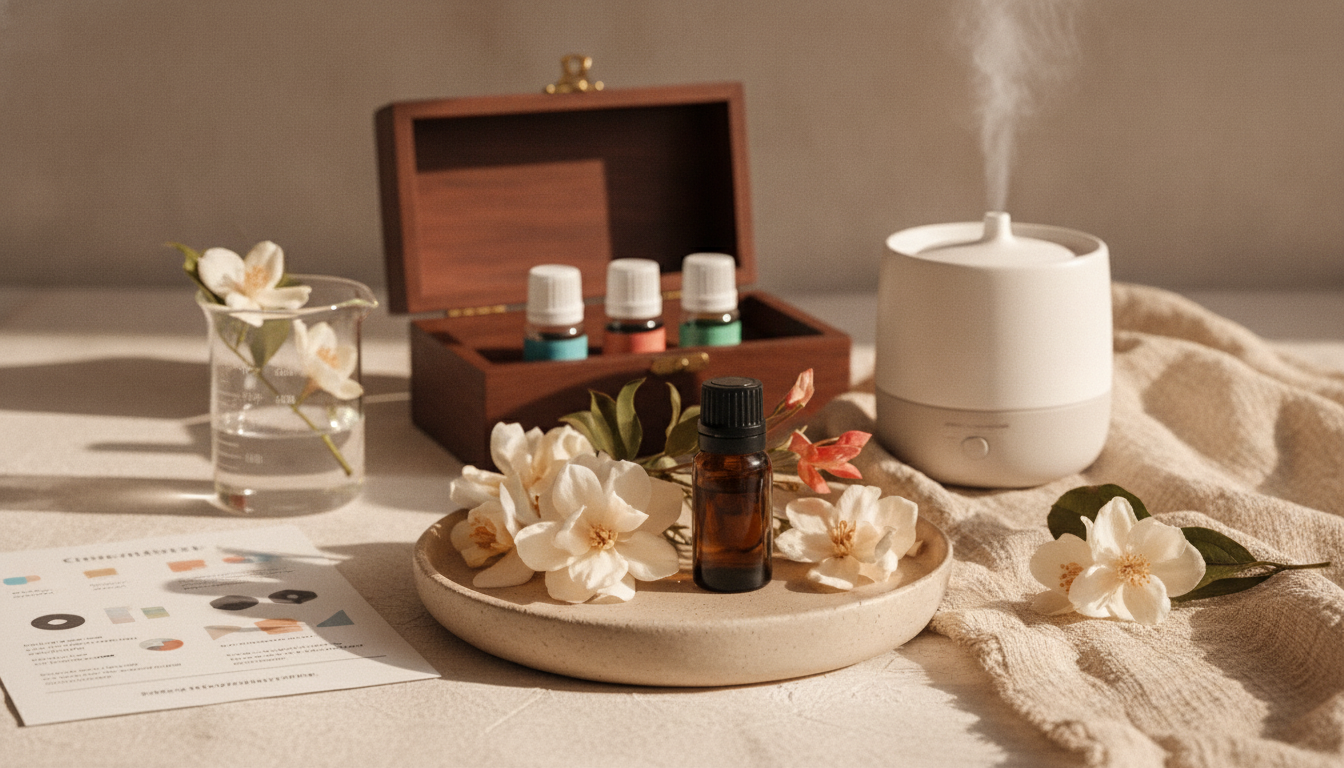
For deeper, print-and-post guidance, the Aromatherapy Safety Cheat Sheet (printable digital download) is designed to make these habits easy to follow at a glance.
Quick dilution guide for topical use
- Start low, then adjust: lower dilutions reduce the risk of irritation and sensitization—especially for frequent use.
- Use a proper carrier: fractionated coconut oil, jojoba, grapeseed, or an unscented lotion are common options.
- Measure drops intentionally: avoid “free-pouring” into roller bottles or jars; inconsistent dosing increases risk.
- Patch test for new oils or blends: apply a small amount to the inner forearm and observe for 24 hours.
Common topical dilution ranges (general reference)
| Use case |
Suggested dilution |
Notes |
| Face / sensitive skin |
0.25%–0.5% |
Use mild oils; avoid known irritants; discontinue if redness or itching occurs. |
| Daily body use |
1%–2% |
Often appropriate for routine massage oils and roller blends. |
| Short-term targeted use |
2%–3% |
Limit duration; reassess if using longer than a few days. |
| Professional/advanced spot use |
Up to 5% (select cases) |
Not ideal for beginners; higher risk of irritation and sensitization. |
If you like structure, a routine-focused companion is the Essential Oils Relaxation Checklist for simple daily rituals, which keeps sessions simple and consistent (especially helpful when you’re trying not to overdo it).
Diffusion and inhalation basics (less is often more)
- Use time limits: diffuse in shorter sessions rather than continuously (for example, 15–30 minutes, then pause).
- Ventilation matters: open airflow reduces buildup, especially in smaller rooms and offices.
- Keep distance from infants and pets: allow an “oil-free” area so sensitive individuals can move away.
- Avoid prolonged direct inhalation from the bottle: brief wafting is typically safer than repeated deep breaths.
A practical rule: if the aroma feels “loud,” causes a headache, or makes the air feel heavy, it’s a cue to stop, ventilate, and restart later at a shorter interval.
High-caution situations: kids, pregnancy, seniors, asthma, and chronic conditions
- Children need extra care: use lower dilutions, fewer oils, and avoid applying near the face or hands (to reduce accidental eye contact).
- Pregnancy and breastfeeding: choose conservative options, keep exposure lower, and consult a qualified clinician when medical conditions are present.
- Respiratory sensitivity: asthma/COPD/allergies may react to diffusion; stop immediately if coughing, wheezing, or chest tightness occurs.
- Medication and health interactions: some oils may not be appropriate with certain conditions; when in doubt, seek guidance from a qualified professional trained in essential oil safety.
When safety feels uncertain, default to non-topical use (like a brief, well-ventilated diffusion) or skip oils entirely and choose another supportive tool for the day.
Oils and practices that most often cause problems
- Skin irritation and sensitization risks: stronger oils (often certain spice and herb oils) are more likely to irritate—use extra-low dilution and limited frequency.
- Photosensitivity: some citrus oils can increase sun sensitivity after skin application; avoid UV exposure on treated areas for the recommended window.
- “Neat” application (undiluted on skin): increases risk of irritation and long-term sensitization; reserve only for rare, informed scenarios with appropriate oils.
- Ingestion: avoid self-directed internal use; dosing, contraindications, and product quality requirements make this a high-risk route without clinical oversight.
For additional safety references from aromatherapy educators, see Tisserand Institute – Essential Oil Safety and NAHA – Safety Information.
Storage, labeling, and quality checks that prevent accidents
If something goes wrong: quick response checklist
For urgent guidance specific to essential oils, Poison Control’s essential oils resource is a reliable starting point (and they can advise next steps in real time).
Printable safety workflow for everyday use
If you want a ready-to-print version you can keep near your oils, use the Aromatherapy Safety Cheat Sheet (printable digital download) to standardize your routine across blending, diffusion, and storage.
FAQ
What’s the safest dilution for essential oils on skin?
A conservative starting point for most healthy adults is about 1% dilution for routine body use, with 0.25%–0.5% for face or very sensitive skin. Patch test new oils or blends, and consider lowering dilution further for frequent daily use or for sensitive individuals.
Can essential oils be used around children and pets?
Yes, but extra caution is important: keep dilutions lower, avoid diffusing in small enclosed spaces, and always allow an oil-free zone so they can move away. Never apply oils to pet fur or skin unless directed by a veterinarian, and stop immediately if irritation or breathing changes occur.
What should be done if essential oil gets in the eyes or is swallowed?
For eyes, avoid flushing with water first; use a carrier oil on a clean cloth around the eye area (not into the eye) and seek medical help promptly. For swallowing, contact Poison Control or local emergency services right away and keep the product label available for accurate guidance.
Recommended for you







Leave a comment