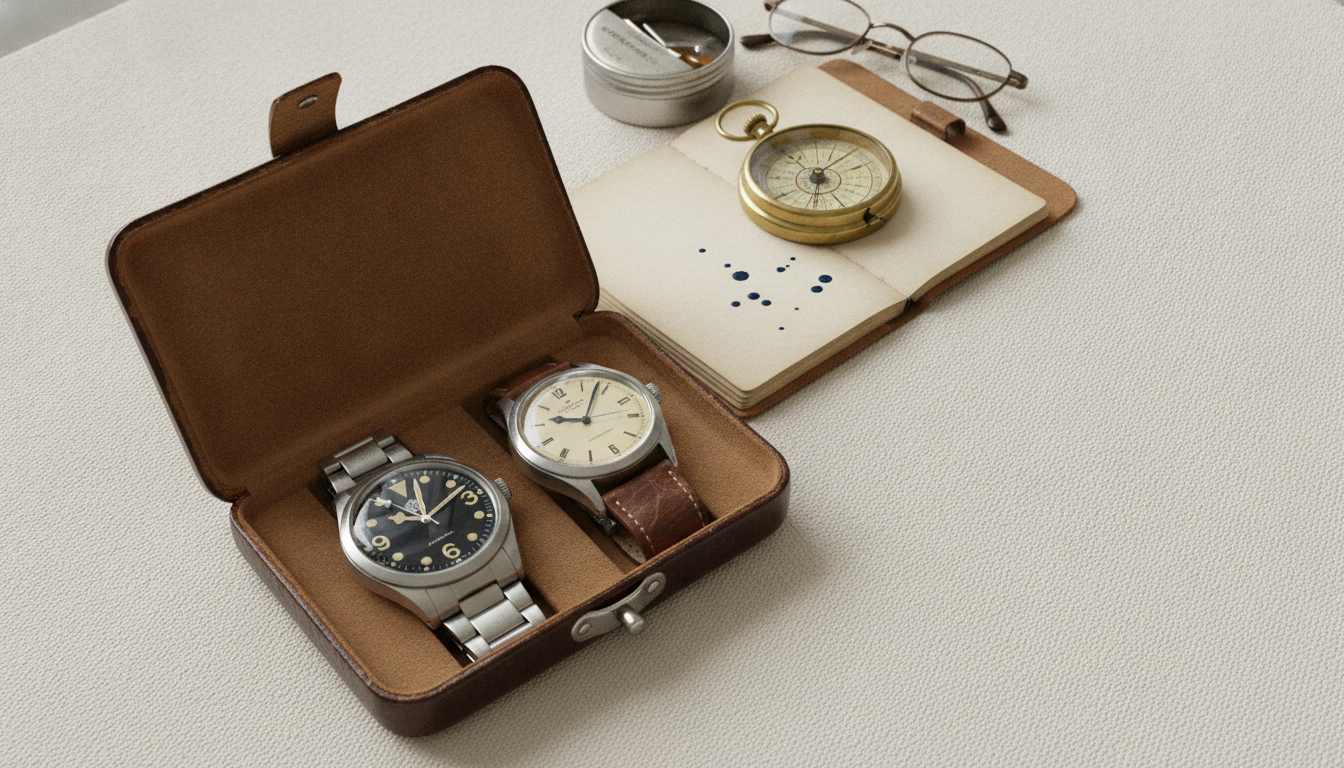
Vintage automatic watches can be impressively accurate, but they rarely match modern chronometer-grade performance. Many well-serviced vintage automatics land in the neighborhood of about +/-10 to 30 seconds per day in real-world wear, while an unserviced example can drift much more. Accuracy also changes depending on how the watch is worn, stored overnight, and how consistently it’s wound by movement.
The biggest factor is condition. Oils dry out, parts wear, and old seals allow dust or moisture to interfere with the movement. A fresh professional service often improves timekeeping dramatically and, just as importantly, helps the watch hold its rate more consistently day to day.
Regulation and health of the movement matter more than the name on the dial. Balance amplitude, magnetization, worn pivots, and the state of lubrication can each add minutes of error per week. Temperature swings and shocks also affect older movements, especially if they lack modern anti-magnetic protection or robust shock systems.
Wear it regularly (or use a winder sparingly if recommended), keep it away from magnets (phone cases, speakers, tablet covers), and set it at the same time each day so you can track its typical gain or loss. Overnight, try resting it crown-up or dial-up and note how position changes the rate; many vintage watches can be “tuned” by how they’re stored between wears.
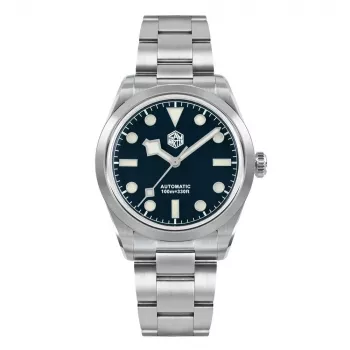
If you’re choosing a smaller classic sports piece and want practical ownership tips—fit, styling, and care—see the full guide here: 38mm vintage automatic sports watch fit, style & care guide.
For Vintage Automatic Watch Accuracy: What to Expect, the best answer depends on fit, material, care instructions, and how the product will be used day to day.
For regular wear, a typical interval is about every 3–5 years, sooner if you notice big time swings, grinding sounds, or poor power reserve. Service timing depends on use, prior maintenance quality, and parts availability.




Leave a comment