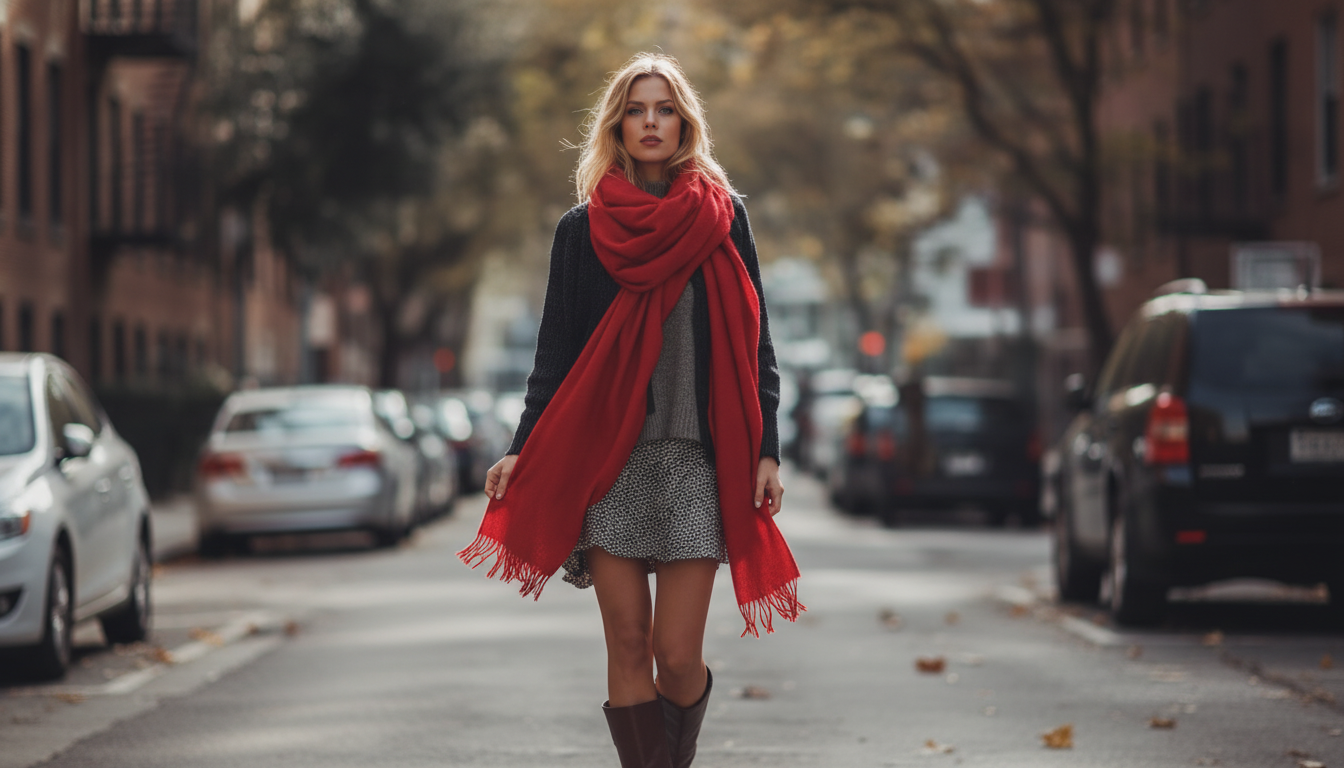
A big scarf can turn simple basics into a polished look—without needing a full outfit change. When the color, fabric, and wrap feel intentional, the scarf becomes the “styling shortcut” that ties everything together for workdays, weekends, and travel. Use this practical checklist to choose the right scarf, match it to your outfit, and layer it in a way that looks finished (not fussy).
Before looking at your outfit, decide what you need the scarf to do. Big scarves can be cozy, sharp, or purely decorative—so picking the “job” first makes the rest easy.
If you’re building a small scarf wardrobe, it helps to know a little about how textiles behave across fibers and weaves. For deeper background on materials, see Encyclopaedia Britannica’s overview of textiles.
| Occasion | Best scarf type | Why it works | Fast styling move |
|---|---|---|---|
| Workday | Silk or fine wool | Clean lines and less bulk under coats | Simple drape + belt at waist |
| Weekend errands | Oversized knit | Cozy texture elevates denim and tees | One-loop wrap for volume |
| Evening dinner | Silk/satin or lightweight cashmere | Luxurious finish without heaviness | Over-shoulder stole + brooch/pin |
| Travel | Large soft wrap | Doubles as blanket and layers easily | Blanket-scarf wrap with ends tucked |
Big scarves look most expensive when they’re paired with a calm base. The scarf provides the interest; the outfit provides the structure.
For inspiration on how fashion houses and stylists treat scarves as a focal accessory, browse Vogue’s scarf coverage and note how often the outfit is intentionally “quiet” underneath.
Use these as “default moves” that work with most face shapes and outfits. If you’re rushing out the door, pick one and commit—constant re-wrapping is what makes a scarf look accidental.
The fastest way to look “swallowed” by a big scarf is to stack it with a bulky collar, thick lapels, and a puffy hood. Use these pairings to keep warmth without losing your neckline.
For a broader look at how accessories and textiles show up across fashion history, the Metropolitan Museum of Art’s fashion and costume collection is a great reference point for shape, drape, and fabric impact.
Start with a slim base layer, then fold the scarf to reduce volume and choose either a clean drape or a belted wrap to control the shape. Keep outerwear structured or minimal so the scarf has room to stand out without crowding your neckline.
Camel, black, gray, navy, cream, and muted plaids tend to work with the widest range of wardrobes. The easiest matching trick is choosing a scarf that repeats one color you already wear often (like your coat, boots, or everyday bag).
A scarf draws attention upward toward the face while adding color or texture that reads styled on purpose. A quick tuck, pin, or belt plus coordinating with shoes or a bag makes the whole outfit look cohesive.





Leave a comment