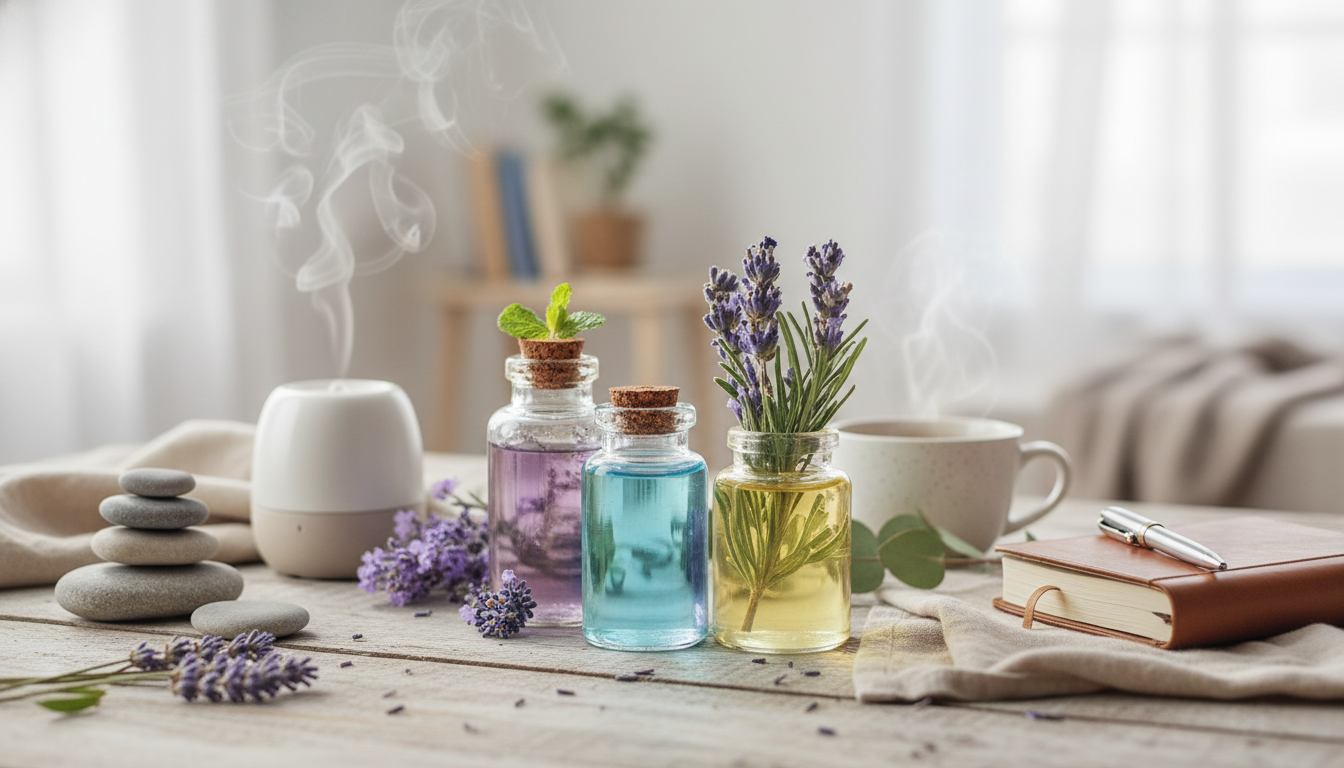
Stress and anxious feelings can show up as a racing mind, tight shoulders, restless sleep, or difficulty unwinding at the end of the day. Aromatherapy with essential oils is a simple, sensory way to support relaxation routines—especially when paired with steady habits like good sleep hygiene, gentle movement, and mindful breathing. This guide explains how essential oils may help, which scents are commonly used, and how to use them safely at home.
Aromas reach the brain through the olfactory system, which is closely connected to areas involved in emotion and memory. That close link is one reason a single scent can feel instantly “comforting” or “resetting,” even before you consciously name it.
Certain scents may promote a calmer mood by supporting relaxation cues and easing the feeling of mental overload. Aromatherapy tends to work best as a repeatable routine: when you pair a scent with a consistent calming activity (slow breathing, stretching, journaling, or a warm shower), the brain can start to associate that aroma with “time to unwind.” Over time, that conditioning effect can make it easier to downshift.
It’s also important to keep expectations realistic. Essential oils are not a replacement for professional care; persistent or severe anxiety deserves medical guidance. For a balanced overview of aromatherapy and what evidence exists, see the National Center for Complementary and Integrative Health (NCCIH) and the Mayo Clinic overview on aromatherapy.
Relaxation is personal—what feels soothing to one person may feel too strong or “sweet” to someone else. These are some of the most commonly used options for stress and anxious feelings:
| Essential oil | Typical mood support | Best time to use | Notes |
|---|---|---|---|
| Lavender | Calm, sleep-ready | Evening, bedtime | Often well-tolerated; patch test for sensitive skin |
| Bergamot | Bright, steady, less frazzled | Midday or after work | Phototoxic if applied to skin unless FCF/bergapten-free; avoid sun exposure after topical use |
| Chamomile | Comfort, ease | Night routine | Can be helpful in blends; check for ragweed allergies |
| Frankincense | Grounding, slower breathing | Meditation, quiet time | Good in diffusion or diluted roll-on |
| Ylang ylang | Tension release, soft mood | Evening, bath/foot soak | Strong aroma; start with small amounts |
| Clary sage | Relaxed, unwound | Evening, decompress | Avoid or consult clinician during pregnancy; can be sedating |
How you use essential oils matters as much as which oil you choose. A gentle approach is usually the most comfortable and sustainable.
If you’re new to aromatherapy, the Cleveland Clinic’s primer is a helpful reference for general use and precautions: Cleveland Clinic: Aromatherapy.
Instead of saving essential oils for “bad days,” attach them to small transitions. Those are the moments when the nervous system benefits most from a predictable cue.
If you prefer a structured plan with ready-made routines for morning calm, daytime focus, and evening unwind (plus safety reminders and gentle blending ideas), explore: How Essential Oils Can Ease Stress and Anxiety | Relaxation eBook Guide for Natural Stress Relief, Aromatherapy, and Anxiety Support.
Stress can also be amplified by daily pressures that have nothing to do with scent—especially finances. For a practical, confidence-building approach to reducing money-related worry, consider: Money Mindset Makeover: Step-by-Step Guide to Financial Well-Being.
Finally, if you’re creating a dedicated “calm corner,” having a stable surface for a diffuser, journal, and tea can make the routine easier to keep. A living-room anchor like the Stylish Wood Coffee Table can help set up a consistent reset space.
Lavender, bergamot, chamomile, and frankincense are commonly used, but the “best” choice depends on your personal scent preference and how your body responds. Start with one oil, use it gently (especially topically), and seek professional support if symptoms are severe or persistent.
Scent signals travel through the olfactory system, which is closely tied to brain areas involved in emotion and memory, so aromas can cue a calmer state. Many people get the most benefit when a scent is paired consistently with relaxing habits like breathing exercises, stretching, or a bedtime routine.
Daily use can be safe when you keep sessions moderate, ventilate well, take breaks from diffusion, and dilute properly for topical application with patch testing. Extra caution is needed for pregnancy, children, asthma, pets, and fragrance sensitivities.






Leave a comment