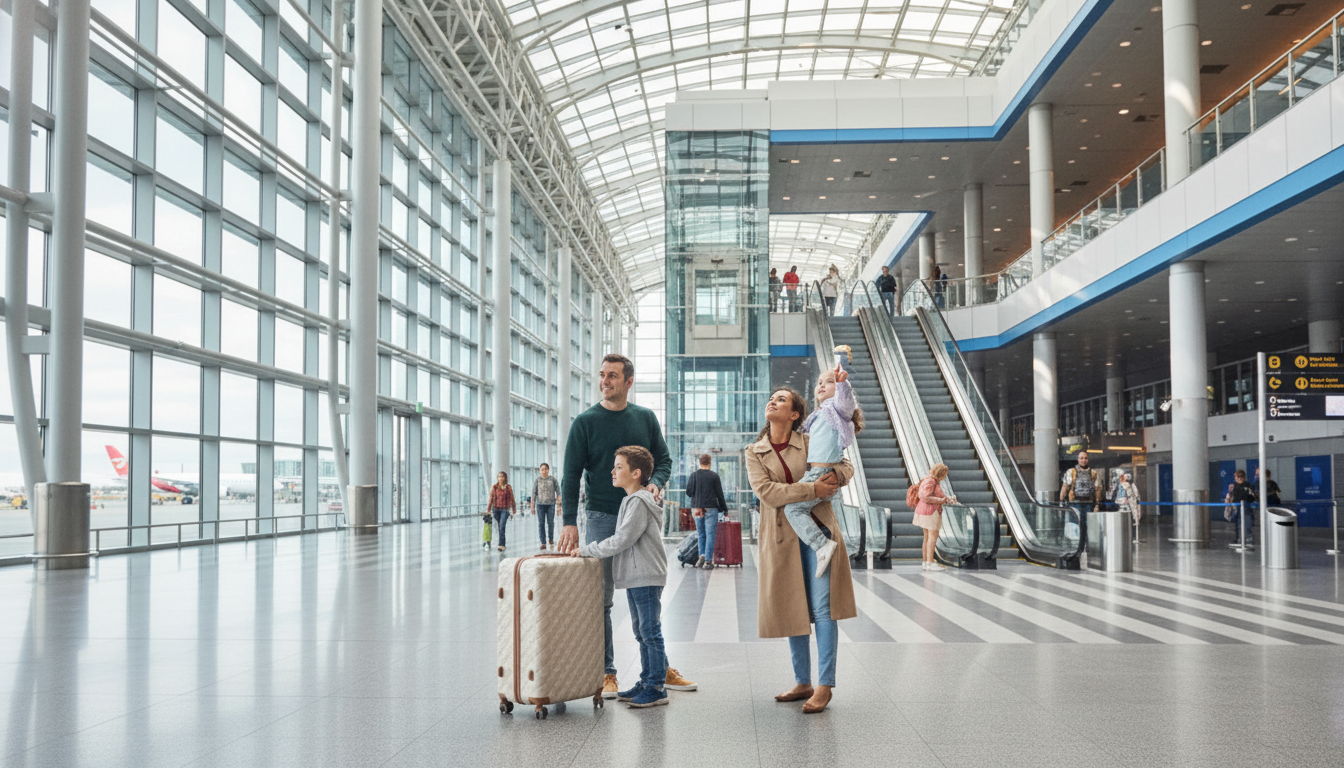
Family flights get easier when the day follows a simple rhythm: prep the essentials at home, move through the airport with fewer decisions, build predictable comfort into takeoff and landing, and keep kids regulated in the air. The goal isn’t perfection—it’s reducing friction with repeatable routines you can use on every trip, from quick weekend hops to long-haul flights.
Below is a practical, kid-tested flight plan broken into four manageable phases, plus a simple “command center” setup that keeps your must-haves within reach without turning your seat into a junk drawer.
Lock in what matters early: documents, seating strategy, sleep/meal timing, and a realistic packing list. A short planning session now prevents the frantic “Where’s the boarding pass?” moment later.
Build a curb-to-gate routine that reduces decision fatigue. When adults know what to do next—and kids know what’s expected—lines and delays feel less chaotic.
Use predictable cycles (snack, activity, bathroom, reset). Kids don’t need constant entertainment; they need pacing and timely switches before restlessness becomes a meltdown.
Plan for baggage claim, ground transport, and a quick “reset” routine so the first evening of your trip doesn’t unravel from hunger, overstimulation, or missing essentials.
Keep it simple: one pouch/folder for essentials (IDs, boarding passes, insurance cards, meds) and one grab-and-go kit for the plane. When everything has a home, you stop rummaging and start moving.
Pack one compact kit for each child with: headphones, wipes, a snack, an empty water bottle (fill after security), 1–2 small toys, and one comfort item. The seat kit is what lives under the seat—not the whole carry-on.
Consolidate liquids, remove large electronics early, and keep a spare bag for pocket items (keys, belts, coins). For the latest family-specific guidance, check TSA’s Traveling with Children page.
Keep it concrete: what’s happening now, what happens next, and what comes after landing (a small reward or preferred activity). For additional safety tips, see the FAA guidance on flying with children.
If you prefer a ready-made, printable system you can reuse for every trip, Smart Parent’s Flight Plan: 4-in-1 Family Travel Hacks for Flying with Kids is designed to keep prep, airport flow, in-flight pacing, and arrival recovery in one place.
For families who also want to reduce money stress around travel (and make “what can we afford?” decisions simpler before booking), pairing your flight routine with a budgeting reset can help—see Money Mindset Makeover: Step-by-Step Guide to Financial Well-Being.
| Trip moment | Parent focus | Kid focus | How the 4-in-1 plan helps |
|---|---|---|---|
| 48–72 hours before | Docs, seats, packing map | Expectations and sleep rhythm | Turns prep into a short, repeatable checklist |
| Airport & security | Flow and bottlenecks | Movement and cooperation | Provides a step order to reduce last-minute scrambling |
| In the air | Snack/activity pacing | Comfort and boredom prevention | Structures an easy in-flight rhythm to follow |
| Arrival day | Recovery and transport | Reset and re-regulation | Helps protect the first evening with a simple routine |
Wash hands/face, change clothes, have a small snack, then offer a quiet activity. If you’re traveling with infants or very young children, the CDC’s guidance for traveling with infants and children is a helpful reference for staying healthy on the go.
Pack documents, any daily meds, wipes, a spare set of clothes, kid snacks, an empty water bottle, headphones, a charger/power bank, a few small activities, and one comfort item. Organize it into “seat kits” so you’re not digging through one big bag mid-flight.
Encourage swallowing during climb and descent with water sips, breastfeeding/bottle feeding, or a chewy snack when age-appropriate. If ear discomfort is common, try to keep your child awake for descent so they’ll swallow more often.
Board early if you need time for a car seat, overhead bags, or settling an infant. Board later if your child struggles with long seated periods and you have minimal gear—less time in the seat can mean fewer wiggles and complaints.



Leave a comment