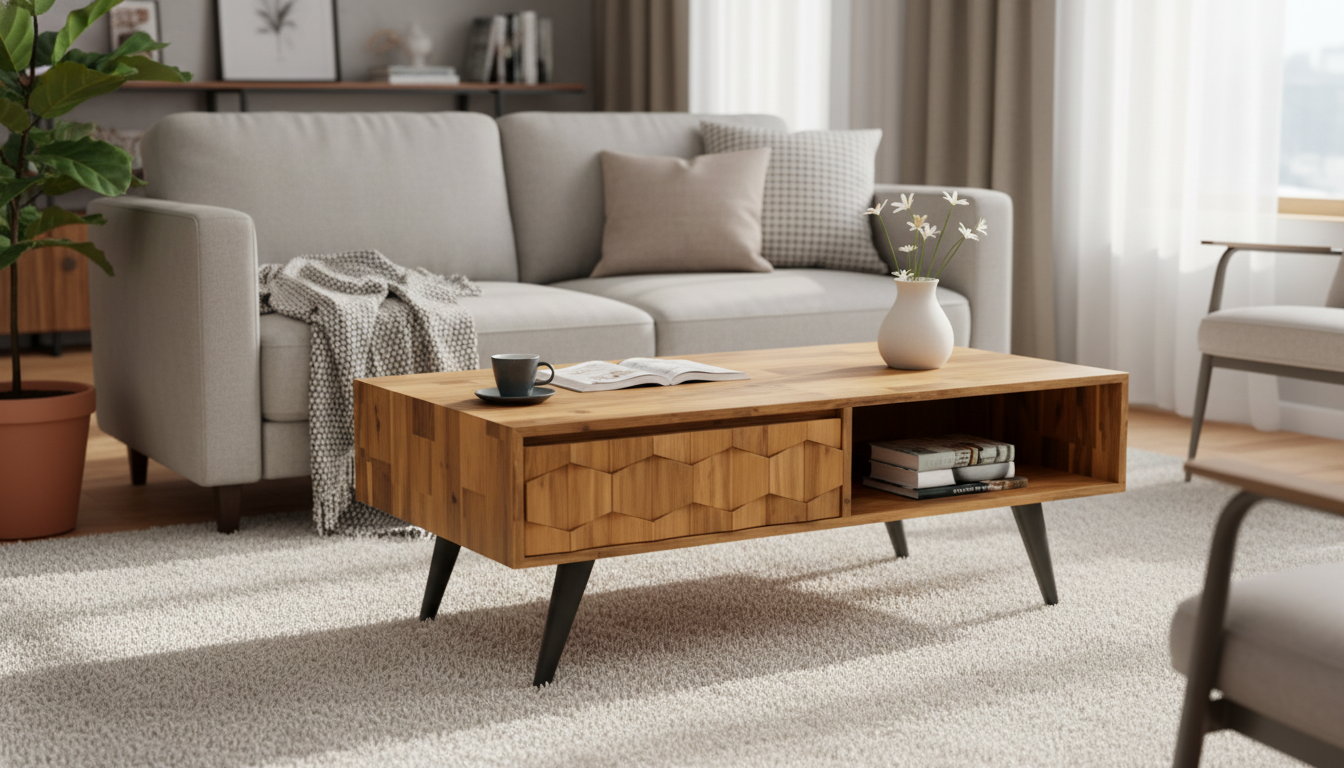
A wood coffee table can anchor a seating area, add texture to a room, and make everyday routines—coffee, books, board games—feel more inviting. The right piece brings warmth without weighing the space down, and it holds up to real life when size, finish, and placement are chosen with intention. Below is a practical guide to what to look for in a stylish wood coffee table, how to fit it into your layout, and how to keep it looking rich over time.
“Stylish” often comes down to proportion, details, and how the table interacts with surrounding furniture.
Even the most beautiful table can feel “off” if it’s too large to walk around or too small to serve the seating group. Start with these comfort-first guidelines, then adjust for your room’s traffic paths.
| Room/Seating Setup | Recommended Table Shape | Typical Fit Notes |
|---|---|---|
| Compact apartment sofa + accent chair | Round or oval | Easier circulation; softer edges in narrow spaces |
| Standard 3-seat sofa | Rectangle | Balances the sofa’s length; keep generous clearance on both sides |
| Sectional sofa | Large rectangle or oval | Works best when centered; consider an open base to reduce visual bulk |
| Family room with frequent snacking/games | Rectangle with sturdy base | More usable surface area; prioritize stable legs and durable finish |
Daily use is where wood tables earn their keep. The best choice depends on your tolerance for patina, your household traffic, and how much maintenance you want.
For a deeper dive into wood behavior and durability, the USDA Forest Products Laboratory’s Wood Handbook is a helpful reference. For cleaning basics, Michigan State University Extension also shares practical tips in Care of Wooden Furniture.
A wood coffee table shines when the surrounding pieces support it instead of competing with it. A few smart pairings can make the entire room feel designed.
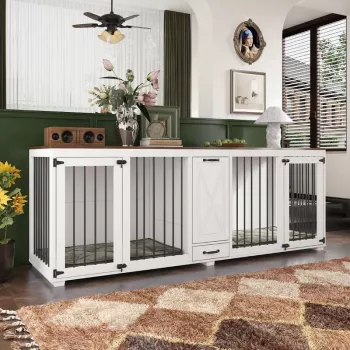
For coordinated wood accents beyond the coffee table—especially in multipurpose family spaces—consider pieces that blend storage with furniture styling, such as the 86.6″ Wooden Dog Crate for Two Dogs with Bowls and Storage Drawer, which can help keep essentials contained while maintaining a cohesive wood-forward look.
Aim for about 14–18 inches from the sofa edge for an easy reach while still leaving comfortable leg and walking room. In tighter spaces, a slightly smaller table or rounded shape can help maintain clearance without crowding the seating.
Round or oval tables improve traffic flow and reduce sharp corners, which is especially helpful in compact layouts. Rectangular tables maximize usable surface area and tend to align naturally with longer sofas and sectionals.
Prevent rings with coasters and a sealed finish, and wipe up condensation promptly. For existing marks, start with the gentlest approach appropriate to your finish (soft cloth and finish-safe methods) and avoid abrasive products that can dull the surface.





Leave a comment